Finding a reliable wrist-mounted dive computer is essential for monitoring depth, time, decompression, and gas mixes during every dive. This guide highlights top models that combine clear displays, robust algorithms, and versatile gas options to support divers of all levels. We compare five strong picks that balance readability, safety features, and user-friendly interfaces, helping you choose the right computer for recreational and technical diving needs.
Overview of recommended models at a glance:
| Brand | Model | Key Features | Primary Use |
|---|---|---|---|
| Mares | Puck Pro EZ Wrist | Clear display, single-gas Nitrox, Buhlmann ZH-L16C | Recreational diving |
| SUUNTO | Zoop Novo Wrist | Air/Nitrox/Gauge/Free modes, 21–50% O2, alarms | All-around divers |
| Cressi | Raffaello | Built-in compass, RGBM, multi-gas planning | Advanced planning |
| Cressi | Donatello | HD display, single-button, versatile units | Beginner to intermediate |
| Cressi | Leonardo 2.0 | HD backlit, FO2/PO2 controls, alarm features | All-around divers needing clarity |
Mares Puck Pro EZ Wrist Dive Computer

The Mares Puck Pro EZ Wrist Dive Computer features a high-contrast display designed for quick readability underwater. It supports single-gas Nitrox (21%–50%) to tailor gas mixtures for safer, more efficient dives. The device uses the Buhlmann ZH-L16C algorithm with dual gradient factors, delivering decompression calculations suitable for recreational divers who demand dependable data in real time.
Mares Puck Pro EZ Wrist Underwater Dive Computer

This model mirrors the Mares Puck Pro EZ with a focus on clear visibility and versatile gas options, including Nitrox compatibility. The same robust algorithm supports safe, precise depth-time planning and decompression tracking, making it a reliable choice for recreational divers seeking consistent performance.
SUUNTO Zoop Novo Wrist Scuba Diving Computer

The SUUNTO Zoop Novo offers multiple operating modes—air, nitrox, gauge, and freedom—along with programmable oxygen ranges (21%–50%). It supports imperial or metric units and provides decompression stop data and audible alarms to keep divers aware of safety thresholds. Its straightforward interface suits divers who value ease of use without sacrificing essential data.
SUUNTO Zoop Novo Wrist Scuba Diving Computer, Aqua Blue

This SUUNTO model emphasizes flexible operating modes, with full nitrox capability and a clear display that supports programmed oxygen mixes. It maintains precise decompression data and alarms, ensuring divers stay informed about ascent rates and upcoming stops, suitable for both beginners and seasoned explorers.
SUUNTO Zoop Novo Wrist Scuba Diving Computer, Wildberry
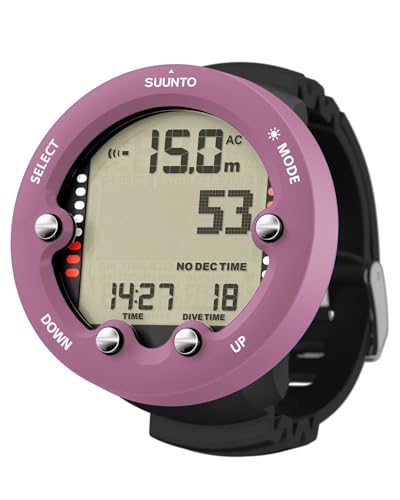
Another SUUNTO Zoop Novo variant, with the same core capabilities: air, nitrox, and gauge modes, programmable oxygen ranges, and audible alarms. This color option simply provides a distinct look while maintaining reliable decompression and safety features for mixed-gas divers.
Cressi Raffaello Scuba Dive Wrist Computer

The Cressi Raffaello dives into advanced planning with RGBM algorithm, built-in digital compass, and long battery life. It provides essential dive data, surface time, and desaturation times to help divers manage multi-gas scenarios. Safety features include oxygen toxicity indicators and ascent speed alarms for safer underwater exploration.
Cressi Donatello Wrist Dive Computer

The Donatello emphasizes a compact design with a single-button interface for quick mode changes and a high-definition display for underwater readability. It features a user-adjustable conservatism setting and clear audible alarms. Its versatile functionality supports imperial or metric units, deep stop options, and varied gas mixes to suit user preferences.
Cressi Leonardo 2.0 Dive Computer

The Leonardo 2.0 offers an HD backlit display, nitrox and gauge modes, and a diver-friendly interface with a single-button operation. Programmable FO2 from 21% to 50% and PO2 from 1.2 to 1.6 bar enable personalized gas management. The device includes audible alarms and adjustable conservatism to fit various risk tolerances and dive profiles.
Buying Guide: Key Purchase Considerations
- Display readability: Look for high-contrast, backlit screens with large numerals and clear dive data to reduce strain during dives.
- Gas options: Ensure the model supports Nitrox or Trimix as needed, with programmable oxygen mixes in a practical range (commonly 21%–50%).
- Decompression model: Common choices include Buhlmann ZH-L16C and RGBM. The chosen algorithm affects decompression calculations and dive safety.
- Modes and alarms: Verify available modes (air, nitrox, gauge, free), as well as audible and visual alarms for ascent, depth, and no-deco limits.
- Navigation features: Built-in compasses or easy integration for planning and orientation can enhance safety on complex dives.
- Battery life and durability: Long-lasting batteries and rugged, water-resistant design reduce maintenance and downtime.
- Interface and usability: A simple, intuitive control scheme—especially a single-button operation—helps divers adjust settings quickly underwater.
- Data accessibility: Look for clear data display of depth, dive time, descent/ascent rates, and desaturation times to assess post-dive requirements.
- Upgrade path: Some models offer firmware updates or additional features over time; consider future-proofing your purchase.
- Size and fit: Wrist size, strap comfort, and legibility under different lighting conditions influence long-term comfort during dives.