For developers and hobbyists alike, precise timekeeping and reliable satellite positioning are crucial. The following GPS modules are selected for their PPS (pulse-per-second) output, multi-GNSS coverage, and broad compatibility with popular microcontrollers and flight controllers. Each entry includes key features, ideal use cases, and integration notes to help you choose the right module for navigation, telemetry, or clock applications.
The table below provides a quick snapshot of the chosen products, including their GNSS support, PPS capabilities, and typical interfaces.
| Product | GNSS / PPS | Interface | Best For |
|---|---|---|---|
| REYAX RYS352A | GPS, GLONASS, Galileo, BeiDou; PPS supported | UART 3.3V | Multi-constellation nav and precise timing |
| Geekstory BE-180 | GPS / Beidou; PPS indicator available | TTL / RS-232 (configurable) | Low-cost, Raspberry Pi friendliness |
| MakerFocus GT-U7 | UBLOX7 family; strong GPS with PPS not required for basic use | TTL (default); optional USB via adapter | Arduino/STM32 projects with clock needs |
| Beffkkip NEO-6M Based | NEO-6M lineage; USB interface supported | USB / IPEX antenna (active) | Quick PC positioning demos and USB-enabled projects |
| Geekstory DY-180 | GLONASS; PPS indicator available | TTL / RS-232 | FPV/flight controller use with PPS indication |
Note: PPS presence is common as an indicator line or LED on these modules, and some require additional wiring or a TTL-to-RS232 converter to achieve RS-232 output. Always verify voltage levels and available pins for your chosen controller or board.
REYAX RYS352A GPS GLONASS Galileo BeiDou Module

The REYAX RYS352A is a multi-GNSS module supporting GPS, GLONASS, Galileo, and BeiDou with 72 receiver channels. Its design favors robust satellite acquisition and fast TTFF (time to first fix). The module’s PPS output enables precise timekeeping suitable for synchronizing sensors or clocks in a distributed system. Interfaces include a 3.3V UART, aligning with common microcontrollers and embedded boards. This module is ideal for navigation projects that need reliable multi-constellation coverage and accurate timing signals for synchronized logging or data fusion.
Geekstory BE-180 GPS Module With Beidou And PPS Capabilities

The BE-180 from Geekstory uses a current-generation GPS chip with Beidou compatibility and PPS signaling to help synchronize precise timing references. It is designed for Raspberry Pi users and supports TTL output by default, with RS-232 output achievable via a TTL-to-RS232 converter. The simple wiring (red to 3.3V, black to GND, green to TXD, white to RXD) makes it accessible for hobbyist projects and flight controllers that require an accurate PPS-aligned time source. This module provides a balance of ease of use, PPS timing, and broad compatibility for embedded systems.
MakerFocus GT-U7 GPS Module With UBLOX 7th Gen Chip
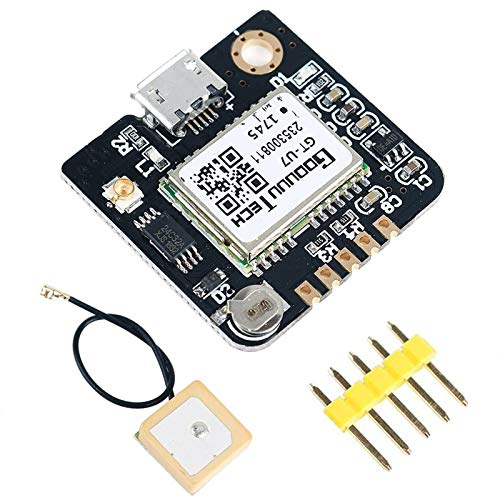
The GT-U7 uses the UBLOX 7th generation GPS core, offering high sensitivity and low power consumption. It is compatible with NEO-6M software and supports straightforward integration with NEO-6M-compatible codebases. While PPS is not strictly required for basic positioning, it is noted that PPS can be used for timing applications when a hardware clock is needed. The module is compact and suitable for microcontroller projects, drones, and RC applications where reliable GPS reception is essential and onboard processing is limited.
Beffkkip GPS Module With USB Interface And IPEX Antenna

This Beffkkip module is built around the popular NEO-6M lineage and emphasizes USB connectivity for easy PC-based positioning demos and quick testing. The included IPEX antenna interface supports quick antenna swaps, which can improve sat fix times in challenging environments. It provides high sensitivity with a TTL level data output by default; RS-232 output can be achieved with a TTL-to-RS232 converter. The USB interface makes it convenient for developers prototyping GPS-enabled software without extra serial adapters.
Geekstory DY-180 TTL GPS Receiver Module

The DY-180 TTL GPS module from Geekstory features dual Glonass support and PPS indicators to show precise time references. It is designed for Arduino, FPV drones, and Raspberry Pi-style boards, with a simple wiring scheme (red to 3.3V, black to GND, green to TXD, white to RXD). Data can be TTL or RS-232, with a TTL output by default. A PPS indicator helps users verify current positional accuracy and time synchronization, making it suitable for projects that require both navigation data and timing signals.
BN-180 GPS Module With TTL Output For Navigation

The BN-180 series offers TTL output and dual-GLONASS navigation capabilities, aimed at flight controllers and Arduino projects. The PPS LED helps indicate precise time positioning, and, like other modules in this lineup, it supports USB interfaces and RS-232 conversion as needed. It suits applications where a compact module with straightforward wiring is preferred for real-time navigation and timing needs in compact flight controllers or robotics projects.
2Pack GPS Module With High Sensitivity NEO-6M

The 2Pack package offers two GPS modules built around the UBLOX UBX7 family with high sensitivity and broad coverage. It includes USB connectivity and an IPEX antenna interface for quick, reliable satellite reception. While PPS is not a guaranteed feature on every unit, the modules are known for solid performance in hobbyist and educational setups. The dual-pack makes it convenient for building redundant GPS capabilities or multi-device testing in a lab environment.
HGLRC Mini M100 GPS Module For FPV Drones

The HGLRC Mini M100 is designed for FPV racing drones, offering a compact footprint with UBLOX compatibility. It supports 2-7 inch drones and uses a ceramic antenna as an option for stable satellite reception. The module supports 3.3V-5V power input, making it versatile across different flight controllers and power architectures. While PPS support is not explicitly highlighted, its high sensitivity and compact design make it suitable for time-sensitive navigation tasks in small drones.
Buying Guide: Key Considerations For GPS Modules With PPS Output
- GNSS Constellations: Multi-GNSS support (GPS, GLONASS, Galileo, BeiDou, QZSS, SBAS) improves satellite visibility and fix reliability, especially under canopy or urban canyons.
- PPS Output: A dedicated PPS signal enables high-precision time synchronization across sensors, logs, and clocks. Confirm voltage levels (TTL vs. RS-232) and pin availability on your board.
- Interface Compatibility: Ensure the module’s data interface (UART, USB, RS-232) matches your microcontroller, single-board computer, or flight controller.
- Power Requirements: Check supply voltage (commonly 3.3V or 5V) and current consumption to fit within your system’s power budget.
- Antenna and Placement: External vs. on-board antennas, IPEX connectors, and antenna quality influence satellite acquisition time and sensitivity.
- Software and Documentation: Availability of sample code, drivers, and setup guides reduces integration time and risk.
- Size And Form Factor: For compact drones or embedded devices, prioritize smaller footprints and low-weight modules with straightforward mounting options.
- TTL vs. RS-232 Output: Some projects prefer TTL-level serial, while others require RS-232 for legacy equipment or certain flight controllers—plan accordingly.
- Reliability and Support: Consider module age, available firmware updates, and manufacturer support when deploying in critical systems.
In summary, selecting a GPS module with PPS output involves weighing constellation coverage, timing precision, and interface compatibility. The highlighted options provide a range of form factors and interface models to fit various hobbyist, educational, and professional setups. When integrating into a system, verify PPS behavior, test fix reliability, and confirm stable clock synchronization with the rest of your hardware stack.