Finding a reliable wireless headset microphone and receiver setup can transform events, classrooms, and performances by delivering dependable, clear audio while keeping hands free. This guide highlights five top options, covering headset and lavalier variants, versatile outputs, and strong range. Each pick is chosen for ease of use, compatibility with common audio gear, and solid battery life. Use the quick-reference table below to compare core specs at a glance.
| Product | Brand | Range | Included Mics | Output |
|---|---|---|---|---|
| TONOR UHF Wireless System With Headset | TONOR | 200 ft / 60 m | Headset + Lavalier | 1/4″ |
| TONOR UHF With 2 Mics | TONOR | 200 ft / 60 m | 2 Bodypack, 2 Mics | 1/4″ |
| HOTEC UHF Wireless Headset | HOTEC | 240 ft | Headset + Lavalier | 1/4″ |
| Phenyx Pro Digital System | Phenyx Pro | 160–200 ft | Headset or Lavalier | 1/4″ |
| MICVISTA 2-User 2.4G System | MICVISTA | 160 ft | 2 Headset | 1/8″ and 1/4″ |
TONOR UHF Wireless Microphone System With Headset Lavalier Mic

TONOR’s UHF wireless system combines a headset microphone, a lavalier mic, a bodypack transmitter, and a rechargeable receiver to deliver freedom of movement with clear vocal reproduction. The system supports up to 200 ft (60 m) of line-of-sight range, suitable for ceremonies, conferences, and live performances. It emphasizes hands-free use, with an LCD in the bodypack for level and status visibility and separate volume controls to minimize popping during transfers. The setup is designed for quick pairing between the bodypack and the receiver, and it connects to any 1/4″ input on mixers, speakers, or PA systems. Note that Bluetooth connections are not supported, and metal cabinets can degrade range.
Key features include: independent volume controls, MUTE/ON/OFF switches to control signal pops, and guidance to position the headset mic 2–3 cm from the mouth and chest-level for the lavalier mic. The package covers common installation scenarios—from church events to weddings—where reliable wireless performance and hands-free operation are essential.
Considerations: ensure you’re using a clear line of sight and avoid metal obstructions to maximize range. The lack of Bluetooth means compatibility is with traditional audio gear via a 1/4″ input; no direct TV or soundbar pairing is supported.
Bietrun Wireless Microphone Headset System
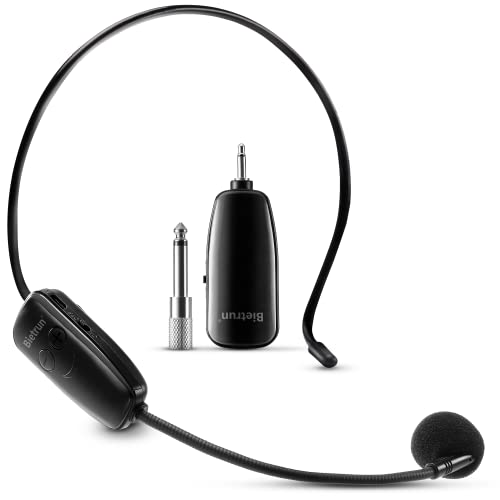
Bietrun offers a user-friendly wireless microphone headset system featuring a built-in condenser mic with a 160 ft (50 m) range. It is designed for easy setup and quick pairing between transmitter and receiver. The kit includes a 3.5 mm output on the receiver, with an optional 6.35 mm adapter to accommodate larger amplifiers and mixers. The two-in-one design lets you switch between headset and handheld modes, catering to singers or presenters who need flexibility. Batteries are rechargeable with a claimed six-hour runtime, and the package emphasizes portability for on-the-go use and small events.
Notes on operation: the product targets those who need simple, reliable wireless performance without complex menus. It works best with devices having a mic input and does not pair with iOS devices or Bluetooth speakers. The kit’s compatibility with standard 3.5 mm and 6.35 mm inputs makes it a practical choice for venues with varied equipment.
TONOR Wireless Microphone System, 4 Microphones

This 4-microphone setup from TONOR centers on versatility for larger events. It includes four wireless mics (two handheld and two bodypack options), a receiver, and a 60 m (200 ft) range for robust performance in varied settings. The system is designed to minimize interference and deliver stable connections across multiple channels. Output is compatible with 1/4″ inputs on mixers, amps, or PA systems, making it suitable for classrooms, weddings, and church gatherings where multiple speakers or performers need reliable wireless capability.
Consider the multi-mic capability and channel management: with ten channels per mic, the system supports multiple users without rapid channel hopping. This makes it well-suited for panel discussions, performances, or larger classrooms where several speakers require wireless mics.
TONOR UHF Wireless Microphone System With Two Bodypacks

This TONOR kit expands on the single-bodypack design by including two bodypack transmitters and two lavalier or headset mics, enabling dual-speaker scenarios or two presenters in tandem. Like the single-bodypack variant, it offers a 200 ft/60 m operating range and automatic pairing between the transmitter and receiver, ensuring quick setup. The receiver connects to 1/4″ inputs on audio gear, enabling straightforward integration with mixers, amplifiers, and PA systems. This package is ideal for events that require two wireless voices simultaneously with minimal setup.
Feature highlights include LCD displays on the bodypacks, individual volume controls, and dedicated ON/MUTE/OFF controls to prevent popping noises during transfer. The kit’s emphasis on reliable range and user-friendly controls makes it a strong option for weddings, conferences, and performance spaces where two speakers are common.
Phenyx Pro Single Digital Wireless Microphone System

The Phenyx Pro PDP-1-1B is a single-digital wireless system with a bodypack transmitter and a compact mini receiver. It offers 15 tunable UHF frequencies in the 902–928 MHz range to help minimize interference. The system supports a headset or lapel microphone through a 3-pin mini XLR connection, enabling clean, reliable sound for live performances, karaoke, and weddings. A 1500 mAh receiver battery and a 550 mAh bodypack battery power long-duration sessions through USB-C charging, with a one-tap frequency selection for quick setup. The transmitter and receiver connect via 1/4″ outputs to most mixers or powered speakers, delivering a stable, low-latency audio path.
Considerations include potential differences in frequency availability by region and the need for proper antenna positioning to avoid obstructions. The system is designed for portability and durability, suitable for on-the-go performers, churches, or small venues requiring a simple, reliable wireless mic solution.
oxxyeeKS Wireless Microphone System for 2 People

oxxyeeKS presents a two-microphone system using 2.4G dual wireless mics with a shared receiver and a 160 ft range. It’s designed for two users with flexible headset options and quick pairing. The system features built-in rechargeable batteries, with multi-hour operation and USB-C charging for both transmitters and the receiver. The 3.5 mm output on the receiver is compatible with most portable PA setups, and adapters are included for 6.35 mm inputs when needed. While designed for general use, it emphasizes portability and ease of use for classrooms, small stages, and fitness classes.
Notes: this model supports two wireless mics simultaneously, offering straightforward setup and reliable performance in environments where two speakers are common. It’s compatible with devices that require a microphone jack, making it a practical option for educators and presenters.
MICVISTA Wireless System For Two People

MICVISTA’s 2.4G dual wireless headset mics system targets two-person use with a stable 160 ft range. The kit supports both 1/8″ (3.5 mm) and 1/4″ (6.35 mm) outputs, broadening compatibility with portable PA systems, mixers, and large speakers. The plug-and-play design allows two transmitters to pair with a single receiver quickly, enabling two simultaneous voices with minimal setup. The included headset mics offer flexibility for teachers, tour guides, fitness instructors, and presenters who need hands-free operation while maintaining strong audio performance.
Things to consider include ensuring the 3.5 mm and 6.35 mm outputs suit your venue, and verifying that the 2.4G spectrum is clear in your area to minimize interference. The two-microphone capability makes it a good fit for classrooms, small events, and fitness classes where two instructors or presenters require wireless mics.
Buying Guide
Key considerations when choosing a wireless headset microphone and receiver system include:
- Range and line-of-sight: Larger venues benefit from longer ranges (up to 200 ft/60 m or more). Check whether the range holds in typical indoor or outdoor environments.
- Frequency band: UHF systems tend to offer more stable performance in crowded venues but may require region-specific tuning. 2.4G systems are easy to pair and widely compatible but can be affected by Wi-Fi and Bluetooth traffic.
- Channels and scalability: If many speakers are planned, prefer systems with multiple channels or the ability to add more mics without interference.
- Power and battery life: Look for long-lasting rechargeable batteries and rapid charging options to minimize downtime between events.
- Output compatibility: Ensure the receiver’s output matches your mixer, PA, or amplifier, commonly 1/4″ or 3.5 mm. Some kits include adapters for larger inputs (6.35 mm).
- Microphone options: Headset mics offer hands-free operation, while lavalier mics are discreet and versatile. Consider headset durability, wind noise handling, and positioning guidance.
- Ease of use: Automatic pairing, LCD displays, and simple on/off/mute controls reduce setup complexity and operational interruptions during events.
- Interference management: Consider systems with multiple tunable frequencies or digital encryption to minimize crosstalk and channel overlap in crowded venues.
- Durability and portability: Metal housings and compact receivers improve longevity for frequent travel and outdoor use.
In choosing among options, align the system with your typical environment, number of simultaneous speakers, and preferred microphone style. For smaller venues with two presenters, dual-mic kits provide a balanced mix of reliability and flexibility. For larger gatherings, multi-microphone configurations with clear separation and robust channels can reduce interference and ensure every speaker is heard clearly.