Finding the right wireless card reader and writer involves sorting through devices that handle magnetic stripe data, chip cards, and NFC or contactless credentials. The following selections cover USB, Bluetooth, and USB-C connectivity, with models oriented toward point-of-sale systems, membership check-ins, and kiosk integrations. Each option emphasizes compatibility, data formats, and practical use cases for American consumers and businesses seeking reliable card data handling.
| Product | Brand | Connection | Primary Use |
|---|---|---|---|
| Symcode Multi-Function Magnetic Card Reader | Symcode | USB | Magnetic stripe reading, basic NFC sensing |
| Ossiygar Multi-Function Card Reader | OSSIYGAR | USB | Magstripe reading with card writing potential |
| Deftun Card Reader Writer USB Swipe Encoder MSR605X | Deftun | USB | Read/Write/Erase/Copy |
| Deftun Bluetooth MSR-X6 (BT) | Deftun | Bluetooth | Wireless swipe encoding |
| MSR90 USB Swipe Magnetic Card Reader | Deftun | USB | 3-track reading, plug-and-play |
| Cryptnox Contactless Smart Card Reader | Cryptnox | USB-C / USB-A | NFC reader/writer with secure authentication |
| 3 Track Bluetooth X6BT VIP Card Reader Writer | TNAIVE | Bluetooth | Read/Write/Copy on Bluetooth |
Below are five products that stand out for users seeking wireless card reading and writing capabilities, with a focus on versatility, compatibility, and security features. Each section includes a short overview, key capabilities drawn from the official features, and practical considerations for deployment in American retail, hospitality, or access-control applications.
Symcode Multi-Function Magnetic Card Reader
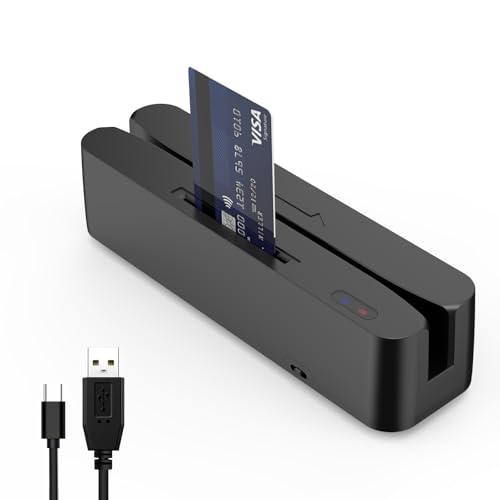
The Symcode device is a USB magnetic card reader intended for read-only magnetic stripe data across all three tracks. It supports SLE4442 chip cards and can be useful for basic membership or loyalty setups where card encoding isn’t required. The unit features two status lights and a toggle to switch NFC sensing on or off, which can help in environments where NFC services must be enabled or disabled quickly. This model is designed for straightforward integration with cashier systems or registration kiosks that need reliable data capture without complex encoding functions.
Key considerations include: the read-only nature for magnetic stripes, compatibility with common card formats, and the need for APDU commands if deep development with chip cards is pursued. The presence of NFC sensing mode adds flexibility for mixed environments, though users should confirm support for their specific card types and software integration requirements. For point-of-sale or membership desks, this model can provide a simple and dependable swipe experience.
Ossiygar Multi-Function Card Reader

The Ossiygar device emphasizes both reading and writing capabilities for magnetic stripes and memory/chip cards, with the potential to support PSAM interfaces. The package often includes SDKs and manuals, making it suitable for developers and system integrators implementing kiosk-style or membership-control environments. It’s intended for broader use cases like loyalty programs, check-in/check-out systems, and card-based access scenarios in cashier or kiosk installations.
Considerations involve evaluating the completeness of the SDK, the quality of software utilities provided, and how well the reader integrates with existing hardware and software stacks. Since it targets both read-only and write-enabled workflows, planners should map out security, track data formats, and firmware support to ensure compliant and reliable operation in U.S. payment and access ecosystems.
Deftun Card Reader Writer USB Swipe Encoder

The Deftun MSR605X reads and writes all three tracks on magnetic cards and can perform operations such as copy, erase, and edit. Powered through USB, this device targets professional environments where card data needs to be duplicated or updated on-site. It’s positioned as a robust encoder/reader for POS terminals, membership systems, or batch card preparation workflows, appealing to users requiring more than mere data capture.
Important factors include compatibility with ISO formats, safety and reliability of write operations, and the availability of developer tools for advanced use cases. In business contexts, validating the unit’s firmware updates and customer support can prevent integration delays, while ensuring that encoding tasks align with local regulatory constraints on card data handling.
Deftun Bluetooth MSR-X6 Card Reader

This Bluetooth-enabled MSR-X6 model focuses on wireless swipe encoding with a compact form factor. It supports standard magnetic stripe reading and is designed to pair with mobile devices and POS systems over Bluetooth. The USB power option adds flexibility for various power configurations, which makes it suitable for mobile checkout workflows, pop-up shops, or field service contexts where a traditional wired connection is impractical.
Considerations include Bluetooth range, pairing reliability, and the experience of using the device with a chosen mobile or desktop application. Security and compatibility with card data formats should be verified, especially for deployments needing strict PCI or local regulatory compliance in card handling and storage practices.
MSR90 USB Swipe Magnetic Card Reader
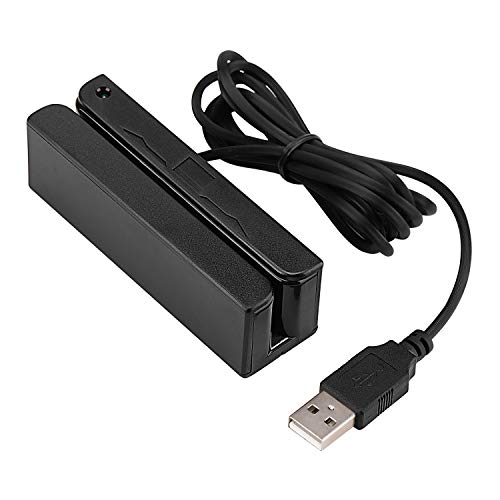
The MSR90 from Deftun is a USB-based reader that emulates a keyboard interface, enabling plug-and-play operation without additional drivers. It reads up to three tracks and supports common data formats such as ISO7811 and AAMVA, making it adaptable for a wide range of cards used in banking, DMV, and access systems. The LED indicator signals connection status and swipe activity, helping operators monitor card transactions in busy environments.
Key considerations include ensuring software compatibility with the keyboard-emulation mode, confirming track data formats for specific card types, and evaluating how the unit behaves in high-traffic scenarios. The device is straightforward to deploy where quick, driver-free integration is valued, such as temporary point-of-sale setups or kiosk checkouts.
Cryptnox Contactless Smart Card Reader

The Cryptnox NFC reader/writer supports ISO 14443 and Mifare standards and is compatible with Cryptnox card products, including Fido2 and Crypto cards. It provides USB-C and USB-A connectivity, enabling secure authentication for e-payments, e-commerce, and access control. With high-speed data transmission and robust hardware protections, this device is positioned for secure, rapid NFC transactions across multiple platforms.
Key considerations include evaluating security features such as firmware encryption, short-circuit protection, and over-voltage protection. For enterprises deploying contactless access solutions, ensuring compatibility with existing card portfolios and software ecosystems is essential. The device can be a strong choice for secure authentication and contactless payment workflows in corporate or campus environments.
3 Track Bluetooth X6BT VIP Card Reader Writer

The X6BT VIP model combines Bluetooth connectivity with versatile magnetic stripe card reading and writing capabilities. It supports multiple operating systems, including iOS, Android, Windows, MacOS, and Linux, making it suitable for cross-platform deployments. Functions include read, write, copy, erase, and file-based operations, enabling both field use and batch processing via mobile devices.
Buyers should assess Bluetooth performance, battery life if applicable, and the compatibility of the associated mobile app. For mobile sales, loyalty programs, or remote check-in stations, this model offers a flexible solution for on-the-go card data handling and encoding tasks.
Buying Guide: Key Considerations For Selecting a Wireless Card Reader Writer
- Connection type and mobility: Choose USB for stationary setups or Bluetooth for mobile use. USB-C offers future-proofing and faster charging in newer devices.
- Data capabilities: Decide between read-only magnetic stripes, full MSR encoding, or NFC/contactless writing. Consider ISO formats and support for SLE4442, Mifare, and other card standards relevant to your operations.
- Security and compliance: Look for firmware encryption, holiday-time protection, and anti-tamper features. Ensure compatibility with PCI or local data-handling regulations in your industry.
- Software and integration: Verify availability of SDKs, drivers, and sample code. Assess how easily the device stacks into your existing POS, kiosk, or access-control software.
- Power and portability: Battery-powered options offer true mobility, while USB-powered devices are simpler to deploy in fixed locations.
- Durability and support: Consider build quality, vendor support, firmware updates, and warranty terms when choosing between models with similar specs.
- Future-proofing: If you expect expanding to NFC or chip-card usage, prioritize devices with flexible interfaces and upgrade paths.