Outdoor wireless bridges and range extenders provide a flexible way to connect distant buildings, barns, shops, or surveillance cameras without running long Ethernet cables. This guide showcases five top options, explaining how they perform, where they fit best, and what to consider before buying. Each entry highlights key specs, practical uses, and how they integrate with Starlink or existing networks.
| Product | Brand | Key Use |
|---|---|---|
| Adalov CPE660 Wireless Bridge | AdaLov | Long-range PtP/PtMP, Starlink extension |
| UeeVii CPE450 5.8G Bridge | UeeVii | Outdoor long-range extension, barn or shop |
| TP-Link Omada PtP Outdoor Bridge Kit | TP-Link | Managed cloud-based control, easy deployment |
| UeeVii Dual-Band Bridge Kit | UeeVii | All-in-one solution, plug-and-play |
| AdaLov CPE469 Dual-Band Bridge | AdaLov | Long-range dual-band, high-throughput |
Choosing the right wireless bridge range extender involves balancing range, speed, durability, and ease of use. The products below cover a range of budgets and layouts, from simple plug-and-play outdoor solutions to cloud-managed systems suitable for multi-building setups. Each section includes a concise overview and practical guidance to help you select a model that matches your site and network goals.
Adalov CPE660 Wireless Bridge For Long Range Extensions

Product overview: The Adalov CPE660 is designed as a versatile outdoor wireless bridge for PtP and PtMP configurations. It supports CPE, client bridge, PTP, and PTMP modes, making it suitable for linking distant sites and sharing a single internet connection. The device emphasizes long-range applications such as surveillance camera networks, Starlink extensions, and building-to-building links. Its 5.8 GHz operation delivers up to 300 Mbps data speeds, which balances range with adequate bandwidth for common outdoor deployments. Two 100 Mbps Ethernet ports enable straightforward wired integration with cameras, access points, or network hubs.
Key considerations: Look for clear line-of-sight between endpoints to maximize performance. The 14 dBi antenna helps with longer reach, while dual Ethernet ports offer flexible device attachment. Practical deployment tips include positioning at elevated, unobstructed locations and ensuring proper weatherproofing where hardware is mounted outdoors. If your goal is to connect multiple outbuildings or extend Starlink service to a distant site, this model provides a robust balance of range and ease of use.
UeeVii CPE450 5.8G Point-To-Point Outdoor Bridge
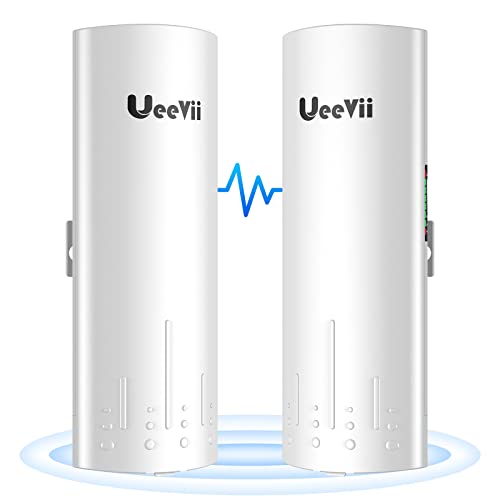
This outdoor bridge offers a straightforward point-to-point setup with a 5.8 GHz band for long-range links. It ships with a 14 dBi MIMO antenna and is designed to cover extended distances between barns, shops, or surveillance points. The device is PoE-powered, simplifying installation in remote locations where power is available. The model emphasizes pre-configuration and ease of use, enabling quick deployment for users who want reliable Wi-Fi extension without complex networking steps.
Key considerations: The pre-configured factory setup supports plug-and-play deployment, but wireless performance will still hinge on line-of-sight and interference in the 5 GHz band. For Starlink integration or multi-site surveillance, pair this unit with a central master bridge and ensure adequate clearance around the antenna to maximize throughput and minimize echoes or signal degradation. Warranty and support are highlighted as part of the brand commitment, adding peace of mind for outdoor installations.
TP-Link Omada Outdoor Point-to-Point Bridge Kit
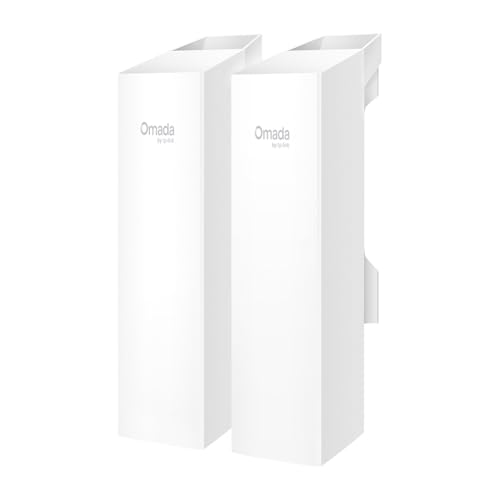
This kit is part of the Omada cloud-managed系列, designed for consistent control across CPEs, switches, and access points. The 5 GHz link supports up to 867 Mbps, with a focus on seamless cloud management and reliable remote configuration. The kit is preconfigured for easy setup and is designed to scale across campuses or multiple building connections. The IP65-rated outdoor enclosure provides weather resistance suitable for varied climates, which is essential for outdoor deployments year-round.
Key considerations: If you already use Omada in your network, this kit offers cohesive administration and monitoring across devices. It’s ideal for sites needing centralized management, uniform firmware updates, and consistent performance across multiple links. The 867 Mbps figure indicates strong throughput for HD video streams and surveillance feeds, while cloud access makes long-term maintenance simpler for IT teams on demand.
UeeVii Dual-Band Wireless Bridge Kit

This kit combines dual-band wireless bridge technology with a WR3000K WiFi 6 router in a single package, delivering a consolidated solution for expanding networks to barns, shops, or remote areas. The setup is described as plug-and-play, reducing complexity for users who want fast deployment without extensive configuration. The kit supports point-to-point and multipoint configurations, enabling connections to multiple devices or locations from a central hub.
Key considerations: Dual-band operation provides flexibility to optimize 2.4 GHz for coverage and 5 GHz for high-speed links. The integrated router helps simplify initial network setup, but for larger sites, consider managed switching or additional APs to optimize coverage and capacity. Outdoor durability and IP65 rating help with weather resilience, which is important for continuous operation in varying environments.
AdaLov CPE469 Dual-Band Outdoor Bridge

The CPE469 is a dual-band outdoor bridge designed for long-range, high-throughput wireless extension. It supports PtP and PtMP connections and includes a 15 dBi high-gain antenna for enhanced reach, with potential coverage up to several kilometers in clear line-of-sight. The dual-band operation (2.4 GHz and 5.8 GHz) helps balance compatibility and performance, making it suitable for Starlink network expansion, surveillance, and multi-building links. The product emphasizes robust performance for HD video, CCTV, and IP camera networks.
Key considerations: For critical surveillance or enterprise-grade deployments, dual-band capability provides resilience against interference and allows traffic separation. Ensure proper mounting and weatherproofing, and plan for line-of-sight across gaps between buildings. If you’re expanding Starlink access or linking separate sites, this model offers strong range and solid throughput to support multiple devices and cameras simultaneously.
Buying Guide: Key Purchase Considerations
- Range vs. speed: Higher dBi antennas and 5 GHz bands improve range and throughput, but may require clear line-of-sight and careful placement to avoid obstacles.
- Environment and weatherproofing: Look for IP-rated enclosures and rugged housings for outdoor use. Consider placement height and mounting hardware to withstand wind and rain.
- Power delivery: PoE support simplifies outdoor installations by delivering power and data over a single Ethernet cable. Verify voltage and injector compatibility with your setup.
- Network topology: PtP (direct link) is ideal for connecting two distant buildings, while PtMP (one master to multiple clients) suits campus-like layouts. If you use Starlink, ensure the bridge performance aligns with your satellite gateway’s line-of-sight.
- Management and monitoring: Cloud-based or centralized management (as with Omada) helps administer multiple links, monitor uptime, and push firmware updates across sites.
- Compatibility and interference: Dual-band devices reduce congestion by offering separate channels for control and data traffic. Consider 2.4 GHz only devices if you’re working in a crowded 5 GHz environment.
- Ease of installation: Plug-and-play options with pre-configuration can speed up setup, but be prepared to adjust placements for optimal signal strength and reliability.
- Security: Ensure secure access control and encryption for wireless links, especially when links cross public or shared spaces.
Overall, the best wireless bridge range extender depends on your site layout, network goals, and how much you value centralized management versus a simple, standalone deployment. For multi-building campuses or farms with several outposts, a cloud-managed option can simplify ongoing maintenance. For straightforward two-point links, a rugged outdoor bridge with proven range and robust antennas may be preferable.