Wind up, solar, and hand-crank shortwave radios deliver essential information during power outages and severe weather. This guide highlights five reliable models that blend AM/FM, shortwave, NOAA weather alerts, and practical charging options. Each entry covers key features, power options, and performance to help you choose a durable, easy-to-use device for home, camping, or disaster preparedness.
| Product | Brand | Link |
|---|---|---|
| Kaito KA500 | Kaito | View on Amazon |
| Mesqool NOAA Weather Radio | Mesqool | View on Amazon |
| Eoxsmile Emergency Radio 12000mAh | Eoxsmile | View on Amazon |
| Kaito Voyager Max KA900 | Kaito | View on Amazon |
| DreamSky AM FM Radio Portable | DreamSky | View on Amazon |
Note: This introduction provides general guidance. Specific models feature varied power options, alert capabilities, and storage capacity. Always verify current specifications and NOAA compatibility before purchasing.
Kaito KA500 5-Way Powered Emergency Radio

The KA500 offers six power modes: hand crank, solar, AA battery compartment (batteries not included), 5V USB, 5V AC/DC input, and an internal NiMH rechargeable pack. It covers AM, FM, two-band shortwave, plus seven pre-programmed NOAA weather channels with the Public Emergency Alert System (PEAS). It doubles as a mobile charger with a USB output for smartphones and other devices, and its 5-LED lamp, built-in flashlight, and red SOS beacon enhance readiness. The device is designed for versatile use during emergencies and daily recreation alike.
Mesqool NOAA Weather Radio AM/FM/Shortwave
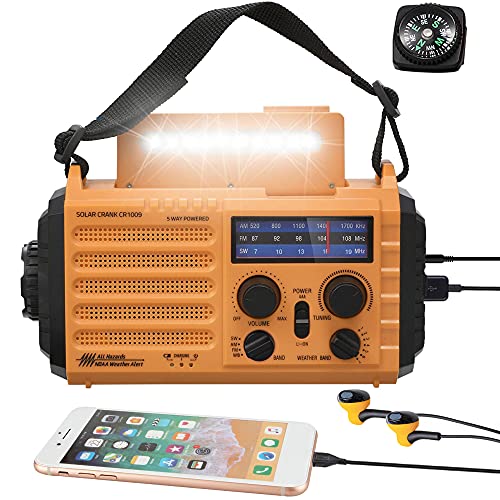
The Mesqool radio is NOAA-certified and provides 7 pre-set weather channels with WB scanning for local alerts. It supports AM/FM/Shortwave bands with a straightforward analog dial for quick tuning. A 5000mAh Li-ion battery powers the unit, enabling up to 13 hours of listening at moderate volume and charging multiple devices via USB-C or solar, hand crank, or 3 AAA batteries. This model emphasizes reliable weather alerts and uncomplicated operation in emergencies and daily life.
Eoxsmile Emergency Radio 12000mAh

This model features a large 12000mAh battery and a 6-way power setup, including solar, hand crank, USB-C, wall power, and a backup 3xAAA battery option. It can auto-scan 7 NOAA weather stations and include an alert system with a loud siren and red alert light. In addition to weather alerts, it supports AM/FM/Shortwave reception and includes a USB port for device charging, making it well-suited for home use during outages or outdoor excursions where power is scarce.
Kaito Emergency Radio Voyager Max KA900

The KA900 is a feature-rich, five-way powered radio with dual stereo speakers and a built-in MP3 player and recorder. It covers AM, FM, Shortwave, and seven NOAA weather channels with PEAS. The unit runs on a 2000 mAh built-in battery and can also be charged via hand crank, solar, USB, or wall adapter (not included). The design prioritizes robust audio output, providing versatility for everyday listening, emergencies, and entertainment in one compact device.
DreamSky AM FM Radio Portable

DreamSky emphasizes a large, easy-to-use analog dial and strong reception for AM, FM, and Shortwave, with a long-range transistor antenna for clear signals. It is designed for home and outdoor use with a straightforward interface and a digital time display. The radio targets seniors and gift-givers seeking a simple, reliable device for entertainment and emergency listening, with a focus on endurance and user-friendly operation.
Buying Guide: Key Purchase Considerations
- Power options: Look for models offering multiple recharging methods such as hand crank, solar, USB-C, wall adapters, and battery backups. A broad range reduces the risk of total power loss during extended outages.
- Band coverage: Prioritize devices with AM, FM, SW (shortwave), and WB (weather) bands to ensure access to a broad spectrum of information, including international broadcasts and emergency updates.
- Battery life and capacity: Higher mAh ratings extend operation time. Consider models with rechargeable Li-ion packs or replaceable batteries for flexibility during long emergencies.
- Audio quality and features: Dual speakers, digital or analog tuners, and MP3 playback can improve usability. Some models include flashlights, reading lamps, or SOS beacons for additional utility.
- Portability and build: For outdoor use, assess weight, size, and rugged design. Look for weather-sealed housings or shock-resistant casings for harsh environments.
- Ease of use: Favor simple, intuitive interfaces with clear dials or minimal menus. If you want a device for older family members, prioritize large controls and straightforward operation.
- Additional features: USB charging, Bluetooth connectivity, SD card support, or MP3 recording can add value, especially for hobbyists or those needing offline media playback.
<liWeather alert capabilities: NOAA compatibility and PEAS integration are essential for real-time hazard warnings. Verify the number of pre-programmed channels and the ability to receive alerts even when the radio is in low-power or sleep mode.
When evaluating wind-up and solar radios, balance the need for reliable weather alerts with practical power options and user-friendly design. A radio that combines robust alert systems, durable construction, and flexible charging will serve well in emergencies and everyday listening alike.