Access real-time insight into how electricity flows through your home with the best whole house energy monitors. This guide highlights five top options that work with Home Assistant, support multiple circuits, and help you optimize energy use, save on bills, and integrate solar net metering. Each product includes clamp-on sensors, cloud or local dashboards, and compatibility notes to fit various panel configurations and installation skills.
The following table provides a quick snapshot of the chosen products and their standout strengths. It helps compare sensor counts, monitoring focus, and integration compatibility at a glance.
| Product | Main Benefit | |
|---|---|---|
| Fusion Energy Monitor (16 sensors) | Extensive single-panel monitoring with Home Assistant compatibility | 16 x 50A sensors, real-time data, solar/net metering support |
| Eyedro Home Energy Monitor | Clear consumption and production visibility with cloud access | Two 200A sensors, MyEyedro cloud, solar/net metering support |
| Emporia Vue Bundle (16 sensors + 4 plugs) | Comprehensive monitoring plus remote control of outlets | 16 sensors, 4 smart plugs, Emporia app for trends and automations |
| LyteSolar Smart Home Monitor (2×120A) | Dual-channel real-time tracking for major circuits | Two high-capacity channels, Tuya/Smart Life app, bi-directional tracking |
| Aeotec Home Energy Meter 8 | Z-Wave based energy management with multi-phase support | 2x200A clamps, two-phase support, Home Assistant ready |
Introduction content continues here with objective framing and a brief note on installation considerations, data privacy, and how to choose a monitor based on panel type, solar integration, and smart home ecosystem. The sections below provide in-depth looks at each product and how it can fit your home energy goals.
Fusion Energy Monitor With 16 Sensors

Fusion Energy’s Smart Home Energy Monitor uses 16 x 50A clamp-on sensors to deliver real-time power data across a home’s circuits. It supports single-phase up to 240VAC, split-phase 120/240VAC, and three-phase up to 415Y/240VAC (no Delta). It automatically matches branch lines to different phases with no limit on the number of monitored circuits. The device is designed for easy panel installation and offers solar/net metering monitoring. The accompanying app enables remote access and historical data review, and there is a one-year warranty for peace of mind.
Key features include broad sensor coverage for major appliances (air conditioning, furnace, water heater, washer, dryer, range, etc.), real-time power visibility anywhere, and compatibility with Home Assistant through open data interfaces. This monitor is well-suited for homes with large or complex electrical loads and solar setups requiring detailed circuit-level insight.
Eyedro Home Energy Monitor

The Eyedro system provides real-time electricity usage data and solar net metering support. It serves as a whole-home monitor or solar meter, offering 24/7 visibility into consumption and production. The MyEyedro cloud delivers dashboards, trends, and usage insights, with the option to visualize electricity costs and performance in dollars, watts, amps, and volts. It includes two 200A sensors and supports WiFi or wired Ethernet, along with compatibility for solar, grid, or net metering setups. The system is built to North American safety standards and operates with a standard 2.4 GHz WiFi network.
Consider Eyedro if you value a robust cloud-enabled dashboard, clear production tracking, and flexible network options. It is a solid choice for homeowners seeking straightforward real-time monitoring, solar awareness, and cloud-based reporting without extensive home automation integrations.
Emporia Vue Bundle With 16 Sensors And 4 Plugs

Emporia’s Vue Energy Monitor includes 16 sensors to track usage across the main panel and up to 16 circuits, providing second-by-second visibility into energy consumption. The bundle adds four Wi-Fi smart plugs that enable remote control and automation of plugged-in devices, making it easy to reduce standby power and optimize load distribution. The Emporia app (iOS and Android) offers usage tracking, trend visualization, and cloud-based automations. Data is stored securely in the cloud for anytime access, and the solution supports solar net metering through the same platform.
This option is ideal when you want detailed circuit-level insight plus convenient remote outlet control. It supports solar integration and provides a complete ecosystem for monitoring and automations in a single package, suitable for tech-friendly homeowners looking to optimize daily energy use and automate common devices.
LyteSolar Smart Home Monitor 2×120A
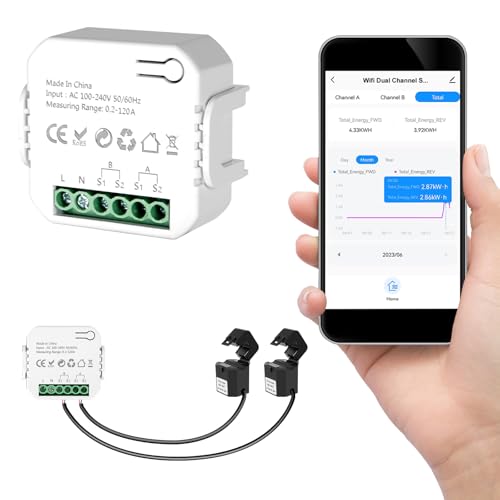
LyteSolar’s dual-channel energy monitor provides real-time tracking for two independent sensing channels, enabling focused monitoring of major circuits and high-power appliances. The device works with Tuya/Smart Life apps for real-time visibility of power, voltage, current, and power factor, plus historical data across hourly, daily, monthly, and yearly views. It supports bi-directional energy tracking, which is advantageous for homes with solar panels or backup power systems. The solution emphasizes compatibility with popular smart home ecosystems and local data access, giving homeowners flexibility in how data is accessed and used.
Choose LyteSolar when you need robust dual-channel monitoring with broad app compatibility and a focus on clear, actionable power flow data. Its bi-directional capability makes it suitable for homes actively integrating solar or other energy storage systems, while maintaining straightforward app-based control.
Aeotec Home Energy Meter 8
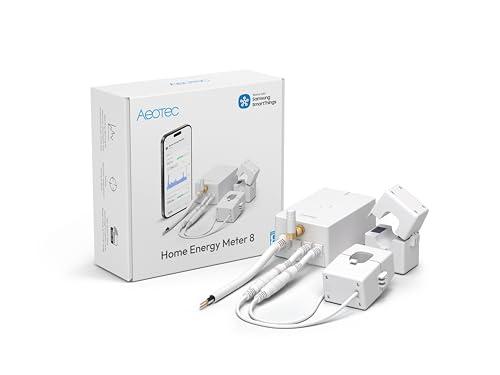
Aeotec’s Home Energy Meter 8 delivers Z-Wave long-range capability with up to two 200A clamp sensors and support for two-phase power. This device emphasizes data security and privacy, leveraging a Z-Wave gateway for data sharing and control. It’s designed to integrate with Home Assistant and other Z-Wave hubs, enabling energy monitoring and smart automation within a familiar smart home ecosystem. The product highlights high accuracy, robust data handling, and secure connectivity for reliable energy management across households with multi-phase configurations.
Aeotec is a strong pick when you want a Z-Wave-based energy meter with solid privacy and security assurances, especially for users already operating a Z-Wave-centered smart home. It’s suitable for homes needing reliable two-phase monitoring with a trusted gateway integration path.
Buying Guide: Key Purchase Considerations
- Sensor count and coverage: Larger homes or multi-circuit setups benefit from monitors with 16 or more sensors, providing granular visibility across many loads.
- Phase support: Ensure the monitor supports single-phase, split-phase, or three-phase configurations matching your electrical service. Some models lack Delta configurations, which matters for certain commercial or specialized panels.
- Real-time data vs. historical trends: Look for dashboards that offer seconds-to-minutes updates along with daily, weekly, and monthly histories to identify peak demands and saving opportunities.
- Solar and net metering: If you have solar, confirm the device supports net metering and bi-directional energy tracking to measure both consumption and production accurately.
- App ecosystem and local vs cloud: Some monitors rely on cloud dashboards, while others offer local data storage or direct integration with Home Assistant. Consider privacy, latency, and offline reliability.
- Integration with home automation: If you want automations, choose devices with strong app ecosystems or direct compatibility with Home Assistant, Smart Life, Tuya, or similar platforms.
- Installation complexity: Clamp-on sensors simplify installation in many panels; however, certain panels (busbar-only access) may require flexible sensors or professional installation.
- Future expandability: Some systems allow adding more sensors or units to monitor additional circuits or whole-home energy flows, which is useful for growing homes or expanding solar/storage setups.
- Data security and privacy: Review how data is stored and transmitted, especially for cloud-based systems. Local data options can reduce exposure and improve privacy.
In sum, the best choice depends on your panel type, number of circuits, solar integration, and preference for cloud versus local data access. Homeowners evaluating these options should balance sensor coverage, phase compatibility, and ecosystem alignment with their existing smart home setup. This approach yields the most reliable, actionable insights for reducing energy waste and optimizing solar usage in daily life.