Choosing the right video distribution amplifier (VDA) is essential for reliable CCTV system performance, especially when multiple displays or recorders must share a single camera feed. The following selections cover BNC-based coaxial setups, RCA-compatible options, and models that push high-definition signals over long runs. Each entry explains key features, compatibility, and typical use cases to help security professionals and enthusiasts compare options at a glance.
| Product | Type | Ports | Representative Use |
|---|---|---|---|
| AuviPal 4-Port (1 Input 4 Output) | BNC | 1 In / 4 Out | Small to medium CCTV installations |
| Love69Toys BNC Video Amplifier | BNC | 1 In / 1 Out (amplifier) | Long cable runs, improved signal integrity |
| TNP Splitter Box 1 In 8 Out | BNC | 1 In / 8 Out | Office or home surveillance with many displays |
| DTECH Powered 4 Way RCA Splitter | RCA | 1 In / 4 Out | Analog video and audio to multiple TVs/projectors |
| Audiovox RCA VH240R | RCA | 4 Output | Coaxial-based video distribution with signal boost |
Below is a quick overview of each option, followed by in-depth product sections and a practical buying guide to help you select the right amplifier for your CCTV or video distribution needs.
AuviPal 4-Port BNC Video Splitter
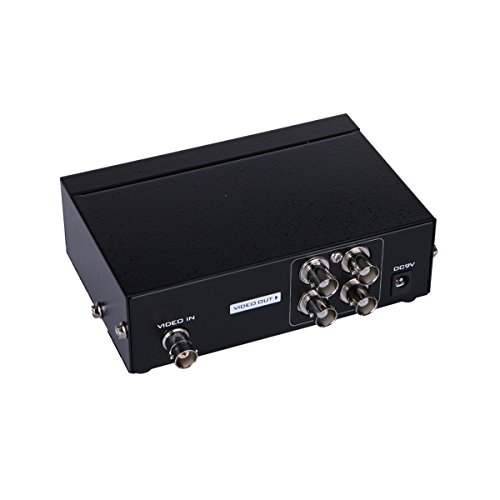
This 1-to-4 BNC distribution amplifier provides a straightforward way to feed four monitors or recorders from a single camera source. Its plug-and-play design minimizes setup time, making it ideal for quick deployments in small to mid-size CCTV configurations. The unit supports resolutions up to 1080p at 60Hz, ensuring a clear, stable signal across all outputs. The compact form factor helps with cabinet or rack mounting in tight spaces. If you’re expanding a single-camera setup to multiple displays, this model offers a balanced mix of affordability and performance.
Love69Toys BNC Video Amplifier Booster

Designed to combat signal loss over long runs, this BNC amplifier supports multiple popular CCTV standards (AHD, CVI, TVI, and analog). It delivers a lossless HD image at longer distances—up to 2600 feet in some configurations—while reducing noise and interference through improved signal-to-noise ratio. This makes it suitable for installations where cameras are spread across large facilities or campuses. The device emphasizes compatibility, long-range performance, and a straightforward installation process.
TNP Splitter Box 1 In 8 Out

The TNP 1×8 BNC distribution amplifier provides eight outputs from a single input, enabling a larger matrix of displays or recording devices. It emphasizes plug-and-play operation and robust construction with a metal enclosure for heat dissipation, which supports reliability in continuous-duty monitoring setups. For facilities with multiple rooms or zones, this model consolidates wiring while maintaining signal integrity across all outputs.
DTECH Powered 4 Way RCA Splitter

This 1×4 RCA splitter distributes an analog video signal along with audio to multiple TV monitors or projectors. It incorporates an internal amplifier to deliver a sharper image and clearer audio over long runs. The design focuses on durability with a metal housing and anti-skid feet to improve thermal performance and longevity in busy setups, such as classrooms, bars, or small retail environments with multiple displays.
Audiovox RCA VH240R 4-Way Amplifier

This 4-way RCA distribution amplifier offers modest amplification to help compensate for signal loss on coaxial runs and supports standard VHF/UHF signals. It is suitable for traditional coax-based CCTV networks where multiple displays must receive synchronized feeds. The unit’s straightforward setup and compact footprint make it a practical upgrade for older installations facing degraded signal quality over longer cable lengths.
Buying Guide: Key Purchase Considerations
When choosing a video distribution amplifier for CCTV and coaxial networks, consider signal type, distance, and compatibility. Here are essential factors to evaluate from multiple perspectives:
- Signal type and compatibility: Ensure the VDA supports your camera technology (BNC, AHD, CVI, TVI, or analog) and matches the outputs you plan to drive (HDMI is not typically included in pure BNC/RCAs systems).
- Distance and amplification: If your cameras are far from monitors or recorders, prioritize units with strong amplification and low noise figures to preserve detail and reduce ghosting.
- Output count: Determine how many displays or recorders you need to feed. Choose a model with enough outputs or consider stacking multiple VDAs if your layout requires.
- Power and installation: Check whether the device is powered and how power is supplied (external adapter vs. built-in). Plug-and-play designs save setup time and reduce complexity.
- Durability and heat management: For deployments in busy environments or outdoor enclosures, a metal housing and adequate ventilation help maintain performance and longevity.
- Resolution support: For systems requiring 1080p at 60Hz, verify the unit explicitly lists this capability to avoid bottlenecks on high-definition feeds.
- Noise immunity: Look for features that reduce signal snow and ghosting, especially in longer runs or environments with interference from other electronics.
- Ease of use: A clean, straightforward interface and clear labeling help technicians deploy and troubleshoot without specialized tools.
In practice, the best choice depends on your specific CCTV layout: the number of cameras, the distance to displays, whether you need audio distribution, and whether you require compatibility with newer AHD/CVI/TVI formats or traditional analog signals. For larger sites with many zones, a multi-output model combined with strategic cable management yields the most reliable results. For smaller setups, a compact 1-to-4 or 1-to-8 option often balances cost and performance effectively.