Discover top universal RFID reader-writers that support multiple frequencies (125 kHz, 13.56 MHz and more), offer cloning or reading capabilities, and work with a variety of cards and key fobs. This guide highlights five capable models from reputable brands, suitable for secure access systems, hobby projects, or professional duplications. Each product includes real-world features, ease of use, and potential compatibility considerations to help you choose wisely.
| Product | Brand | Key Features |
|---|---|---|
| Handheld 125khz RFID Reader Writer | FIYYIA | 125KHz, READ/WRITE, 2xAAA power, LEDs/buzzer |
| RFID Reader Writer Copier Multi-Frequency | Chiletoy | 125KHz–13.56MHz, wide card support, free software |
| XIXEI X7 NFC RFID Card Copier | XIXEI | Multi-frequency, supports AWID/HID, app connection |
| Edinruis 300CD RFID Reader Writer | Edinruis | Multi-frequency 125KHz–13.56MHz, Windows app |
| 125KHz Card Reader Writer | GEEOT | 125KHz only, compact handheld, simple operation |
Handheld 125khz RFID Reader Writer by FIYYIA

The FIYYIA handheld RFID reader writer operates at 125KHz with simple two-button control: READ and WRITE. It includes built-in LED indicators and a buzzer to confirm operations. The device is battery-powered, requiring two AAA batteries purchased separately. Ideal for small-scale cloning tasks, door access testing, or basic card duplication workflows in a portable form factor. Consider whether your target cards are within the supported 125KHz range and if battery life aligns with your typical usage.
RFID Reader Writer Copier with Free Software

This device functions as a versatile reader, writer, and clone tool across multiple frequencies, including 125KHz, 250KHz, 375KHz, 500KHz, and 13.56MHz (ISO14443A/B). It supports a wide range of card types and is paired with free software for cloning tasks, making it suitable for access control setups, parking passes, and key fob duplication. The clear screen and voice prompts guide users through scanning and programming. Evaluate whether the included software supports your operating system and whether multi-frequency compatibility matches your card inventory.
XIXEI X7 Multifrequency Card Copier

The XIXEI X7 supports multiple frequencies and reads a broad range of cards, including S50, S70, TK4100, EM4100, EM4200, HID ProxCard II, and AWID variants. It offers app-based operation and the potential to decode card data via connected devices. This makes it a flexible option for developers and security professionals who require mobile or desktop control. When selecting this model, ensure your card types and app compatibility align with your project requirements and data security policies.
Edinruis 300CD RFID Reader Writer
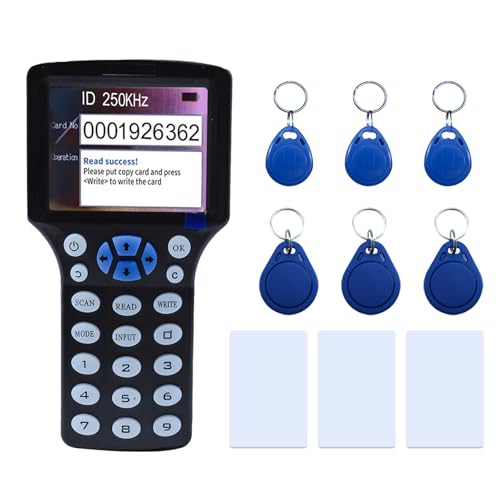
Edinruis offers a multi-frequency writer capable of handling cards across 125KHz to 13.56MHz, including HID, AWID, and similar formats. It emphasizes user guidance for selecting the correct frequency and discusses potential write failures by retrying. The device supports data transfer between devices and includes software for Windows. Prospective buyers should verify driver compatibility, the availability of app-based features, and the practicality of cloning in their local regulatory environment.
GEEOT 125KHz Card Reader Writer

The GEEOT handheld unit focuses on 125KHz compatibility with a straightforward interface featuring READ and WRITE modes. This model is well-suited for environments where 125KHz cards dominate and where a compact, ergonomic form factor is beneficial. Before purchasing, confirm the card frequencies you intend to clone and assess whether future expansion to higher frequencies is a priority for your use case.
Tqsbeyah Handheld 125KHz RFID Writer

The Tqsbeyah handheld writer kit includes a 125KHz device with five writable key fobs and five writable cards. It operates without a computer for on-site copying, provided you use the included starter labels to replicate data before writing to new cards. It supports common cards such as T5577, EM4205/4305, and EL8265/8268. Buyers should verify supported card types, test data integrity, and battery requirements for on-site use.
Buying Guide: Key Purchase Considerations
- Frequency range and card compatibility: Look for multi-frequency support (125KHz and 13.56MHz are common) and confirm compatibility with your target cards, including HID Prox, AWID, TK4100, EM4100/4200, and T5577 chips.
- Ease of use and software: Assess whether the device offers intuitive operation, clear prompts, and reliable software or mobile app support for decoding, programming, and data management.
- Portability vs. power: Portable handheld units are convenient on-site, while desktop or USB-connected models may offer broader data access and faster throughput.
- Data security and legality: Ensure cloning or copying capabilities comply with local laws and organizational policies. Use legitimate, authorized scenarios only.
- Reliability and build quality: Consider devices with robust components, clear indicators (LEDs, buzzer), and documented safety precautions to minimize write failures and misreads.
- Battery and power considerations: If choosing battery-powered models, verify battery type, life, and replacement costs to avoid interruptions in field use.
- Documentation and support: Favor products with ample documentation, firmware updates, and responsive seller support for troubleshooting and compatibility questions.
- Future-proofing: If your needs may expand to higher-frequency cards or more advanced security features, prioritize multi-frequency devices with active app ecosystems and upgrade options.
Note: This article presents product features for informational and comparison purposes. Users should ensure compliance with applicable laws and property access policies before using RFID readers, writers, or cloners in any setting.