Ultra High Contrast (UHC) filters are essential tools for stargazers and aspiring astrophotographers who navigate light-polluted environments. These filters selectively reduce artificial light while allowing the wavelengths emitted by nebulae to pass through, increasing image contrast and detail. This guide highlights five top 1.25-inch and 2-inch UHC options, helping you compare performance, durability, and ease of use for urban and rural observing alike.
Summary of chosen products
| Product | Brand | Size | Key Benefit |
|---|---|---|---|
| Aerbeis UHC 1.25″ Filter | Aerbeis | 1.25″ | Improved nebula contrast; lightweight aluminum frame |
| SVBONY 1.25″ UHC Filter | SVBONY | 1.25″ | Dark sky background, sharp, clear images |
| Astromania 1.25″ UHC Filter | Astromania | 1.25″ | Excellent nebula visibility; versatile for small telescopes |
| SVBONY 2″ UHC Filter | SVBONY | 2″ | Ultra high contrast for deep-sky objects |
| FIBONAX 1.25″ UHC Filter | FIBONAX | 1.25″ | Dual threading; enhances nebula and lunar details |
Aerbeis UHC 1.25″ Filter
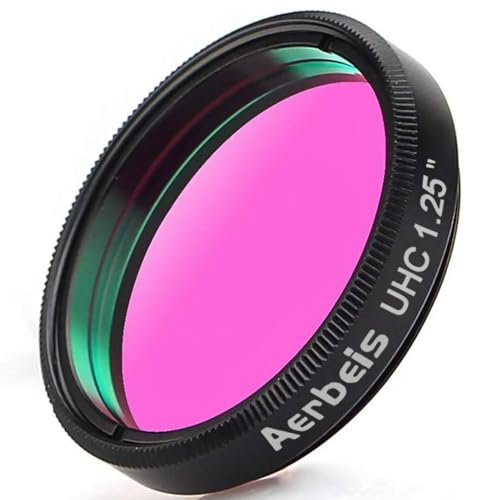
The Aerbeis UHC Telescope Filter is designed to selectively reduce light pollution by filtering out artificial wavelengths while preserving the emission lines typical of nebulae. It features a 1.25-inch standard thread (M28.5×0.6mm) compatible with most 1.25-inch eyepieces and astro-imaging devices. The aluminum alloy frame provides durability with a lightweight profile, and the high-transparency optical glass supports clear, high-contrast views. Packaging materials emphasize environmental responsibility.
SVBONY 1.25″ UHC Filter
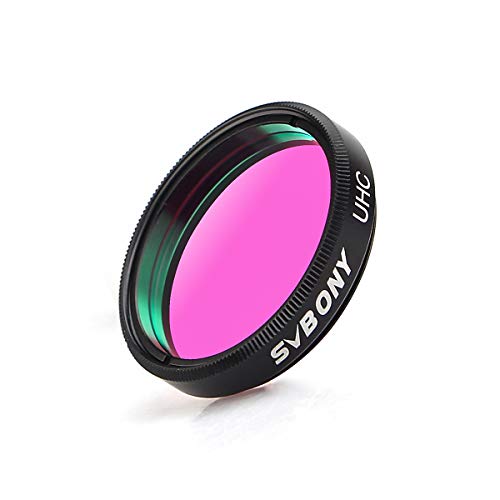
SVBONY’s 1.25″ UHC filter sharpens nebular features by suppressing light pollution and enhancing contrast. The filter darkens the sky background, making emission nebulae more prominent, and remains suitable for both visual observation and astrophotography. Its popularity stems from solid optical performance, reliable coatings, and broad compatibility with a wide range of telescopes and cameras.
Astromania 1.25″ UHC Filter

Astromania’s 1.25″ UHC filter is designed to boost nebular contrast while remaining compatible with smaller telescopes. It helps objects such as Orion, Lagoon, and Swan nebulae become more visible, even in partially light-polluted skies. Suitable for both urban observatories and dark-sky sites, it blocks the light from mercury and sodium-vapour lamps to reveal fainter details.
SVBONY 2″ UHC Filter
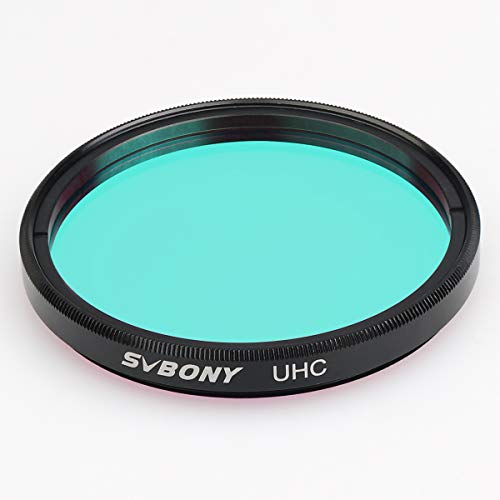
This 2″ UHC filter is designed to improve image contrast for deep-sky objects. It passes light around the 400 nm line while blocking H-alpha and other emission lines that contribute to light pollution, resulting in sharper, more defined views of nebulas. The aluminum frame and optical glass construction ensure durability and clear images, making it a popular choice for both visual observing and astrophotography at larger aperture setups.
FIBONAX 1.25″ UHC Filter

FIBONAX’s 1.25″ UHC filter blocks sodium and mercury streetlight glare to enhance emission nebulae and lunar details. It features dual M28.5×0.6 threaded compatibility for stacking with other filters, enabling customized setups for astrophotography or visual observing. The multi-coated optical glass and lightweight aluminum frame prioritize light transmission and durability.
Buying Guide: Key Purchase Considerations
- Exposure to light pollution: UHC filters are most beneficial in urban and suburban skies. In dark skies, you may experience only marginal gains, but some users still report improved nebula visibility.
- Filter size and compatibility: 1.25″ and 2″ sizes cover most beginner and intermediate telescopes. Check your focuser and camera threading (M28.5×0.6mm for many 1.25″ filters) before buying.
- Coatings and transmission: Multicoated filters reduce reflections and maximize light transmission, contributing to clearer, higher-contrast images.
- Versatility for visual and astrophoto use: Some filters are optimized for both viewing and imaging; consider whether you need stacking options or clip-on compatibility.
- Durability and materials: Aluminum frames and robust optical glass ensure long-term use in field conditions. Lightweight designs reduce wear on focusers.
- Environmental considerations: Packaging and materials vary; opting for eco-friendly packaging aligns with sustainable observing practices.