Smart timing can simplify daily routines and reduce energy use by automating when lights and small appliances turn on or off. The following timers span mechanical, digital, and dual-outlet designs to fit different outlets and power needs. From simple daily cycles to flexible weekly programs, these devices help create a lived-in look when you’re away and save energy when you’re home.
| Product | Brand | Type | Key Feature | Link |
|---|---|---|---|---|
| BN-LINK BND-60/U47 | BN-LINK | Mechanical Outlet Timer | Up to 24 on/off settings per day | Link above |
| GE 15119 | GE | Mechanical 24-Hour Timer | Daily 24-hour cycle | Link above |
| Intermatic TN111K | Intermatic | Mechanical 2-Prong Timer | Two customizable On/Off settings per day | Link above |
| G-Homa 2-Pack | G-Homa | Digital/Mechanical Timer | 30-minute intervals, 24-hour cycle | Link above |
| Techbee 1-Pack | Techbee | Digital Countdown/On-Off Timer | Countdown delay and cycle options | Link above |
BN-LINK Indoor Mini 24-Hour Mechanical Timer, 2-Pack

BN-LINK BND-60/U47 is a compact mechanical timer with a straightforward pin system. Pins DOWN indicate ON, while pins UP stop power. It allows up to 24 on/off settings per day, repeating daily once programmed. This makes it suitable for lamps, small appliances, and seasonal decor without requiring batteries or software. The simple interface supports quick setup and predictable automation for everyday use.
BN-LINK Indoor Digital Timer Outlet, Dual Outlet 7 Day Programmable

This BN-LINK dual-outlet digital timer offers eight on/off programs and simultaneous control of both outlets. With options down to one minute intervals, you can tailor schedules for lamps and fans. A built-in backup battery preserves settings during outages, and Daylight Saving mode simplifies seasonal adjustments. Random Vacation mode adds a layer of home security by simulating occupancy when you’re away.
GE 24-Hour Indoor Plug-in Mechanical Timer
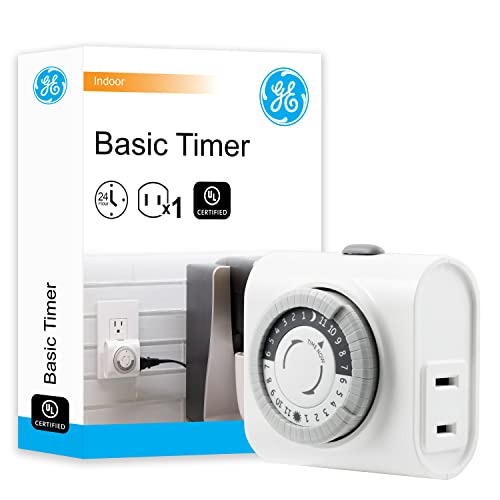
GE’s 24-hour plug-in timer provides a daily cycle suitable for lights and small decor. The mechanical push-pin mechanism is simple to operate, and a single polarized outlet makes it a straightforward choice for older plug-in devices. It’s ideal for individuals seeking a no-frills, reliable timer with a familiar brand footprint.
BN-LINK Indoor Digital Timer Outlet, 2 Pack
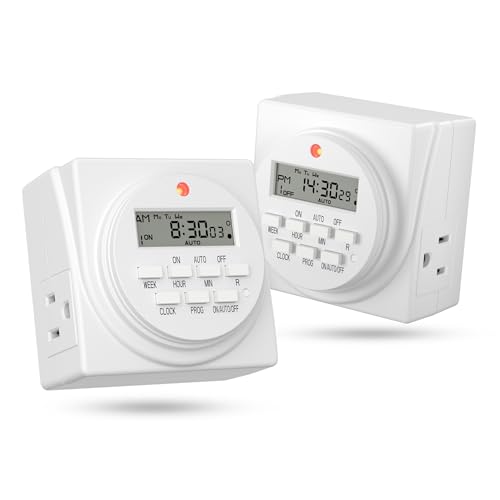
This two-pack digital timer offers eight on/off programs per timer with one-minute granularity. It supports Daylight Saving time and includes a backup battery to preserve settings during power interruptions. Random Vacation mode and easy setup help maintain the appearance of occupancy while away, with outlets controlled simultaneously for coordinated lighting.
G-Homa Timers For Electrical Outlets

G-Homa offers a 24-hour indoor timer with 30-minute interval precision and a 2-pack configuration. The design emphasizes ease of use: align the dial to the current time, set the pins for on/off, and use the override switch for manual control. It supports a broad range of devices, including lamps, fans, and small appliances, and is ETL listed for safety compliance.
Intermatic TN111K 15-Amp Indoor Timer

Intermatic TN111K provides a versatile 24-hour control with up to two On/Off settings per day and a single 2-prong design. The manual override allows immediate control without disrupting the programmed schedule, making it a reliable choice for lamps and seasonal lighting. It’s a compact, straightforward option with a long-standing brand reputation for reliability.
Techbee Digital Infinite Repeat Cycle Timer

Techbee’s digital timer combines a countdown delay with a daily on/off cycle and a short-cycle option, offering a versatile 24-hour timing solution. A large display aids readability, and an internal memory keeps settings through outages. It’s suited for homes needing more nuanced scheduling without multiple devices.
Buying Guide: Key Considerations For Choosing The Right Timer
- Timer type and interface: Mechanical timers are simple and durable, while digital timers offer more programming options and exact intervals. For beginners, a mechanical timer is often easiest to start with; for complex schedules, digital timers provide flexibility.
- Programming capacity: Consider how many on/off settings you need per day and whether you require multi-outlet control. Dual-outlet timers save space and synchronize lighting across two devices.
- Outlets and compatibility: Check the outlet type (2-prong vs 3-prong) and the rated amperage to ensure compatibility with your lamps, fans, or small appliances. For high-draw devices, choose models rated for 15A/1875W or higher if available.
- Memory and power backup: Timers with internal backup batteries preserve settings during outages. This is important if you rely on schedules during storms or outages.
- Security features: Modes like Random Vacation help simulate occupancy when you’re away, contributing to home security and the appearance of activity.
- Ease of use and maintenance: Look for clear displays, intuitive controls, and simple overrides. ETL-listed or UL-certified models add safety assurances for indoor use.
- Placement and aesthetics: Consider whether you need timer control for a single lamp, a group of lamps, or devices in different rooms. Compact designs minimize footprint on outlets and power strips.
Durability and reliability are important for a device that will live in a household environment. If you want a balance of scheduling power and ease, digital timers with multiple programs and a backup battery offer robust options. For simple, low-maintenance control, mechanical timers still perform well and require no setup beyond dialing in the correct time.