For immersive sound, a dedicated center channel is essential to anchor dialogue and anchor a true multi-channel setup. This article highlights five solid center-channel-focused options and related 5.1 systems that emphasize clear dialogue, precise imaging, and balanced frequency response. Each entry includes key features to help you compare performance and integration with existing or planned surround systems.
Overview Of Selected Products
| Product | Brand | Channels / Type | Notable Features | Notes |
|---|---|---|---|---|
| MB42X-C Advanced Center Channel Speaker | Micca | Center Channel, Passive | Balanced carbon fiber woofer, silk dome tweeter, ported enclosure | Pairs well with MB42X bookshelf speakers |
| MB42X-C G2 Center Channel Speaker | Micca | Center Channel, Passive | Two upgraded 4″ carbon fiber Woofers, 0.75″ silk dome tweeter | Balanced, compact center for compact setups |
| Saiyin 5.0 Channel Surround System | Saiyin | 5.0 Channel Passive (Center + 4 surrounds) | 52mm horn tweeter, vintage-inspired MDF cabinets | Expandable with an external amplifier/receiver |
| Onkyo HT-S3910 | Onkyo | 5.1 Channel Home Theater Receiver Package | 4K HDR, Bluetooth, DTS PlayBack | All-in-one package includes subwoofer and four surrounds |
| Acoustic Audio AA35CB Center Speaker | Acoustic Audio by Goldwood | Center, 3-Way | Dual 3″ woofers, 1″ soft dome tweeter | Compact bookshelf-style center for small spaces |
Below are five detailed product sections to help you compare how each option handles dialogue clarity, imaging, and overall integration with surround configurations.
Micca MB42X-C Advanced Center Channel Speaker
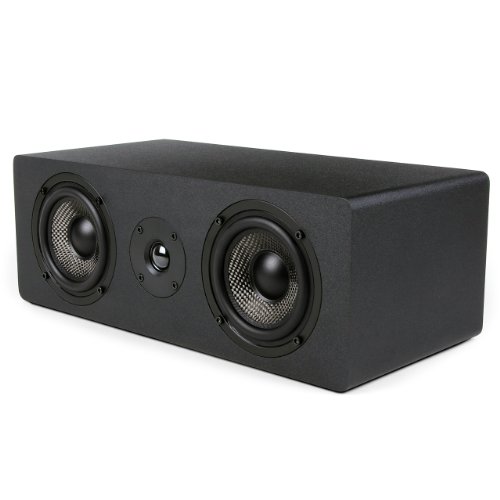
The Micca MB42X-C Advanced Center Channel Speaker is designed to anchor dialogue with a balanced, two-way configuration. It features a balanced woven carbon fiber woofer for enhanced transient bass and an elastic, high-performance silk dome tweeter for smooth treble and accurate imaging. The ported enclosure helps extend bass response while keeping distortion low, which supports clear center-channel performance in living room layouts and compact home theaters. This center channel is commonly paired with the MB42X bookshelf speakers to create a cohesive, budget-friendly stereo-to-surround bridge.
Key considerations: pairing with MB42X G2 or similar bookshelf models can yield a well-balanced system, but you’ll want to ensure the receiver’s crossover settings align with the MB42X-C’s capabilities to preserve dialogue clarity. In medium to larger rooms, consider placement symmetry and vibration isolation to maximize imaging stability and reduce boom in the center.
Micca MB42X-C G2 Center Channel Speaker

The MB42X-C G2 is an evolution of Micca’s center channel concept, built around two upgraded carbon fiber woofers and a 0.75-inch silk-dome tweeter. This design emphasizes articulate bass and crisp highs, contributing to a balanced center channel that supports both music and movie dialogue. The compact form factor offers flexible placement options, including under a TV or on a media console, without sacrificing stage width or vocal localization.
Key considerations: match this center with compatible MB42X bookshelf models for tonal consistency. If your room has reflective surfaces, consider using room treatments to control early reflections that can blur center imaging. Ensure your receiver’s channel level is calibrated so dialogue remains distinct relative to effects and music.
Saiyin 5.0 Channel Surround System

The Saiyin 5.0 Channel Surround System provides four surrounds and a dedicated center speaker for a true multi-driver surround experience. With four identical 25W passive speakers and a 75W center, the system offers a total peak of 160W. The horn tweeter design is intended to deliver dynamic high frequencies with wider dispersion, helping dialogue and effects feel more expansive without sacrificing center clarity. A stylish vintage-inspired MDF cabinet design adds a touch of aesthetics to living rooms.
Key considerations: since this is a passive, amplifier-driven system, you’ll need a compatible receiver or amplifier with sufficient power to drive all five channels. Proper wall or ceiling placement can maximize surround imaging, while a robust subwoofer and appropriate crossovers will help keep center dialogue clean and present without overpowering midrange textures.
Onkyo HT-S3910 Home Theater Package

The Onkyo HT-S3910 is a complete 5.1 channel system that includes a front/center speaker, four surround speakers, a subwoofer, and a receiver. It supports 4K/60p video and HDR, and includes Bluetooth for wireless audio from mobile devices. DTS PlayBack and Dolby Atmos compatibility provide a modern surround experience with clearly defined center-channel dialogue for film and TV. This package is a convenient option for users seeking a hassle-free setup with solid center-channel performance.
Key considerations: integrated receivers simplify setup but may limit customization compared to a separate, higher-end AVR. For best dialogue clarity, ensure the center channel level is properly calibrated and that the subwoofer’s crossover is set to maintain a clean midrange and avoid masking vocals during loud scenes.
Acoustic Audio AA35CB Center Speaker

The Acoustic Audio AA35CB is a bookshelf-style, 3-way center speaker designed to deliver full-range sound from a compact cabinet. With dual 3″ polypropylene woofers and a 1″ soft-dome tweeter, the speaker covers a broad frequency range (roughly 70Hz to 20 kHz) at a reasonable sensitivity. Its sealed cabinet helps minimize port noise and cabinet resonance, supporting clear center-channel dialogue in smaller to medium-sized rooms.
Key considerations: while the AA35CB offers strong center performance for its size, users with larger rooms may want to pair it with a subwoofer and a capable AVR to maintain coherent cross-channel integration. Proper placement—centered below or above the TV—will maximize imaging and vocal intelligibility.
Buying Guide: Center Channel Selection For Surround Clarity
When choosing a center channel for surround sound, consider these factors to optimize dialogue clarity, imaging, and overall integration with your system.
- Speaker type and design: Center channels come in 2-way, 3-way, and more complex configurations. A dedicated center with a well-tred crossover can preserve vocal clarity. For larger rooms, 3-way designs can offer better midrange control and dynamics.
- Tweeter and woofer materials: Silk dome tweeters tend to deliver smoother highs, while carbon fiber woofer cones offer stiff, responsive bass. Matching materials with your left/right front speakers helps achieve tonal balance across channels.
- Cabinet design and size: Sealed or ported enclosures affect bass extension and transient response. Ported designs can deliver more bass, but may require careful placement to avoid bass boom near walls.
- Power and amplification: Passive center channels rely on a compatible receiver or amplifier. Ensure your amp has enough current to drive all five channels without compression, especially at louder listening levels.
- Room layout and placement: Center channels should be centered with the TV and ear level when seated. Isolation from nearby surfaces reduces vibrations that can smear imaging.
- System integration: If you’re building a 5.1 system from a package (like Onkyo HT-S3910), ensure the receiver supports your preferred audio formats and speaker layout. If you’re pairing standalone center channels with bookshelf or tower fronts, calibrate crossovers and channel levels for a cohesive soundstage.
- Future upgrades: Consider whether you want to add more channels later (e.g., Atmos height speakers or additional surrounds). A flexible receiver or amplifier will simplify upgrades without reconfiguring your entire setup.
In summary, a dedicated center channel improves vocal intelligibility and helps anchor the soundstage. The five options above provide a range of approaches—from compact, budget-friendly centers to feature-rich 5.0 systems that can be paired with external amplifiers. For many home theaters, pairing a capable center channel with well-matched bookshelf or tower speakers and a quality subwoofer yields the clearest dialogue and immersive surround experience.