Finding the right surface mount prototyping boards can speed up project iterations and simplify circuit testing. This guide highlights five strong options, including double‑sided FR4 boards and SMT breadboards with dense pad layouts. Each product listing includes key features, a direct Amazon link, and a quick comparison to help you choose what fits your design needs and workflow.
| Product | Brand | Key Feature | Approximate Size |
|---|---|---|---|
| SP3UT SMTpads-3U-Thin | BusBoard | Double‑sided FR4 with unplated holes and 0.050″ SMT pads | 3.94 x 6.30 in |
| SBBSM4040-1 | Chip Quik | Large surface mount breadboard with 1600 SMT pads | 40 x 40 pads |
| SBBSM3060-1 | Chip Quik | Large surface mount breadboard with 1800 SMT pads | 60 x 30 pads |
| SBBSM2106-1 | Chip Quik | Medium SMT breadboard with 126 SMT pads | 126 pads |
| uxcell SSOP/SOP Adapter | uxcell | Fr4 adapter for SSOP to SOP/P DIPs, 16 pins | 0.6 x 0.83 in |
Note: The selections emphasize surface mount prototyping utilities—from dual‑sided, ground‑plane friendly boards to dense SMT pad layouts and adapters that bridge different package styles. The list balances compact, hobbyist kits with larger, multi‑ pad prototyping solutions suitable for development and testing tasks.
BusBoard SP3UT SMTpads-3U-Thin Prototyping Board
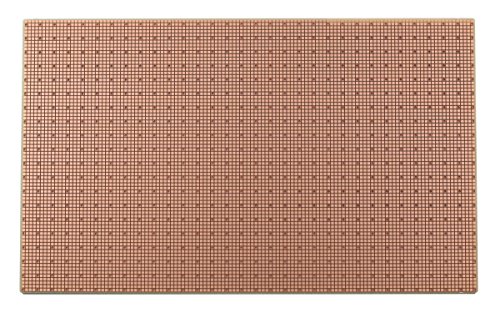
Features include a double‑sided FR4 glass‑epoxy construction with unplated holes and square SMT pads spaced at 0.050 inches. The board uses 1 oz/ft² copper with an anti‑tarnish coating, designed for easier soldering and reliable connectivity. It is lead‑free and RoHS compatible, supporting a wide range of surface mount components and quick layout testing scenarios. The layout is optimized for compact, dense prototyping with a ground plane focus to minimize EMI concerns.
SBBSM4040-1 Large Surface Mount Breadboard

This large SMT breadboard offers 1600 SMT pads for rapid layout experiments and high component density. It is designed to accommodate a wide array of surface mount components, allowing engineers to prototype complex circuits without hand‑routing extensive traces. The pad arrangement supports straightforward testing and debugging, while the robust build helps maintain alignment during repeated insertions and clean soldering. Users benefit from quick iterations when verifying SMT designs against breadboard‑style testing rigs.
SBBSM3060-1 Prototyping Breadboard

With 1800 SMT pads, this large surface mount breadboard supports expansive prototyping efforts. The grid is suitable for dense component placements, including microcontrollers, voltage regulators, and signal conditioning circuits. The layout aims to simplify testing by providing clear separation between rows while maintaining tight pitch compatibility with standard SMT footprints. The kit’s compatibility with various kits and headers makes it flexible for different project stacks.
uxcell SSOP/SOP Adapter PCB

This FR4 glass fiber adapter provides a bridge between SSOP or SOP packages and a prototyping environment, with pin pitch matching 2.54 mm where applicable. The kit is pre‑tinned and sized around 15.6 x 21 mm, with a thickness near 1.6 mm and 1 mm hole diameters. It supports smaller form factor ICs and helps convert between package types during quick experiments or breadboarding sessions. It is especially useful for testing surface mount devices that need hand‑soldered connections to a traditional prototyping setup.
SEN0006 Flexible PCB With SMT Pads

Although categorized broadly, this flexible PCB product emphasizes tight trace/space and a 20×20 mm square pad area, ensuring long surface mount pads suitable for prototyping. It supports prototyping workflows that require flexible substrates or reworkability. The board’s layout can accommodate rapid iterations, especially when testing new surface mount designs that may require quick reconfiguration. It provides a different substrate option for projects needing flexibility alongside SMT prototyping pads.
Buying Guide
Key considerations when selecting surface mount prototyping boards:
- Pad density and pitch: Higher pad counts enable more complex prototypes but may complicate hand soldering.
- Board material: FR4 is common and economical; consider glass epoxy or other substrates for thermal performance or flexibility requirements.
- Hole treatment: Unplated holes reduce manufacturing cost but require careful routing for grounding and mounting.
- Ground planes: A ground plane helps EMI suppression and signal integrity on SMT prototypes.
- Compatibility: Ensure the pad layout and pitch align with your components, headers, and test rigs.
- Size and portability: Smaller boards suit benchtop prototyping; larger boards suit dense validation setups.
- Adapters and accessories: Tools that bridge SMT to SIP or through‑hole formats can expand use cases.
- RoHS and lead‑free compliance: If material reuse and environmental concerns matter, verify certifications.
For project planning, consider starting with a mid‑range SMT breadboard that balances pad density, ease of soldering, and compatibility with common microcontrollers and regulators. If you anticipate frequent rework, boards with ground planes and robust solder‑mask coverage can improve reliability. When testing high‑density designs, larger SMT breadboards or modular prototyping kits offer flexibility to reconfigure connections quickly.