Choosing the right SPL meter for subwoofers helps bass enthusiasts dial in setups, protect equipment, and ensure a precise listening experience. The following selection focuses on meters that measure low-frequency sound pressure levels with reliability, fast response, and user-friendly displays. Use this guide to compare features, weights, and measurement ranges to fit home theaters, car audio, or studio subwoofers.
Summary of chosen products:
| Product | Brand | Range / Focus | Display / Readability | Special Notes |
|---|---|---|---|---|
| Basshead Garage 9-18v Bass Decibel/SPL Meter | Basshead Garage | 120–180 dB, 10–100 Hz | 1.3″ OLED | Designed for bass enthusiasts; fast response |
| SPL-Lab Mini Bass Meter | SPL-Lab | 20–120 Hz; 120–165 dB | Compact, clear readings | Instant readings; simple setup |
| Tadeto Digital Sound Level Meter | Tadeto | 30–130 dB | LCD display with backlight | A/C weighted and fast/slow modes |
| BINTA Decibel Meter | BINTA | 30–130 dB | Backlit LCD | A/C weighting; MAX/MIN and data hold |
| DURFICST Sound Level Meter | DURFICST | 30–130 dB | Color LCD (backlit) | A/C weighting; fast/slow; dB/SONE |
Basshead Garage 9-18v Bass SPL Meter

The Basshead Garage meter is tailored for bass-focused users, delivering measurements from 120 to 180 dB in the 10–100 Hz band. It features a 1.3″ OLED display for high-contrast real-time readings and an impressive response time of 800 M/s. This combination supports quick checks of subwoofer output during tuning and during dynamic bass passages. The device emphasizes low-frequency accuracy, enabling more precise subwoofer calibration in home theaters, car audio, and studio setups.
SPL-Lab Mini Bass Meter
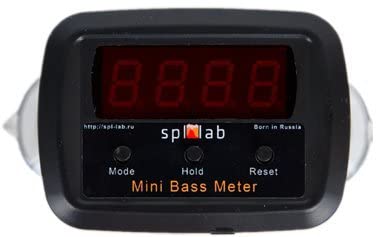
The SPL-Lab Mini Bass Meter is a compact option ideal for bass-focused measurements. It provides accurate voice and bass SPL readings and is designed for quick, user-friendly operation without complicated setup. Its measurement range covers the essential low-frequency window, making it a practical choice for monitoring subwoofer performance in small to mid-sized rooms or vehicles, delivering reliable data for tuning and testing.
Decibel Meter TOPTES TS-501B

The TOPTES TS-501B features a 2.25” backlit LCD for easy viewing in dim rooms. It includes A-weighting and C-weighting to cover different listening contexts and noise sources, with a measurement range of 30–130 dB. The Max/Min mode and data hold function make it suitable for long-term monitoring of subwoofer rooms, studios, or automotive setups where peak values and stability matter for safe listening levels.
Tadeto Digital Sound Level Meter
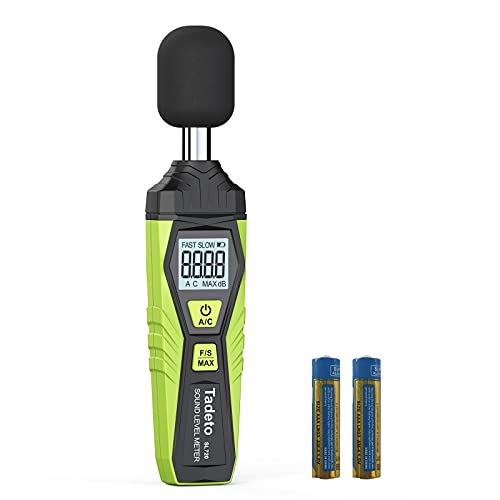
The Tadeto meter emphasizes accuracy with a 30–130 dB range and fast/slow response options. It supports A-weighted and C-weighted measurements to match human hearing and mechanical noise analysis, respectively. This makes Tadeto suitable for general room tuning and specialized subwoofer checks where low-frequency behavior is critical. The device provides straightforward readings ideal for quick checks during installation or on-the-fly adjustments.
BINTA Decibel Meter

BINTA offers a versatile SPL meter with a 30–130 dB range and backlit LCD. Its A/C weighting modes support both general ambient measurement and industrial noise analysis, which is helpful when your subwoofer room doubles as a multi-use space. Fast/Slow response modes and MAX/MIN capture provide additional data points for evaluating how your bass system behaves over time, especially during dynamic tracks or test tones.
DURFICST Sound Level Meter

DURFICST focuses on a 30–130 dB range with high-precision sensors and a color LCD that improves readability in various lighting. It supports A/C weighting to accommodate both environmental and mechanical noise contexts, plus fast/slow response modes and a dB/SONE unit option for different loudness analyses. This makes it a practical choice for studios or home theaters where bass energy needs careful tracking alongside overall room acoustics.
Buying Guide: Key Considerations For Subwoofer Use
When selecting an SPL meter for subwoofers, consider these factors to balance accuracy, practicality, and budget:
- Frequency Range: Subwoofers produce low frequencies; meters that cover at least down to 20 Hz or specifically target sub-bass ranges offer more relevant readings than generic meters.
- Weighting (A vs C vs Z): A-weighting approximates human hearing at low levels, while C-weighting captures peak, low-frequency content often associated with bass systems. For bass tuning, C-weighting or unweighted readings can be informative.
- Display and Readability: A clear, backlit or high-contrast display helps during late-night tuning sessions or in dim rooms. Larger displays reduce eye strain when monitoring long test sequences.
- Response Time: Fast response helps track quick changes in bass dynamics. Look for meters with fast or selectable fast/slow modes to capture transient bass peaks or sustained energy.
- Memory and Data Features: Some meters offer MAX/MIN, data hold, and USB or PC connectivity for logging. This is valuable for long-term room tuning or comparing test results over time.
- Portability and Power: Battery-powered meters are convenient for car audio and portable setups. Consider whether the device supports rechargeable power or uses replaceable batteries for field use.
- Ease of Use: For most users, a simple interface with straightforward readings and quick setup reduces the learning curve and speeds up tuning sessions.
Across the options listed, pay attention to whether your primary use is informal room tuning, car audio bass calibration, or studio/subwoofer measurement. Durability, ease of data export, and the ability to read results in real time are common differentiators.