Turning an aging stereo collection into a vibrant, room-filling listening experience is easier than you think. The right bookshelf or powered speakers can bridge the gap between vintage rigs and modern sources, delivering clearer highs, deeper bass, and more versatile connectivity. Below are five Amazon-listed options that pair well with traditional stereo systems, offer solid compatibility, and help you enjoy clearer vocals and fuller sound without a full system overhaul.
| Product | Brand | Key Benefit |
|---|---|---|
| Polk Audio T15 | Polk Audio | Deep bass response; wall-mount capable |
| Elimavi 30W X 2 | Elimavi | Full frequency stereo; wall mounting |
| Elimavi Passive Bookshelf | Elimavi | Compact, wood grain; needs amplifier |
| Saiyin Passive Bookshelf | Saiyin | Crystal-clear vocals; requires receiver |
| PreSonus Eris Accent | PreSonus | Studio-quality with multiple inputs |
Buying guidance: When matching old stereo gear, you’ll typically choose between powered (active) speakers that can accept line-level sources directly, or passive speakers that require an external amplifier or receiver. Consider room size, desired power, input options, and whether you want to maintain a traditional hi-fi feel or add modern digital inputs. This list includes a mix of powered and passive options, so you can pick based on your current hardware and listening goals.
Polk Audio T15: Deep Bass Bookshelf Speakers

Polk Audio T15 bookshelf speakers are designed to deliver clear, balanced sound with an emphasis on bass response, making them a good pairing for older stereo setups that might lack low-end punch. The 0.75-inch tweeter and 5.25-inch Dynamic Balance driver help reproduce vocals and instruments with natural detail, while their wall-mount capability allows flexible placement in living rooms or dedicated listening spaces. For those starting to build a home theater or two-channel system from an older receiver, the T15s offer a straightforward upgrade path. The manufacturer notes their suitability as front, left, right, or rear speakers when expanding to a full 5.1 setup in the future.
Key passages for compatibility and setup: These are passive speakers, so you will need an external amplifier or AV receiver. They pair well with classic stereo gear for enhanced imaging and midrange presence. If your room requires more bass, consider adding a subwoofer later as part of a broader upgrade plan.
Elimavi 30W X 2 Powered Bookshelf Speakers

This two-channel powered system provides 30 watts peak per speaker with a built-in amplifier, reducing the need for a separate receiver. Featuring dual 4-inch woofers and adjustable high and low-frequency controls, these speakers claim to offer a surround-like experience for home theater use while remaining compact enough for desktop or shelf mounting. The included wall-mount clips simplify placement, and the 3.5 mm/ RCA inputs ensure compatibility with turntables, TVs, and computers. If you want quick, plug-and-play performance from an older stereo or TV, these Elimavi units are a practical option.
Considerations: While convenient, these are active speakers and require a source with line-level output. If you’re upgrading a vintage amp, you’ll want to ensure the output level matches the speakers’ input expectations to avoid distortion or clipping at high volumes.
Elimavi Passive Bookshelf Speakers

These passive bookshelf speakers emphasize a classic wood grain finish and a compact 5.1 by 8.6 inch footprint, designed to deliver a robust low-end with a 4-ohm impedance suitable for a variety of amplifiers. They are positioned as ideal satellite speakers in a larger surround sound arrangement or as main speakers in a two-channel setup when paired with a capable amplifier. The design focuses on minimizing acoustic resonance for cleaner sound, making them a thoughtful upgrade for older stereo systems that lack warmth or fullness in the midrange and bass.
Compatibility notes: Since they require an external amplifier, you’ll want to pair these with a receiver or separate amp that provides adequate power without introducing noise. Their wood finish helps them blend into living spaces without looking out of place next to vintage gear.
Saiyin Passive Bookshelf Speakers

The Saiyin passive bookshelf speakers are designed for critical listening with a 20mm silk dome tweeter and a 5-inch woofer, delivering enhanced vocal clarity and detailed highs. A note for buyers: these require a wired connection to a receiver or amplifier, and included cables help simplify setup. Their dimensions are modest, allowing placement in tighter spaces while still delivering a convincing frequency range. They’re positioned as a versatile option for those who want to preserve a vintage aesthetic while gaining clearer trebles and intelligible vocals from modern sources.
Purchase considerations: Be sure your amplifier has enough sensitivity and an appropriate impedance match to avoid strain on both speaker and amp stages. If your room demands more bass, pairing with a subwoofer or a larger amp can help achieve a fuller soundstage without compromising the clarity of mids and highs.
PreSonus Eris Accent Powered Speakers
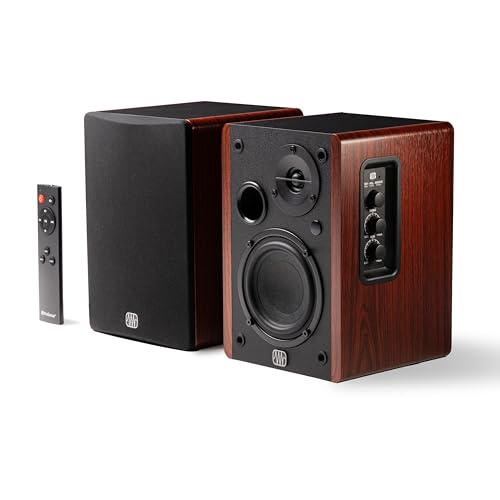
PreSonus Eris Accent speakers bring studio-style amplification with 50W total power, a 4-inch woofer, and a ½-inch silk dome tweeter. The system offers a broad 55 Hz to 20 kHz frequency range and 85 dB peak SPL, designed for balanced, immersive listening across music, movies, and gaming. The complement of onboard controls—volume, treble, bass—as well as separate source selection, makes it flexible for desktop setups, turntables, and computer audio. For users wanting precise control over a compact, aesthetically neutral speaker pair, the Eris Accent line provides reliable, consistent performance in a two-channel format.
Practical implications: For those updating from a vintage receiver, ensure your source devices can drive the input levels of these powered monitors. The built-in controls help tailor sound for different genres or room acoustics, but aligning setup with room calibration can yield the best possible clarity and bass response.
Buying Guide: Key Purchase Considerations For Old Stereo Systems
1) Power and amplification: Passive speakers require an external amplifier or receiver. If your old stereo already includes a built-in amp, passive options are a natural fit, letting you upgrade to clearer highs and more controlled bass. If you prefer a simpler, plug-and-play upgrade, powered (active) speakers remove the need for a separate amp but require a suitable audio source with proper line-level outputs.
2) Room and placement: Bookshelf speakers work well on shelves or stands, but room dimensions influence bass response and imaging. Wall-mountable options help optimize soundstage in smaller spaces and minimize floor real estate. For large rooms, consider higher wattage or adding a subwoofer to prevent bass from feeling thin.
3) Input options: For mixed sources (turntables, TVs, computers), look for speakers with a range of inputs (RCA, 3.5mm, optical, or digital). If you plan to use a turntable with a preamp, ensure the speaker’s inputs align with your setup to avoid extra adapters.
4) Sound signature: Vintage systems often prioritize midrange warmth. If you’re seeking clarity and vocal definition, prefer speakers with well-damped tweeters and accurate midrange response. Silk-dome tweeters tend to deliver smoother highs, while metal domes can be sharper; your preference for brightness or neutrality matters.
5) Compatibility and future-proofing: If you anticipate expanding to a full surround system, choose speakers that align with your future plans (again, passive vs. powered, impedance compatibility, and if you’ll add subwoofers). A flexible setup can save money and effort over time.
6) Build quality and aesthetics: Wood-grain finishes and compact dimensions help traditional setups blend into living spaces. Consider the finish that best complements your furniture and existing components.
7) Budget and value: The selected options balance performance with affordability. For an older stereo, you may prioritize a clean midrange and reliable bass for everyday listening, reserving premium features for future upgrades as needs evolve.
Overall, the right combination depends on your current receiver and listening preferences. A mix of passive and powered options can provide a scalable path from a vintage system to a modern, flexible setup that preserves beloved gear while delivering modern clarity and comfort.