With solar powered backpacks, you can charge essentials like smartphones, GPS devices, and small gadgets while hiking, commuting, or traveling. This guide highlights five reliable options that balance solar efficiency, durability, and everyday practicality. Each product includes a built-in panel, USB charging, and rugged design suited for outdoor conditions. Read on to compare capabilities, assess what matters most for your adventures, and find the best solar backpack to keep devices powered under sunny skies.
| Product | Brand | Key Benefit |
|---|---|---|
| TOZLU 5V 14W Solar Panel Power Backpack | TOZLU | Durable nylon, 5V panel, direct sun charging |
| ECEEN Solar Backpack Travel Daypack | ECEEN | Lightweight, 6.5W panel, packable and versatile |
| ECEEN Solar Backpack 7W | ECEEN | High efficiency solar cells, multiple USB charging |
| MWS-ForCamping 15.6 Inch Solar Backpack | MWS-ForCamping | Monocrystalline panel, TSA-friendly, large storage |
| Acogedor 5V 14W Solar Backpack | Acogedor | Efficient solar panel, lightweight, rugged build |
TOZLU Solar Panel Backpack For Outdoors

The TOZLU backpack integrates a compact 5V solar panel designed to recharge devices from 0 to 100 percent in about four hours under direct sun. Its 43 x 30.8 x 14 cm frame weighs around 942 g, offering a light, portable solution for day trips and longer excursions. The bag can accommodate small electronics and accessories, supporting additional devices such as iPhones, Android phones, tablets, action cameras, and power banks through the attached solar panel. Built from durable nylon and polyester, it features LV5 water resistance and heavy-duty zippers for reliable weather protection and easy access.
ECEEN Solar Backpack Travel Daypack

This lightweight, packable daypack features an attached 6.5-watt solar panel capable of generating 5V/1A under direct sunlight. It is designed for hiking, camping, travel, and daily use, with a main compartment that can fit a 14-inch laptop. The backpack uses rip-stop nylon for durability and includes two mesh side pockets for water bottles or accessories. Its portable design makes it easy to stash in a larger bag when solar charging isn’t needed, while still offering practical storage and weather resistance for outdoor activities.
ECEEN 7W Solar Charger Backpack
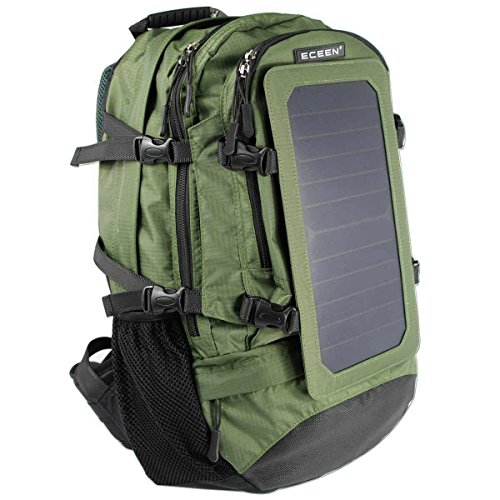
The ECEEN 7W solar charger backpack uses high-efficiency solar cells (around 22%) sewn into rugged fabric, offering weather resistance and a protective coating for durability. It includes a 5V USB port for direct device charging, and a removable solar charger with a voltage stability controller, enabling charging for GPS devices, MP3 players, Bluetooth speakers, and more. This setup is well-suited for outdoor enthusiasts who need reliable portable power during activities like trekking, hiking, and biking, especially in sun-drenched environments.
MWS-ForCamping 15.6 Inch Solar Laptop Backpack

This business-oriented backpack combines a built-in solar panel with a USB charging port, enabling charging without a separate power bank. Equipped with a monocrystalline silicon solar panel, it emphasizes efficiency and long service life. The bag materials include 1680D polyester and ABS components for water resistance and durability. It also features a luggage strap for securing to suitcases and a breathable back panel to distribute weight evenly, making it suitable for commuting, college, travel, and professional use while on the go.
Acogedor 5V 14W Solar Backpack

The Acogedor solar backpack uses a third-generation solar panel with an efficiency of 23%–25%, delivering up to 14 watts of solar power for direct USB charging. The exterior fabric combines water-repellent nylon with a PVC coating for added durability and splash resistance. Aimed at hikers and travelers, the bag emphasizes light weight without sacrificing protection for devices. It also features an intelligent circuit system that guards against overcharge, over voltage, over current, short circuit, and other electrical faults, contributing to safer solar charging in variable outdoor conditions.
Buying Guide: Key Considerations For Choosing A Solar Backpack
- Solar panel wattage and efficiency: Higher wattage speeds up charging but adds weight. Look for 5W–14W panels with good efficiency (20%+ typical for modern cells).
- Battery independence: Some models charge devices directly via built-in USB ports; others rely on internal battery packs. Decide which fits your travel style and device count.
- Durability and weather resistance: Materials (nylon, rip-stop fabrics), water resistance, zippers, and seals determine performance in rain and rough use.
- Storage capacity and layout: Ensure the bag has enough compartments for laptops, tablets, cables, and water bottles. Consider TSA-friendly designs for business travel.
- Weight and comfort: Heavier packs can cause fatigue on long hikes. Look for padded straps, breathable back panels, and weight distribution features.
- Charging safety: Features like overcharge protection, voltage regulation, and short-circuit safeguards reduce risk when charging outdoors.
- Portability and packability: Some models are designed to fold or compress when not in use, aiding portion control in carry-on luggage.
- Compatibility and ports: Check USB output amperage (5V, 1A–2A) and whether a device requires a direct connection to the solar panel or to a junction box inside the bag.
- Maintenance: Cleanable surfaces and durable zippers extend life in dusty or wet environments.
- Price and warranty: Compare feature sets against price and confirm warranty coverage for solar components and fabric.