Preparing for power outages, camping trips, or remote living requires a reliable solar panel emergency kit. This guide highlights top portable solar kits and power stations that blend efficiency, rugged design, and flexible charging. Each pick is evaluated for weather resistance, expandability, and real-world usability to help you stay powered when it matters most.
The following summary table lists five standout products chosen for versatility, portability, and dependable performance in emergency or off-grid scenarios.
| Product | Brand | Key Strength |
|---|---|---|
| Jackery Solar Generator 1000 v2 with 2x100W Light Solar Panels | Jackery | High output with portable design |
| SOLPERK Solar Panel Kit 20W 12V | SOLPERK | Durable, weather-ready charging controller |
| MARBERO 88.8Wh Solar Generator with 21W Panel Included | MARBERO | Compact, ready-to-go kit for small devices |
| ABOK Ark2000 Solar Generator Kit | ABOK | Expandable power capacity for longer outages |
| ECO-WORTHY 200W Solar Panel Kit | ECO-WORTHY | High efficiency panel with sturdy build |
Jackery Solar Generator 1000 v2 With 2x100W Panels

The Jackery kit combines a powerful 1070Wh LiFePO4 battery with a 1500W continuous AC output (3000W surge) to run essentials during emergencies. The system remains portable at 23.8 lbs for the power station and 4.52 lbs per 100W panel, making it suitable for RVs, camping, balconies, and off-grid uses. Its fast 1-hour emergency charging via AC input supports rapid readiness when mains power returns. The two 100W panels employ advanced IBC technology with 25% conversion efficiency and an all-black design for strong sunlight absorption from multiple angles.
Features emphasize weather resistance, with IP68-rated panels that tolerate dust, water splash, and diverse temperatures. Flexible mounting allows curved surfaces like car roofs or rails on a balcony. The system operates effectively from -40℉ to 185℉, offering broad usability across climates. For users needing high power in a compact footprint, this kit balances performance and portability.
SOLPERK 20W 12V Solar Panel Kit
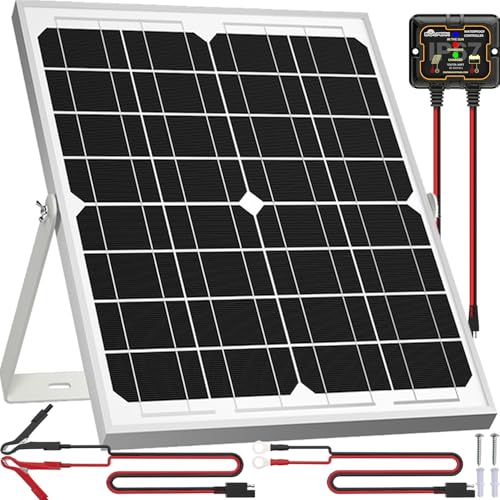
This kit provides a compact 20W solar panel with a smart MPPT controller. It’s designed to charge and maintain 12V batteries such as LiFePO4, Lithium Ion, AGM, and more. The panel uses low-iron tempered glass and an aluminum frame, delivering waterproof and rustproof durability with a long lifespan—up to 25 years. Its weather-resistant construction supports operation in harsh conditions and provides reliable charging for boats, RVs, cars, and small off-grid systems. The upgraded 8A controller offers 20–30% higher charging efficiency, with clear status indicators on the controller.
MARBERO 88.8Wh Solar Generator With 21W Panel

The MARBERO kit integrates an 88.8Wh power station with a 21W solar panel, offering a portable solution for overnight trips, camping, or temporary outages. Its emphasis is on uninterrupted power for essential devices such as lights, phones, and small electronics. This compact pairing is designed for easy transport and quick setup, ensuring basic power availability when sun is available and a fallback during cloudy periods or nighttime.
While it focuses on portability, it also highlights the value of having a dedicated charging source for essential devices during emergencies, making it a practical entry point for users new to solar backup systems.
ABOK Ark2000 Solar Generator Kit

The Ark2000 kit offers a large 1536Wh LiFePO4 battery with expansion options to reach up to 4608Wh, and a 2000W continuous output (2200W peak). This setup supports powering most household appliances during extended outages and can be expanded with additional batteries for longer off-grid use. The LiFePO4 chemistry provides a long lifespan with improved safety and a BMS that protects against overcharge, discharge, and thermal events. App connectivity enables monitoring and control, enhancing user insight during critical events.
ECO-WORTHY 200W Solar Panel Kit

The ECO-WORTHY 200W kit is designed for RVs, campers, and off-grid applications, delivering up to 800Wh per day under optimal sunlight. Its high-efficiency monocrystalline panels and a 30A PWM charge controller enable steady charging of 12/24V systems while supporting a robust aluminum frame built to withstand wind and snow loads. The IP65-rated junction box adds environmental protection, making this kit a solid choice for reliable daytime charging and extended outdoor use.
Buying Guide: Key Purchase Considerations and Comparisons
- Power needs: Assess essential devices you want to run during outages. If you need to power refrigeration, medical devices, or home appliances, prioritize higher wattage capacity and robust surge handling (e.g., 1500W+ continuous output).
- Portability vs. capacity: Larger power stations offer more capacity but weigh more. For travel, camping, or balcony use, consider lighter kits with expandable options for future upgrades.
- Battery chemistry: LiFePO4 offers longer life cycles and better safety at higher temperatures, making it suitable for extended off-grid use. It is common in mid-to-high-end kits.
- Panel flexibility and durability: Flexible panels and weather-resistant frames extend usability in cars, boats, and rugged environments. Look for IP ratings and weather resistance suitable for your setup.
- Charging options: In addition to solar charging, check for rapid AC charging and USB-C outputs to keep devices charged quickly and across multiple ports.
- Expandability: If you anticipate growing power needs, choose systems with expansion batteries or modular kits to scale capacity without replacing hardware.
- Weather and climate considerations: Some panels and stations operate across extreme temperatures; confirm operating ranges align with your environment before purchase.
- Monitoring and control: App-enabled or controller-based monitoring helps manage charging status, protect against overcharge, and optimize performance during emergencies.
Each product listed provides a distinct balance of power, portability, and reliability. When building a solar panel emergency kit, consider how you will use the system most—nighttime lighting, device charging, refrigeration, or a combination—and select a configuration that aligns with those needs while allowing room for future expansion.