Powering a MacBook remotely often hinges on reliable USB‑C PD charging and ample capacity. The following solar chargers deliver high capacity, multiple output options, and built‑in cables or fast charging, making them suitable for MacBooks when you’re off‑grid or traveling. This guide compares top options with a focus on PD compatibility, solar panel efficiency, and rugged design. Each pick includes a direct Amazon link for quick evaluation and purchase.
| Product | Capacity | Solar Panels | Charging Tech | Key Benefit |
|---|---|---|---|---|
| Hicyzoe Solar Charger Power Bank | 49800mAh | 4 Panels | QC3.0, USB‑C PD? (5V/2.4A Type‑C) | Direct solar charging and fast USB‑C/ wireless charging |
| BLASOUL Solar Power Bank | 49800mAh | Built‑in solar cell array | PD 3.0 QC 3.0; 15W wireless | High‑speed charging with multi‑port options |
| KEPSWIN Solar Charger Power Bank | 49800mAh | 4 Panels | PD 22.5W, USB‑C In/Out | High solar efficiency and multiple cables |
| Sudrov Solar Charger Power Bank | 42800mAh | 4 Panels | USB‑C, QC3.0, wireless Qi | Wide device compatibility and dual LEDs |
| BigBlue 28W Solar Panel Charger | 28W panel only | Dual USB‑C + USB‑A | USB output, no built‑in battery | Compact solar panel with multi‑device output |
Table notes: Capacity values refer to battery packs with built‑in cells. For MacBooks, ensure you use a PD capable port (preferably USB‑C) and a charger that can deliver sufficient wattage when solar conditions are favorable. All options assume direct connection to the laptop or to a portable power bank that can negotiate PD with the MacBook.
Hicyzoe Four‑Panel Solar Charger

The Hicyzoe model combines four solar panels with a 49800mAh battery, designed to deliver rapid charging through a 5V/2.4A USB‑C port and wireless charging for compatible devices. It mentions direct solar charging capabilities, useful in outdoor settings where access to outlets is limited. The high capacity supports extended laptop usage, though the PD wattage for MacBooks is not specified in the feature list. Users should verify the PD output on their model and consider this as a backup or supplementary charging option when off‑grid.
Key features include an upgraded solar array and fast charging via USB‑C, plus wireless charging for phones and other devices. The build is oriented toward outdoor robustness, with emphasis on safety in rugged environments. If you plan to rely on solar charging for a MacBook, consider carrying a PD adapter or verifying compatibility with your specific MacBook model’s wattage needs.
BLASOUL 49800mAh Power Bank With Wireless
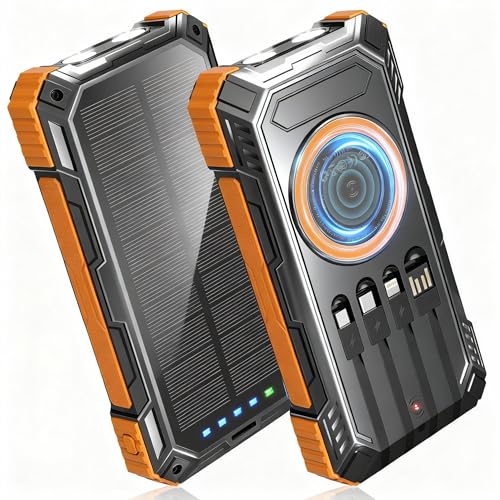
BLASOUL’s 49800mAh pack emphasizes PD 3.0 and 22.5W fast charging with an integrated 15W wireless charging feature. It’s designed to power multiple devices simultaneously through USB‑C and USB‑A outputs, with the promise of fast recharging for phones and tablets. The solar charging aspect adds flexibility for outdoor use, though MacBook charging may require a higher wattage than this device’s listed PD capability. This option is strong for travelers who want a reliable power bank that can keep smartphones and tablets topped up while trekking or camping.
With a large capacity and intelligent protection, the unit aims to balance speed and safety. If your MacBook charging plan relies primarily on AC input, you’ll want a separate PD power source or a USB‑C hub that can negotiate higher watts, but as a supplementary solar companion, it is a robust option for longer outdoor stays.
KEPSWIN 4‑Panel Solar Charger Power Bank
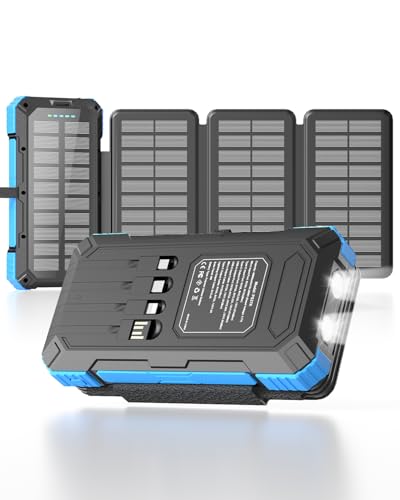
KEPSWIN presents a 49800mAh solar charger with four built‑in cables and three charging ports, including USB‑C, Micro, and USB‑A. This model highlights PD23.5W type support (labeled as PD22.5W in listing) and emphasizes a 8x solar charging efficiency claim compared with single‑panel chargers. The four built‑in cables simplify use with various devices, reducing the need to carry extra cords. For MacBook users, the PD performance matters, and this unit’s PD wattage should be confirmed to ensure adequate laptop charging during solar exposure.
Durability and safety are underscored by certifications and a robust protection system. The combination of high capacity, built‑in cables, and multiple ports makes it a versatile option for people who want to avoid cable clutter and still charge several devices simultaneously while outdoors.
Sudrov 42800mAh Solar Charger

Sudrov’s 42800mAh power bank combines wireless charging with USB‑C input/output and a QC3.0 fast charging capability. Its four built‑in cables and built‑in dual LED flashlights add convenience for camping and emergency use. While the capacity is substantial, MacBook charging typically requires higher wattage than typical USB‑C PD on some models. This option is best viewed as a supplemental charger for devices like phones, tablets, and possibly a MacBook when paired with appropriate PD infrastructure.
Its dual LEDs and rugged design are beneficial for outdoor scenarios. The device emphasizes long battery life and compatibility with a wide range of devices, making it a practical companion for off‑grid trips where multiple devices need charging in a limited space.
BigBlue 28W Solar Panel Charger

This option is a solar panel charger rather than a power bank. It offers a 28W panel with multiple ports (two USB‑C and one USB‑A) to simultaneously power or charge devices that can be plugged directly into the panel when sun is available. It is not a battery pack, so it won’t store energy unless you pair it with a battery. For MacBooks, you would typically need a battery pack with PD or a separate adapter. This panel is ideal for charging accessories, batteries, or a laptop when you already have an external power source to store energy.
Buying Guide
Key considerations when choosing a solar charger for a MacBook:
- Power delivery capability: Look for USB‑C PD outputs rated for at least 45W for many MacBook models, with higher wattage (60W–100W) preferred for faster charging. Confirm the charger can negotiate PD with your specific MacBook model.
- Battery capacity: Higher mAh (or Wh) means more charge cycles for your MacBook and other devices. 40,000mAh+ is common among multi‑panel packs and is beneficial for longer trips.
- Solar panel configuration: Four or more panels increase solar charging speed, especially under bright sun. Ensure the panels are portable, durable, and foldable for travel.
- Built‑in cables and ports: Four built‑in cables reduce cable clutter. A mix of USB‑C, USB‑A, and Lightning compatibility helps handle multiple devices, though for a MacBook, a dedicated USB‑C PD path is essential.
- Durability and safety: Look for waterproofing, dust resistance, shock resistance, and protection circuits (overcurrent, overvoltage, short circuit, and temperature protection) for reliable outdoor use.
- Portability and weight: A high‑capacity system adds weight. Consider your travel needs and whether you want a dedicated MacBook charging solution or a general outdoor power bank with PD support.
- Charging environment: Solar performance depends on sunlight intensity and angle. In cloudy conditions, external batteries may be essential to store energy captured earlier.
- Warranty and certifications: UL, CE, FCC, and RoHS certifications indicate safety and quality. A robust warranty can help with long‑term reliability.
When evaluating, cross‑check the actual PD wattage output, confirm whether the device can sustain MacBook charging at your required wattage, and consider whether you need a battery pack with built‑in solar charging or a standalone solar panel for on‑the‑go energy capture. For many users, pairing a solar panel with a high‑capacity PD battery pack offers the most reliable MacBook charging experience in outdoor or travel scenarios.