When working with ham radios, CB radios, scanners, or antenna systems, reliable connections between SO-239 (UHF female) and PL-259 (UHF male) are essential. The following five adapters and related cables are designed to minimize loss and maintain signal integrity across typical frequencies used in amateur and commercial applications. This guide highlights6 products that help you bridge endings, ensure a solid mechanical fit, and reduce SWR-related issues in field use or lab setups.
Summary of selected products:
| Product | Brand | Key Benefit | Impedance | Notes |
|---|---|---|---|---|
| MOOKEERF 2 Pack N Male to UHF Female Adapters | MOOKEERF | Low loss; durable brass construction | 50 Ω | Two-pack, nickel plating, PTFE insulator |
| XRDS -RF PL-259 UHF Cable 3ft | XRDS -RF | Ultra-low loss, durable for outdoor use | 50 Ω | High-density braid, UV-proof jacket |
| XRDS -RF N Male to UHF Female Adapter | XRDS -RF | Low loss; solid brass with nickel finish | 50 Ω | Pack of 2; NOT for TV use |
| Ancable SO-239 / PL-259 Cable Barrel Adapter | Ancable | Affordable female-to-female joining | 50 Ω | Brass/copper housing |
| Boobrie UHF Female to BNC Male Coax Cable | Boobrie | Flexible RG58 extension; simple cross-connector | 50 Ω | 6.56 ft length; UHF to BNC transition |
MOOKEERF N Male To UHF Female Adapters

These adapters feature a Type N Male to UHF Female design with 50 ohm impedance. The body is pure brass with nickel plating, and the inner conductor is brass gold plated. Teflon (PTFE) insulation provides high-temperature tolerance and stable dielectric properties. They offer a life expectancy exceeding 1000 mating cycles and exhibit low signal loss, with reported SWR below 1.15 up to several GHz. The package contains two adapters, suitable for quick field swaps when different RF cables must connect.
XRDS-RF PL-259 UHF Cable 3ft
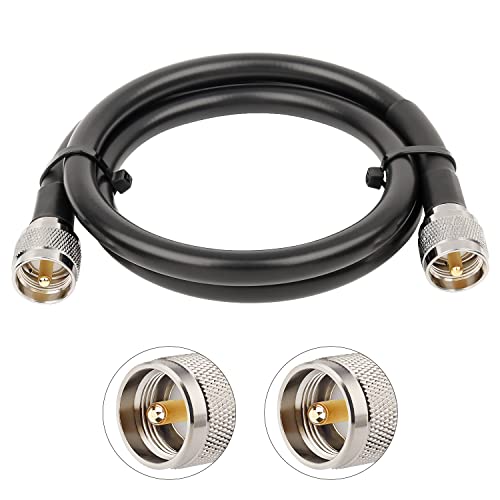
XRDS-RF offers a professional-grade kmr400 cable designed for CB and HAM use. It shows a VSWR below 1.35 and an ultra-low loss profile, with a 3 ft length that attenuates only about 0.26 dB at 500 MHz. The braid is high-density tinned copper with full shielding, and the jacket resists UV exposure for outdoor use. The connectors are nickel-plated UHF types, delivering a secure connection and robust durability in demanding environments.
XRDS-RF N Male To UHF Female Adapter (2-Pack)

This adapter set connects N Female to UHF Female cables or N Male to UHF Female configurations. It boasts a 50-ohm impedance, 0.1 dB loss up to high frequencies, and a VSWR around 1.15 at 6 GHz. The internal copper construction helps minimize signal loss while the exterior brass with nickel plating reduces corrosion and maintains a low profile for reliable RF matching across band ranges often used in professional test setups.
Ancable SO-239 / PL-259 Female-to-Female Adapter

Ancable’s 2-pack offers a simple, cost-effective solution for extending coax runs or joining two short PL-259 cables. The adapter is a 50 Ω system with a brass/copper housing to ensure decent performance and durability in indoor or sheltered outdoor environments. It is well-suited for CB and HAM radio antenna work where quick, non-precision connections are needed.
Boobrie UHF Female To BNC Male Cable

This Boobrie extension pairs a UHF female (SO-239) with a BNC male on a 6.56-foot RG58 coax. It provides a practical cross-connector for devices requiring different connector types at the ends of a single coax run. The line maintains a 50-ohm impedance and is designed for general antenna and handheld radio applications where quick field adaptations are necessary.
DHT Electronics Handheld to SO-239 Cable
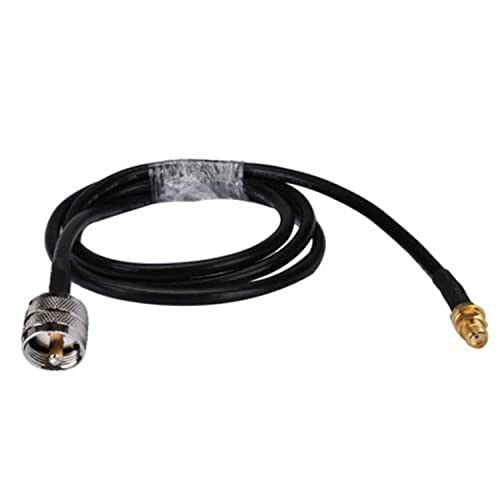
This 20-inch cable from DHT Electronics provides a simple, copper-based connection with pure copper conductors and a short length for compact setups. It is designed for handheld radios and antennas requiring a direct SO-239 to SMA/other interfaces within a tight footprint, offering reliable mechanical fit and straightforward use in field deployments.
Onelinkmore 4-Type BNC/UHF Adapter Kit

The Onelinkmore kit eliminates connector guesswork by including BNC-to-UHF and UHF-to-BNC combinations. It is designed for handheld scanners, CB radios, and HAM antennas. The set uses brass with nickel plating and PTFE insulation, delivering a robust low-loss connection across common 50-ohm RF applications. It is ideal for users who frequently swap between BNC and UHF equipment in field operations or lab tests.
Onelinkmore N-Type To UHF Adapter Kit

This kit covers the common N to UHF connections, including N-Male to UHF-Male and N-Female to UHF-Female. Built from brass with nickel plating and PTFE insulation, these adapters keep signal integrity under demanding conditions. They are well-suited for ham radio setups, testing environments, and outdoor installations where high-power or high-frequency work is routine.
Buying Guide
When choosing SO-239 to PL-259 adapters and related components, consider the following factors to optimize performance and reliability:
- Impedance and frequency range: Most adapters are 50 ohms and designed for VHF/UHF bands. Verify SWR specs at the frequencies you plan to use.
- Material quality: Brass bodies with nickel plating improve corrosion resistance and durability, while PTFE insulation maintains stable dielectric properties at elevated temperatures.
- Connector compatibility: Ensure the adapter type matches your cables and devices (N, PL-259, UHF, BNC, etc.), especially if you mix legacy and modern equipment.
- Mechanical fit: Rough handling or loose threads can degrade RF performance. Look for tight fits, robust shielding, and solid coupling mechanisms.
- Mating cycles: A higher life expectancy (e.g., >1000 cycles) reduces wear in portable field kits and base station setups.
- Environmental exposure: UV and moisture resistance are important for outdoor use; consider UV-protected jackets and waterproof connectors for long-term reliability.
- Cost vs. performance: More expensive assemblies often offer lower loss and better shielding, but assess your actual needs and operating environment before investing.
- Availability and variations: Some kits provide multiple combinations in one package, which is convenient for troubleshooting mismatches in the field.