When quick, clear signaling is essential, a siren with integrated light control can streamline operations for police, fire, EMS, and security fleets. This guide highlights five top options that combine loud sirens with programmable light controls, ensuring you can coordinate audible alerts and lighting from a single system. Each product below includes key features, compatibility notes, and practical considerations for installation and maintenance.
| Product | Brand | Key Strength | Link |
|---|---|---|---|
| Xprite 200W Siren Kit | Xprite | Integrated light control switches, 8 tones | Amazon |
| LAMPHUS ThunderWave 100W | LAMPHUS | All-in-one PA and light control options | Amazon |
| Whelen 295 Siren & Light | Whelen | Park-Kill, radio rebroadcast, multi-mode | Amazon |
| UBL Handheld Siren Controller | UBL | 14 programmable buttons, integrated mic | Amazon |
| Feniex Typhoon 100W | Feniex Industries | 36 tones, 6 outputs, rugged | Amazon |
Note: The table above focuses on systems with built-in light control or easy light-signal integration, suitable for fleet maintenance managers seeking reliable, compact configurations. Each selection emphasizes compatibility with standard 12V vehicle power and typical 100–200W siren speakers. Always verify wattage compatibility with your speaker and electrical system before installation.
Xprite 200W Siren Kit With Light Controls
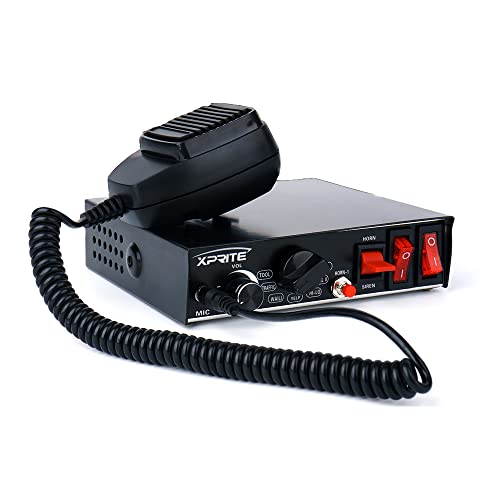
The Xprite 200W Siren Kit delivers a robust audible signal with eight tones and two auxiliary switches, plus a Push-To-Talk microphone. It is designed to work with any 100–200W siren speaker that meets the minimum wattage requirement. A notable feature is its built-in support for two-channel LED lighting, allowing light activation directly from the main siren box through dedicated light switches. This combination makes it suitable for agencies that require synchronized siren tones and exterior lighting for traffic control, incident scenes, and crowd management. Installation considerations include mounting space for the siren amplifier, speaker selection, and ensuring proper power distribution to the lighting circuit. The included microphone enables rapid PA announcements in addition to siren output.
Key considerations:
- Compatibility with 100–200W speakers and power supply.
- Two auxiliary switch inputs for independent light or accessory control.
- Light switching capability integrated into the siren unit reduces wiring complexity.
- PTT microphone supports on-scene communication.
SpeedTech Lights Vireo 100W System

The SpeedTech Lights Vireo system focuses on delivering a 100-watt siren output in a compact handheld package, featuring a dedicated control box and an integrated PA microphone. Tied to a handheld controller, it enables operators to manage tones and alert patterns without needing to interact with a separate console. While primarily designed for audible signaling, its compact form factor makes it well-suited for vehicles with limited dashboard space or for quick-response units that require mobility. Operators should consider how the system integrates with exterior lighting and whether additional light modules are required to achieve full visual signaling in various environments.
Key considerations:
- Handheld control for flexible positioning during operations.
- 100W loudspeaker output for clear audible alerts.
- Multiple siren tones and built-in controls simplify operation.
Whelen 295 Siren and Light Controller
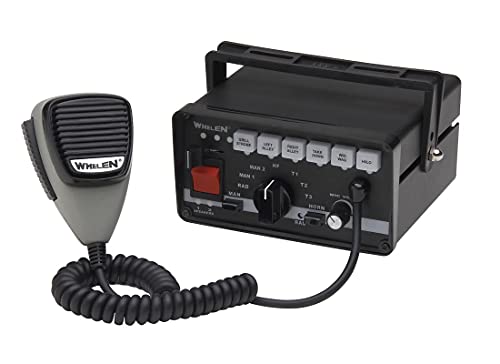
The Whelen 295SLSA6 system is a versatile siren and light controller with a Park-Kill feature, six-function siren capabilities, and radio rebroadcast plus public-address options. It supports either 100 or 200-watt output, accommodating a range of siren speakers. This setup is favored for larger fleets requiring complex signaling, including coordinated light patterns and broadcast messaging. Installation requires attention to wiring harnesses, power management, and compatibility with existing radios and PA equipment. The 295’s multi-function nature makes it suitable for agencies needing robust, programmable control for both siren tones and external lighting.
Key considerations:
- Park-Kill function for vehicle safety in parked scenarios.
- Six functions plus PA and radio rebroadcast for on-scene versatility.
- Supports 100 or 200W outputs; verify speaker compatibility.
UBL Handheld Siren Controller

The UBL handheld siren and light controller is designed to work with any 100-watt siren speaker. It combines a public-address microphone with a portable control surface featuring 14 programmable buttons to manage up to nine LED lights and five different siren tones. This setup is ideal for agencies that require a flexible, mobile solution with quick-access controls for lighting patterns and audio signals. Installation considerations include ensuring the external PA speaker is compatible and securely mounted, as well as programming the button layout to match operational priorities on different routes and incidents.
Key considerations:
- Designed for 100-watt sirens; confirm speaker compatibility.
- Integrated microphone for on-scene communications.
- Fourteen programmable buttons provide extensive light and tone options.
Feniex Typhoon 100W Handheld Siren Controller

The Feniex Typhoon handheld siren controller is a versatile, rugged option with 36 tones, six programmable outputs at 3 amps each, and 12 amp total capacity. It includes a microphone and is designed for universal compatibility with compatible 100W sirens. The system emphasizes lighting integration and signaling versatility, enabling air horn, park kill, and radio rebroadcast functions. Its durable construction makes it suitable for patrol vehicles, command trailers, and field units that demand reliable performance under harsh conditions. Consider the ease of wiring, button legend clarity, and compatibility with auxiliary lighting as part of installation planning.
Key considerations:
- 36 tones provide broad signaling options for varied scenarios.
- Six programmable outputs support complex lighting and alerts.
- Includes a microphone for direct PA use on the move.
Buying Guide: Key Purchase Considerations And Comparisons
When choosing a siren with light control, consider the following factors to ensure you select the best fit for your fleet and operation:
- Power and compatibility: Confirm the siren’s wattage matches your speaker system (prefer 100–200W range) and verify vehicle electrical capacity to prevent dimming or fuse issues during peak usage.
- Light control integration: Decide whether you need built-in light switches, dedicated light channels, or compatibility with external LED modules. Integrated light control reduces wiring complexity and improves reliability in emergencies.
- Control form factor: Handheld controllers offer mobility and quick access, while fixed consoles provide rapid, hands-free operation. Consider operator training and standardization across your fleet.
- Programmable tones and features: Look for systems with a wide range of tones, park-kill, radio rebroadcast, and PA capabilities. More programmable outputs enable sophisticated signaling patterns for different scenarios.
- Durability and environmental resilience: For vehicles operating in extreme weather or harsh conditions, prioritize ruggedized housings, vibration resistance, and reliable connectors.
- Expansion and future-proofing: Anticipate future needs such as additional light bars, smart lighting interfaces, or integration with dispatch systems. Choose systems that support scalable configurations.
- Installation considerations: Check mounting space, wire routing, power distribution, and professional installation requirements. A system-heavy setup may require an electrician or fleet technician.
- Maintenance and support: Favor brands with clear documentation, firmware updates, and accessible customer support to reduce downtime during critical operations.
The products listed above provide a range of configurations—from integrated light control on the Xprite kit to handheld and console-based options from Feniex, Whelen, UBL, and SpeedTech. Each option has strengths in signal clarity, lighting coordination, and control flexibility, allowing agencies to tailor their emergency signaling to specific routes, environments, and response protocols.