Exploring shortwave antenna tuner kits helps keep your radio signals clean and your transmissions efficient. The following picks cover automatic and manual tuners across a range of frequencies (1.8–50 MHz), suitable for hobbyists, field ops, and compact setups. Each kit emphasizes reliability, ease of use, and clear visual indicators, ensuring solid performance for QRP and regular HF operations.
Summary of Selected Products
| Product | Brand | Band Coverage | Key Feature |
|---|---|---|---|
| Malahit ATU-100 | Malahit | 1.8–50MHz | Automatic tuning with OLED display |
| Walfront ATU-100 | Walfront | 1.8–50MHz | OLED screen, real-time VSWR indicators |
| Zopsc Manual Antenna Tuner | Zopsc | 1–30MHz | T-type topology, 15W tolerance |
| Zerone 1-30MHz Manual Kit | Zerone | 1–30MHz | T-type topology, 15W compatibility |
| VQP ATU-130 | VQP | 1.8–50MHz | High power 200W, OLED display |
Malahit ATU-100 Antenna Tuner Kit

The Malahit ATU-100 is an automatic antenna tuner designed for 1.8–50 MHz operation. It integrates a 0.96 inch OLED display for clear data visibility and uses high-quality SMD components, including 1000V capacitors and a PIC-based control system. The kit version ships unassembled, inviting hands-on assembly and firmware options for customization. It is designed to automatically tune various antenna configurations, simplifying QRP and standard HF operations for hobbyists and field operators.
Manual Antenna Tuner DIY Kit 1-30 MHz
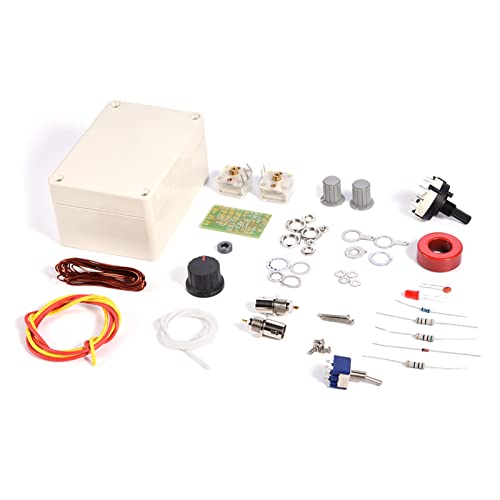
This kit targets 1–30 MHz with a professional T-topology design to suppress interference and improve reception and transmission. It supports up to 15W of transmit power and includes real-time VSWR indicators for quick tuning. The LED indicators and robust board design help operators locate optimal match efficiently, making it suitable for long-distance and weak-signal work in ham radio setups.
Manual Antenna Tuner Kit for Ham Radio QRP
Featuring a T-type topology, this 1–30 MHz tuner is designed for QRP enthusiasts and includes an LED tuning indicator. It supports approximately 15W of transmit power and provides straightforward impedance matching within the 30–300 ohm range, aiding reliable dependsability in compact, field-friendly configurations.
1-30 MHz Manual Antenna Tuner Kit
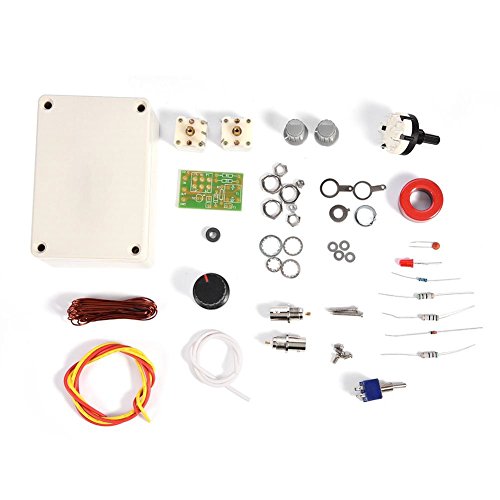
Another 1–30 MHz option using a T-type network, this kit emphasizes a simple setup with a 15W rating and a standing-wave indicator for accurate matching. It is well-suited for beginner and intermediate builders seeking a reliable, low-cost path to improved HF performance and stable QRP operations.
ATU-100 Automatic Antenna Tuner Kit

This automatic ATU covers 1.8–50 MHz with an OLED display for easy-readouts and a compact, portable form factor. It is built around an N7DDC-inspired concept with capacitors and PIC chips designed for broad HF operations, including CW, SSB, and data modes. Power handling up to moderate levels ensures practical use in home and mobile environments.
ATU-130 Antenna Tuner, 1.8-50MHz

The ATU-130 provides broad 1.8–50 MHz coverage with a focus on higher power handling, rated up to 200W SSB or 100W continuous. It uses 1000V SMD capacitors, robust relays, and PIC-based control for stable tuning. The OLED display conveys tuning status clearly, making it a strong choice for serious HF setups, field stations, and mobile rigs seeking dependable, high-power performance.
QRP Z-Match Manual Tuner 3-28 MHz

The QRP Z-Match supports 3–28 MHz with a compact metal housing and BNC connectors. It is designed for 5W continuous operation (10W intermittent) and works with various coaxial and balanced feed lines. Its straightforward design makes it ideal for portable or fixed ham setups where simplicity and portability are prioritized.
Buying Guide: Key Considerations When Selecting an Antenna Tuner Kit
- Frequency Range: Match your operating bands. Kits labeled 1–30 MHz are common for HF/QRP, while 1.8–50 MHz covers more bands including some 80/40 meters depending on the configuration.
- Power Handling: Check continuous and peak power ratings. Higher power supports more modes and longer-range communications, but add weight and cost.
- Topologies: T-type topology is common in manual tuners for stable matching, while automatic tuners simplify nightly adjustments but may be more complex to modify.
- Display and Indicators: OLED or LED indicators help monitor VSWR and tuning status in real time. A clear display reduces guesswork during alignment.
- Build Quality: Look for robust PCBs, quality capacitors, and reliable relays. This affects longevity in field use and exposure to weather or vibration.
- Assembly vs. Ready-to-Use: Some kits are unassembled, which is good for learning and customization; others arrive closer to plug-and-play, suitable for quick deployments.
- Portability: Consider size, weight, and power needs if you operate mobile or field stations.
- Community and Firmware: Access to firmware updates and community support can extend life and improve performance through tweaks and new features.
When selecting a kit, align features with your operating goals: casual home ham operations may benefit from automatic tuning and OLED displays, whereas field operators may prefer compact, rugged, and manually tunable units with straightforward impedance matching.