Choosing the right exhaust headers for Small Block Chevy (SBC) engines can improve spool time, horsepower, and overall engine response. This guide focuses on up-and-forward header designs that fit SBC V8s and related LS-based swaps, offering options for classic builds, turbo projects, and street performance. Below are five carefully selected products with links to official Amazon listings and clear feature highlights to help you compare at a glance.
| Product | Brand | Key Features |
|---|---|---|
| Turbo Headers 1-7/8″ Up & Forward Facing 304 Stainless Steel for GM LS Based V8 Engines LS1 LS2 LS3 LS6 LS7 | PG POWERGO MOTORSPORT | Up and forward design; 1.5mm 304 stainless; mandrel bent; suitable for single or twin turbo builds |
| Exhaust Headers Shorty Headers For Chevy Hugger small block SBC V8 265 283 305 327 350 400 | AMVirtuo | 304 stainless; TIG welded; laser-cut head flanges for flat seals |
| Exhaust Turbo Headers 1-3/4 x 3 in. Up and Forward Facing for Chevrolet GM LS1 LS2 LS3 LS6 LS Based V8 Engines | PG POWERGO MOTORSPORT | Up and forward design; 16-gauge 304 stainless; mandrel bent |
| Polished Stainless Long Tube Headers for Small Block Chevy GMC 1973-1987 C10 K10 C20 K20 C30 K30 Blazer Suburban Jimmy 265 283 305 307 327 350 400 SBC | Certified Automotive Experts | Long tube; fits classic trucks; requires header spark plugs; polished stainless |
| Center Dump Block Hugger Headers for Gen 1 SBC 265 283 302 305 327 350 400 V8 Stainless Steel 3 Bolt Shorty | Certified Automotive Experts | Center-dump; tight fit for front-engine mounts; 3-bolt collectors |
Turbo Headers 1-7/8″ Up & Forward Facing 304 Stainless Steel for GM LS Based V8 Engines
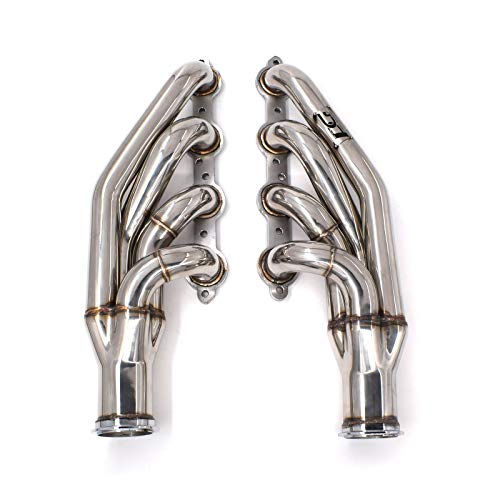
Designed for LS-based small block V8 engines (LS1, LS2, LS3, LS6), these headers support single or twin turbo configurations. The up-and-forward orientation helps with clearance in tight engine bays and improves exhaust flow by reducing bends. Constructed from 16-gauge 304 stainless steel and fully mandrel bent, they are built for durability under high-heat operation. This option is ideal for turbocharged SBC swaps that demand robust piping and a clean install. Consider the mounting hardware and compatibility with your exhaust system when planning installation.
Key considerations
- Engine compatibility: LS-based platforms; verify fit with your vehicle’s chassis and exhaust routing.
- Material and finish: 304 stainless steel offers corrosion resistance and long-term durability.
- Turbo support: Designed for turbo builds; ensure clearances around turbos and manifolds.
Exhaust Headers Shorty Headers For Chevy Hugger SBC V8 265 283 305 327 350 400

These shorty headers are designed for standard SBC installations with a hugger-style layout. Manufactured from 304 stainless steel, they provide durability and corrosion resistance across various climates. TIG welding adds crack resistance, while laser-cut head flanges create a flat surface for a secure seal. This design is suitable for street cars and light performance applications where ease of installation and compatibility with stock engine bays are priorities. The shorty length can help with beginners installing headers or those seeking ample ground clearance.
Key considerations
- Fitment: Suitable for 1995-up SBC V8 engines with standard exhaust patterns.
- Assembly quality: TIG welds and laser-cut flanges improve sealing and longevity.
- Durability: 304 stainless steel resists rust in varied climates.
Exhaust Turbo Headers 1-3/4 x 3 in. Up and Forward Facing for SBC LS1 LS2 LS3 LS6
This set is designed for LS-based small block V8 engines with an up-and-forward layout, suitable for both single and twin-turbo setups. The headers use 16-gauge 304 stainless steel and are fully mandrel bent to maintain consistent exhaust diameter through bends, reducing backpressure and improving flow. They are a solid option for performance-oriented SBC builds or LS swaps where turbocharging is planned. Ensure compatibility with engine mounts and steering geometry before purchase.
Key considerations
- Orientation: Up-and-forward design helps engine bay clearance.
- Construction: Mandrel-bent tubing for smooth exhaust flow.
- Turbo readiness: Particularly suitable for turbocharged projects.
Polished Stainless Long Tube Headers for SBC 1973-1987 C10/Chevy/GMC

Long tube headers for classic SBC applications, specifically 1973-1987 Chevy and GMC trucks. The design accommodates square body chassis and older front-end layouts, offering a fit for trucks like C10 and Suburban variants. The kit emphasizes comprehensive compatibility with a wide range of SBC engines (265-400), and the polished stainless finish provides corrosion resistance and a show-ready appearance. Note that header spark plugs and heat shields are often recommended to avoid clearance issues and heat-related wiring or components.
Key considerations
- Vehicle fitment: Suited for classic trucks and square-body models up to 1991.
- Plugs and shields: May require compatible spark plugs and heat shielding for clearance.
- Finish: Polished stainless for aesthetics and durability.
Center Dump Block Hugger SBC Headers 1955-1957

Center-dump shorty headers are designed for Gen 1 SBC engines with 1955-1957 street rods and early swaps. The center-dump layout helps with rear spring and frame clearance in tight engine bays, while the 3-bolt collector maintains a robust seal. This option is not compatible with side-mount or clamshell SBC mounts, and is best suited for installations where clearance around the frame and mounts is a defining constraint. The stainless construction provides durability in hot operating conditions.
Key considerations
- Application: Best for early-style street rods and swaps with front engine mounts.
- Compatibility: Not for side-mount or clamshell SBC engines.
- Durability: Stainless steel construction for corrosion resistance.
Buying Guide: Key Purchase Considerations For SBC Up-And-Forward Headers
When selecting SBC up-and-forward headers, it’s important to balance fitment, performance, and installation concerns. Here are the main factors to consider from multiple perspectives:
- Fitment and engine type: Confirm engine family (SBC vs LS-based V8s), year range, and whether the vehicle uses front-engine mounts or specific chassis configurations. Some headers are designed for classic trucks, while others target modern LS swaps or hugger-style setups.
- Tube diameter and length: Larger diameter tubes can improve high-end power but may affect low-end torque. Shorty headers often provide easier installation and better ground clearance, whereas long-tube designs typically deliver stronger top-end gains.
- Material and finish: Stainless steel (304 or 18-8) offers corrosion resistance and durability in varied climates. Polished finishes add aesthetics but may require more maintenance to retain shine.
- Flange and welding quality: TIG-welded flanges and mandrel bending ensure consistent sealing and reduced risk of leaks or cracking under heat stress. Check for laser-cut flanges for flat seating against the exhaust manifold.
- Clearance and mounting: Up-and-forward and center-dump designs aim to maximize clearance around the steering, frame rails, and crossmembers. Ensure the selected headers clear suspension components, spark plugs, and fuel lines.
- Intended use: Street, drag, or turbocharged builds require different header geometries. Turbo-specific designs emphasize flow stability and heat management in turbo manifolds.
- Compatibility with other components: Confirm compatibility with aftermarket exhaust systems, catalytic converters, oxygen sensor locations, and spark plug wire routing.
- Installation effort: Some headers require basic hand tools, others may need additional fabrication or heat shielding. Evaluate whether you can perform the install yourself or need professional help.
These considerations help buyers select headers that align with their vehicle, budget, and performance goals while ensuring reliable operation in typical driving conditions and under boost or high-rpm use.