A wall-mounted RGB LED controller combines convenient control with a clean, recessed look for LED strip lighting. The following selections focus on wall-plate style controllers that support DC12V-24V strips, multiple color modes, and capacitive or RF control. This guide compares performance, ease of installation, and feature sets to help American buyers choose the right unit for indoor or outdoor use. Each option below is compatible with common 5050 and 3528 LED strips and offers tactile or touch panel control plus color or brightness adjustments.
Product Snapshot
| Product | Brand | Key Benefit | Power Range |
|---|---|---|---|
| AMKI LED Wall Switch Dimmer | AMKI | High-end touch panel with multiple lighting effects | DC12-24V |
| LGIDTECH P3 Wall-Mounted | LGIDTECH | 1%-100% dimming with voice/DMX options | DC12-24V |
| MEIRIYFA RGB LED Dimmer Knob | MEIRIYFA | Manual knob with color/brightness mixing | DC12-24V |
| Sorfia RGB LED Dimmer Switch | Sorfia | RF remote control for easy operation | DC12-24V |
| LaiPuDuo RGBW Wall Controller | LaiPuDuo | High-precision capacitive touch with quick brightness control | DC12-24V |
AMKI LED Wall Switch Dimmer
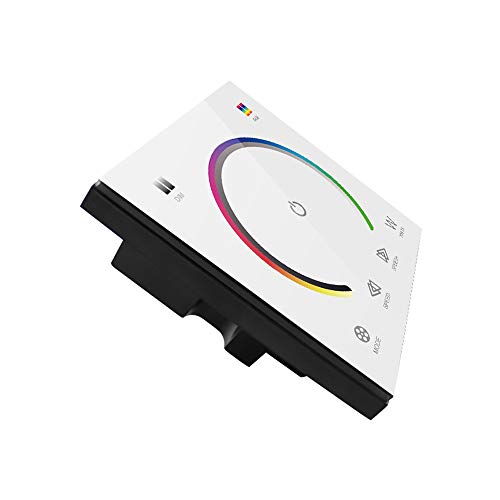
The AMKI wall-mounted touch panel supports DC12V-24V RGB LED strips, including 3528, 2835, and 5050 configurations. It offers a high-end touch interface, easy installation, and a two-year warranty. The controller is suitable for indoor and outdoor lighting and supports various lighting effects, including jumping, gradual, and strobe transitions. It emphasizes reliable connectivity and user-friendly operation.
LGIDTECH P3 Wall-Mounted Full Touch Panel

LGIDTECH P3 supports RGB, RGBW, and RGB+CCT strips in DC 12-24V with a 10A/120W (or 240W) capacity. It offers 1%-100% dimming and compatibility notes for voice control via gateway hubs, plus a night-light indicator. The device is designed for wall mounting, with a focus on precise brightness control and multi-mode color output, suitable for ambient home lighting or stage setups.
MEIRIYFA RGB LED Dimmer Knob Controller

This 3-channel dimmer uses PWM digital brightness regulation and a manual knob for stepless color mixing and brightness control. It supports DC12-24V operation and is compatible with various LED light sources, including soft and hard light strips and modules. The design emphasizes straightforward wiring and simple operation for bespoke color effects.
Sorfia RGB LED Dimmer Switch

The Sorfia dimmer switch combines a PWM dimmer with RF remote control for RGB LED strips in a compact wall-mount form. It is designed for 12-24V systems and up to 18A current, delivering smooth dimming and remote convenience. The package typically emphasizes ease of integration with 5050/3528 LED strips and simple setup.
LaiPuDuo RGBW Wall Controller

LaiPuDuo’s RGBW wall controller provides a capacitive touch interface with quick brightness adjustments and full-color output for DC12-24V LED strips. Built for indoor use, it emphasizes a high-precision touch experience and straightforward wall installation, enabling rapid scene changes and mood lighting without drilling into walls.
Buying Guide: Key Considerations for RGBW and RGB LED Wall Plate Controllers
Compatibility: Confirm voltage (DC12V-24V) and LED strip type (RGB, RGBW, RGB+CCT, or COB). Ensure the controller supports your specific strips (e.g., 5050/3528) and the desired color or white channel configuration.
Control method: Choose between touch panel, knob dimmer, or RF/voice control. Touch panels offer fast on/off and brightness changes, while RF remotes provide flexible placement. Some systems require gateway hubs for voice or DMX control.
Dimming range and fidelity: Look for 1%-100% dimming with smooth transitions. Check PWM-based dimming for accuracy and minimal color shift at low brightness.
Installation and mounting: Ensure the wall plate is compatible with your wall type and that wiring is straightforward. Some units are designed for indoor use, while others mention outdoor suitability.
Durability and warranty: A two-year or longer warranty and solid build quality reduce maintenance concerns, especially in high-traffic areas or rooms with frequent color changes.
Integration: Consider whether the controller can work with existing hubs, DMX, or smart home setups. Some models require specific gateways or receivers for full functionality.