Remote power control over IP is essential for IT admins, home lab enthusiasts, and remote site management. The right IP-enabled power switch can monitor connectivity, perform automated reboots, and schedule power cycling to keep devices like modems, routers, and servers online. Below we highlight five top options designed to defend against outages, reduce downtime, and simplify remote administration. A quick product summary follows, then in-depth sections for each option.
Product Snapshot
- MSNSwitch2 Internet Enabled IP Remote Power Switch with Reboot (UIS-722b) — 2 independent outlets, auto-reboot, cloud/app/web/API access
- ezOutlet5 – Internet Enabled IP & Wi-Fi Remote Power Switch (EZ-72b) — single outlet, Wi‑Fi or Ethernet, auto reboot
- IP-Based PDU Remote Power Switch with Auto Ping — professional 2-outlet IP PDU with built-in web server
- ezOutlet5-2R Dual Outlet IP & WiFi Remote Power Switch (EZ-73a) — dual outlets, auto reboot, LAN/Wi‑Fi
- MSNSwitch2 IP Enabled Remote Power, Dual Outlets (UIS-722T) — dual outlets, ping-based reboot, cloud/app
Table: Quick product overview
| Product | Outlets | Connectivity | Key Benefit | Brand |
|---|---|---|---|---|
| UIS-722b | 2 | Ethernet/Wi‑Fi | Auto-reboot on connectivity loss | Proxicast |
| EZ-72b | 1 | Wi‑Fi/ Ethernet | Router/modem auto-reboot | Proxicast |
| IP-Based PDU 2-outlet | 2 | LAN/WAN | Centralized remote control | AllAboutAdapters |
| EZ-73a | 2 | Wi‑Fi/Ethernet | Dual reboot capability | Proxicast |
| UIS-722T | 2 | Cloud/APP | Ping-based auto reset | Proxicast |
MSNSwitch2 Internet Enabled IP Remote Power Switch with Reboot

The MSNSwitch2 is a compact, cloud-enabled IP power switch with two independent outlets. It monitors Internet connectivity and can automatically cycle one or both outlets if the connection is lost, helping restore network services quickly. It supports user-definable scheduled power cycling and a straightforward auto-reset function activated by a single button. This device is suited for remotely rebooting PCs, modems, routers, DVRs, PLCs, and other critical equipment. Control is available via smartphone app, cloud service, web browser, or API, providing flexible, remote management options for IT and facilities teams.
Key considerations:
– Robust auto-reboot when connectivity drops reduces downtime for network gear.
– Two independent outlets enable separate reboot strategies for different devices.
– API access enables integration with existing monitoring systems and automation workflows.
ezOutlet5 – Internet Enabled IP & Wi-Fi Remote Power Switch
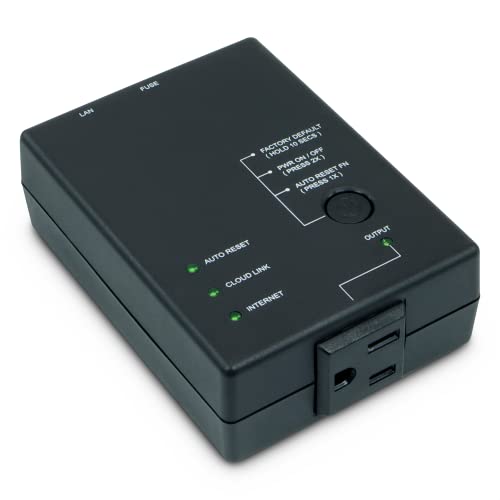
The ezOutlet5 is a single-outlet, IP-enabled device with both 2.4 GHz Wi‑Fi and Ethernet connectivity. It continuously monitors Internet connectivity and reboots the connected equipment when the broadband connection is lost, making it ideal for modems, routers, and security cameras. It supports cloud and LAN control, enabling remote reboot and management via iOS, Android, or a web interface. The device is designed for simple deployment with automatic reboot behavior that helps keep essential services online without manual intervention.
Key considerations:
– Effective for single-device reboots when network connectivity fails.
– Dual-path connectivity (Wi‑Fi and Ethernet) offers flexibility in different network setups.
– Cloud and local control provide multiple management options for remote administration.
IP-Based PDU Remote Power Switch with Auto Ping Support

This professional IP-addressable PDU provides built-in web management with two AC outlets. It supports remote and centralized control over power distribution via LAN or Internet, and all outlets can be managed independently. It offers on/off switching, immediate or delayed reboot, and power event scheduling. The device is suited for data centers, labs, or small business environments where centralized power control and detailed scheduling are required to maintain uptime and orderly restarts of equipment.
Key considerations:
– Independent outlet control enables nuanced reboot strategies.
– Scheduling and priority-based power cycling help orchestrate complex environments.
– On-device HTML web server simplifies setup and remote management without additional software.
ezOutlet5-2R Dual Outlet IP & WiFi Remote Power Switch

The ezOutlet5-2R offers two web-controllable AC outlets with automatic reboot behavior when connectivity issues occur. It connects via 2.4 GHz WiFi or 10/100 Ethernet, enabling remote power cycling for paired devices or separate systems. This model is designed for home offices or small business setups where two devices benefit from independent control, such as a modem and a primary router or separate servers in a small lab environment.
Key considerations:
– Dual outlets provide more reboot strategy options in compact form factors.
– WiFi/Ethernet flexibility supports diverse network layouts.
– Automatic reboot improves resilience for linked Internet-enabled devices.
MSNSwitch2 IP Enabled Remote Power, Ping Auto Reboot (UIS-722)
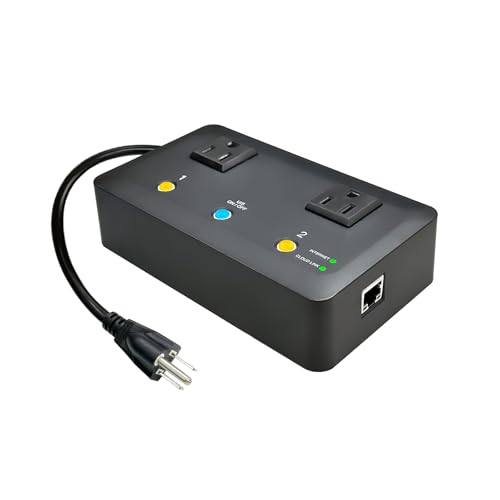
Another variant of the MSNSwitch2 family, the UIS-722 emphasizes ping-based auto reboot with dual outlets and cloud/app access. It is designed for IT professionals and home networks that require remote resets for devices that frequently lose connectivity or respond slowly. The device provides scheduled power cycling, and a ready-to-use auto reset feature suitable for a wide range of remote equipment, including industrial devices and IoT hubs.
Key considerations:
– Ping-based reboot supports connectivity-focused recovery for remote devices.
– Dual outlets enable independent reboot sequences for critical gear.
– Cloud and app access support integration with monitoring and automation tools.
Buying Guide: IP Power Control Core Considerations
- Outlets and load capacity: Choose models with enough outlets for your devices and ensure the current rating matches or surpasses connected equipment.
- Connectivity options: Ethernet, Wi‑Fi, or both—pick based on your network topology, security policies, and reliability requirements.
- Monitoring and reboot logic: Look for auto-reboot on connectivity loss, ping checks, or scheduled power cycling to match your operational needs.
- Management interfaces: Cloud, mobile apps, web UI, and APIs enable integration with existing monitoring systems and automation platforms.
- Security: Ensure devices support secure access, password protection, and, if available, firmware update capabilities to mitigate vulnerabilities.
- Latency and response time: For critical equipment, consider devices with fast reboot and low-latency command execution to minimize downtime.
- Physical form factor and mounting: Wall-mountable or desktop units with appropriate cabling can help fit into tight spaces or rack environments.
- Remote diagnostics: Some models offer logging, event history, and alerting to help diagnose recurring outages.
- Compliance and compatibility: Especially for business or lab use, confirm if the device meets relevant regulatory standards and integrates with existing infrastructure.
Selecting the right IP power control device depends on your environment. For two-device setups requiring robust automation and cloud control, models with cloud/app access and auto-reboot features provide strong resilience. For single-outlet needs, a Wi‑Fi or Ethernet-connected option with automatic reboot can simplify remote management. For data-center or lab configurations, a professional IP-based PDU with centralized control and advanced scheduling may be the best fit. Consider your devices’ reboot tolerance, network reliability, and preferred management interface when deciding.