In modern classrooms, radio frequency (RF) classroom response systems let students participate through remote clickers, instantly polling opinions, quizzes, and attendance while instructors gauge understanding in real time. This article highlights five RF-based options and accessories that support engaging, data-driven teaching. Each product section provides a quick overview, key features, and practical use cases to help educators select the right solution for their classroom size and tech setup.
Summary Table
| Product | Brand | What It Is | Ideal For |
|---|---|---|---|
| iClicker Student Remote (Gen1) | W. H. Freeman | RF classroom response system remote | Small to medium classes seeking simple polling |
| TURNING TECHNOLOGIES RCRF-03 | Turning Technologies | RF classroom aide with programmable channel | Medium to large classes needing quick channel changes |
| Surecom SF401 Plus | Surecom | RF frequency counter and CTCCSS/DCS decoder | Technical setups, RF listening, and classroom demonstrations |
| Frequency Multiplier Module RF | plplaaoo | Passive frequency doubler for RF projects | STEM labs and advanced RF demonstrations |
| Retekess TR101 Headphones (5 Pack) | Retekess | FM wireless headphones for classroom testing and tours | Auditory support in test environments and group activities |
iClicker Student Remote (Gen1) Overview

The iClicker student remote is a compact RF-based polling device used in classrooms to collect student responses during lectures. Its straightforward design supports quick multiple-choice and numeric answers, enabling instructors to capture real-time feedback. The device pairs with instructor software to compile participation rates, assess understanding, and tailor discussion prompts to the class’s needs. Battery life and interference resistance are important considerations in dense wireless environments.
TURNING TECHNOLOGIES RCRF-03

The TURNING TECHNOLOGIES RCRF-03 offers a robust RF classroom response solution with a 200-ft range, LCD interface, and programmable channel options. It allows quick session switching, enabling instructors to manage multiple groups or topics within a single class. Battery life is typically long, with included coin cell batteries. Its ease of use supports large classrooms where rapid polling and minimal setup time are critical. This system is well-suited for quizzes, attendance, and immediate feedback on learning objectives.
Surecom SF401 Plus Frequency Counter
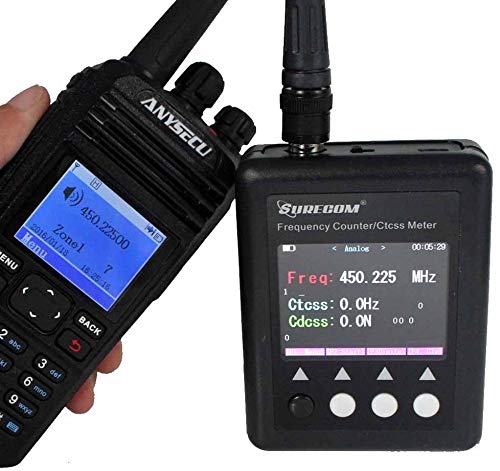
While not a direct classroom clicker, the Surecom SF401 Plus is a portable RF frequency counter that measures continuous carrier signals from walkie-talkies and other RF sources. It includes a signal strength indicator and supports multiple ranges, making it useful for demonstrating RF principles, charting channel usage, or ensuring compliance with classroom RF experiments. This tool is most applicable in technology labs or engineering-focused courses requiring real-time frequency measurement.
Mcbazel Surecom SF401 Plus Frequency Counter

As a variant of the same RF counter family, this listing reiterates the device’s utility in measuring walkie-talkie frequencies from 27MHz to 3000MHz. It is designed for precise transmission frequency testing and includes accessory antennas and power options to support classroom demonstrations of radio frequency behavior. The unit is not intended for broad-spectrum measurements but excels in targeted frequency verification tasks in tech labs.
Frequency Multiplier Module RF Frequency Doubler

This passive frequency doubler converts 0.85-2 GHz input signals to 1.7-4 GHz output, enabling advanced demonstrations of frequency synthesis and signal processing in RF labs. Featuring a passive design, it requires no external power supply and provides a compact option for students exploring how harmonics and doubling affect signal integrity. It’s especially useful for higher-level physics or engineering courses that examine RF circuit design.
Retekess TR101 Headphones (5 Pack)

The Retekess TR101 set provides wireless FM headset functionality suitable for classroom testing or guided tours, with stereo output and a 3.5mm input jack. In a radio-frequency-assisted classroom, these headphones can help isolate audio prompts, announcements, or exam materials for individual groups or students, reducing cross-room interference during large-scale activities.
Buying Guide: RF Classroom Response And RF Lab Tools

Key purchase considerations include:
- Class size and polling needs: Choose a system with a sufficient response range and reliable channel management to handle the number of students and simultaneous sessions.
- Ease of use: Prioritize intuitive remotes or clickers, quick pairing with instructor software, and minimal setup time between activities.
- Interference tolerance: In busy RF environments, systems with step-by-step channel switching and robust anti-collision protocols help maintain accurate polling results.
- Battery life and maintenance: Long-life batteries and straightforward replacement procedures reduce classroom downtime.
- Lab compatibility: For RF demonstrations, devices like frequency counters and multipliers should integrate with curriculum goals and safety guidelines.
- Audio support: Headphones and audio receivers can enhance focus during tests or demonstrations where quiet environments are needed.
When comparing products, assess total cost of ownership, software ecosystem compatibility, and user reviews focused on classroom performance and durability. For STEM-focused courses, combining RF response systems with RF measurement tools can provide a comprehensive hands-on experience, from polling engagement to frequency analysis.
These options offer a spectrum of RF-based classroom tools, from simple instant polling to advanced RF demonstrations. Educators can mix and match devices to fit teaching objectives, class size, and technical curricula while maintaining an objective, data-driven approach to student engagement.