Lightning and power surges can damage television sets and connected equipment. This article highlights reliable coaxial surge protectors and lightning arrestors designed to safeguard TVs, antennas, and receivers. Each product is chosen for performance, ease of installation, and compatibility with common home entertainment setups. Read on to compare top options and find practical buying guidance for American households.
Summary of chosen products:
| Product | Brand | Key Benefit |
|---|---|---|
| Coaxial Surge Lightning Protector (2 Pack) | groword | High surge protection with low loss, suitable for coaxial TV, cable, and satellite systems |
| TV Antenna Lightning Surge Suppressor | Channel Master | Compact inline protector for HDTV antennas with up to 6kV surge protection |
| VCE Coaxial Surge Protector | VCE | Low insertion loss, DC power option, rated for CATV/MATV/SATV networks |
| TII Broadband Cable Surge Protector | TII | In-line design with broad frequency support (5-1500MHz) for HDTV and modems |
| XRDS RF Lightning Arrestor | XRDS-RF | Gas discharge protection for outdoor antennas and signal boosters with low loss |
Groword Coaxial Surge Protector (2 Pack)

The groword surge protector protects connected devices during lightning events by opening the circuit when surge discharge is detected. It is designed to safeguard TVs, receivers, set-top boxes, and other home electronics. Manufactured with nickel-plated brass, it offers durable, corrosion-resistant construction for long-term use. The device is suitable for CATV, MATV, SATV, and satellite TV applications, featuring low return loss and the option to be remotely powered via a DC socket. It is intended for inline installation in coaxial networks.
Channel Master TV Antenna Lightning Surge Suppressor

This in-line protector is designed to shield HDTV antennas and connected devices from electrical surges. Its compact design makes it easy to add to existing antenna setups, and it provides up to 6kV surge protection. The unit is described as robust and simple to implement, offering a straightforward way to reduce the risk of surge-related damage to TVs and receivers in digital HDTV systems.
Cable Protector for TV – Coaxial Surge Protector

Designed for satellite, antenna, and cable TV systems, this protector disconnects instantly during a lightning strike and reconnects after about 10 seconds. It is compatible with CATV, MATV, SATV, and other coaxial networks, offering easy inline installation to protect receivers, set-top boxes, TVs, and distribution equipment. Long service life and resilient construction accompany its simple, direct approach to surge protection.
VCE Coaxial Surge Protector
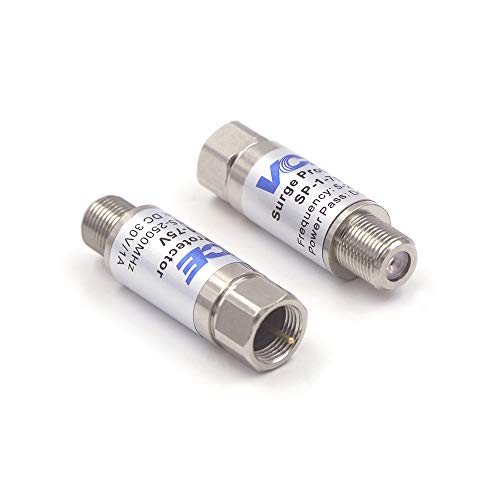
The VCE protector provides robust protection against voltage surges while maintaining low insertion loss and high return loss characteristics. It is CE and RoHS compliant and suitable for CATV, MATV, SATV, and other coaxial networks. A DC outlet option supports remote power supply, making it a flexible choice for home entertainment setups that require inline surge protection without sacrificing signal integrity.
TII 212 Broadband Surge Protector

The TII 212 in-line protector is designed to shield HDTV receivers, DVRs, and cable modems from surges. It claims transparent operation across DC to 1 GHz, ensuring minimal signal interference while offering robust surge protection. Suitable for mixed home setups, it supports a range of devices that connect via coaxial networks and is presented as a straightforward solution for protecting valuable AV gear from transient events.
PBD LTE Filter For TV Antenna

The PBD LTE Filter blocks interference from 3G, 4G, and 5G LTE signals before they reach the TV antenna, while allowing TV signals up to 608 MHz to pass through. It also grounds coaxial cables to reduce static buildup and protect connected devices from lightning and surges. This option is especially useful for modern digital TV reception alongside surge protection, though its emphasis is on interference mitigation in addition to protection.
Coaxial Surge Protector for Cable TV – IMUQI
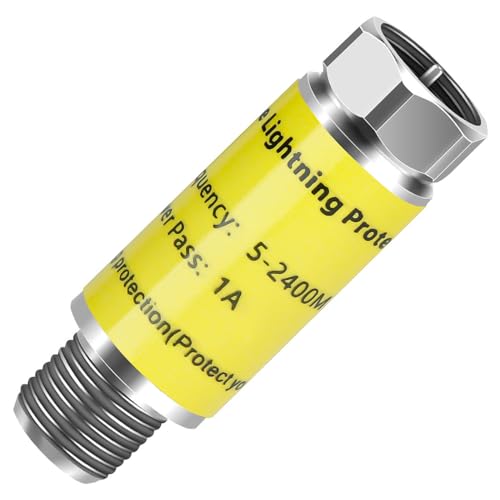
IMUQI’s surge protector for coaxial cables emphasizes high surge protection with a low-loss profile. It specifies a 100A surge handling capacity and provides return-loss data to support signal integrity. The product is designed for inline installation between the TV/satellite equipment and the distribution network, aiming to safeguard receivers, TVs, and streaming devices from lightning-induced damage.
XRDS-RF Lightning Arrestor

The XRDS RF arrestor uses a gas discharge element for surge protection on 75 ohm coax connections. It is intended for outdoor antennas and signal boosters, protecting antennas and related amplifiers from lightning. The device supports bi-directional protection with a replaceable gas tube element and claims low loss and wide frequency compatibility up to 3 GHz, with a note on grounding requirements for optimal performance.
Buying Guide: Key Purchase Considerations
- Surge rating and response time: Look for devices that specify surge handling (e.g., amperage or kilovolt ratings) and a fast response to lightning events to protect TVs and receivers.
- Frequency range and compatibility: Ensure the protector supports the coaxial frequency bands used by your TV antenna, cable, or satellite system (common ranges include up to 1.5–3 GHz).
- Insertion loss and return loss: Low insertion loss preserves signal quality, while adequate return loss reduces reflections that degrade picture and sound.
- DC power options: Some units offer a DC outlet to remotely power an inline protector, which can help maintain signal integrity for active devices.
- Construction and durability: Nickel-plated brass, weatherproof housings, and corrosion resistance matter for outdoor or attic installations exposed to the elements.
- Grounding considerations: Many surge protectors require proper grounding to maximize protection. Check installation instructions for grounding guidelines.
- Installation type: Inline, easy-to-install designs are preferable for homeowner setups without specialized tools. Inline models reduce rerouting of cables and maintain a clean install.
- Compatibility with modern standards: If you use ATSC 1.0/3.0 or other digital standards, ensure the device does not degrade advanced signals while protecting hardware.
- Maintenance and replacement parts: Some surge protectors include replaceable elements (gas discharge tubes)—consider long-term maintenance needs and availability of replacement parts.
- Multi-pack options: For multi-room or antenna networks, a 2-pack or kit can simplify installation and provide consistent protection across devices.
When selecting a protector, balance surge protection strength with signal integrity. For outdoor antennas or roof-mounted setups, prioritize weatherproof and corrosion-resistant designs. For indoor configurations, compact inline units with strong surge ratings and low loss are typically sufficient. Consider whether you prefer a single inline protector at the entry point of your coax network or distributed protection at multiple connection points to minimize the risk of surge propagation.