When scouting for a portable tripod with an extendable mast, the goal is a compact, sturdy, and versatile tool that can switch from ground leveling to overhead shots with ease. This guide highlights five top options that blend lightweight design, reliable load capacity, and flexible height adjustments—perfect for photography, videography, live streaming, and fieldwork. Each model below supports a range of devices from smartphones to mirrorless cameras, and many convert into monopods or feature inverted columns for macro and overhead shots.
| Product | Brand | Max Height | Weight | Load Capacity |
|---|---|---|---|---|
| NEEWER Basics Carbon Fiber Travel Tripod Monopod TP17B | NEEWER | 63.8″ (162 cm) / Inverted option | Lightweight (approx. 4–5 lb typical for carbon fiber) | 13.2 lbs (6 kg) |
| K&F Concept Camera Tripod, 75″ | K&F CONCEPT | 75″ (190 cm) | About 2.6 lb (1.18 kg) | Camera, Phone, Tablet suitable; varies by head |
| GRA-ULT01 MK3 Portable Antenna Tripod Mast | Gabil | Not specified in inches; designed for mast use | Lightweight aluminum | Supports various antennas and accessories |
| RFMAX Heavy Duty Portable Antenna Mounting Tripod | RFMAX | 47–79 inches | Not stated | 132 lbs load capacity |
| NEEWER Basics TP15 Camera Tripod Monopod | NEEWER | 68″ tall | Lightweight metal | Up to 17.6 lbs |
NEEWER Basics Carbon Fiber Travel Tripod Monopod TP17B
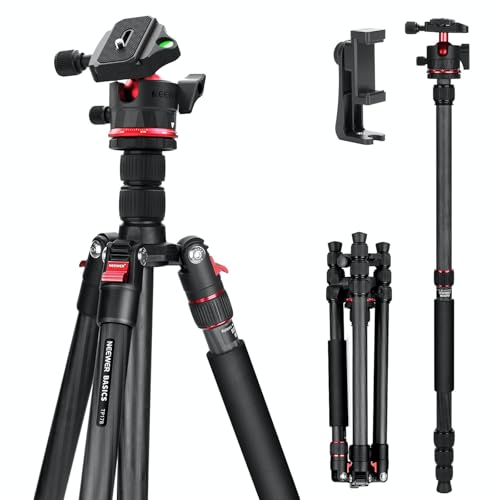
The NEEWER Basics TP17B is a cost-conscious option that emphasizes essential tripod functionality with a carbon fiber build for strength without excess weight. It supports DSLRs up to 13.2 lbs, and includes a reversible leg design that folds to compact dimensions for easier travel. A key feature is its interchangeable monopod capability, letting creators quickly switch between a steady tripod and a handheld setup for on-the-go filming. The two-section center column extends from roughly 54 cm to 162 cm, with leg-angle options to stabilize on uneven surfaces. The setup prioritizes quick adjustments and reliable stability for field shoots.
Crafted for versatility, the TP17B accommodates macro and overhead angles by inverting the center column. This makes it suitable for tabletop product shots, video reviews, and outdoor scenes where portable height adjustments are essential. The included leg locks and non-slip feet help maintain grip on diverse terrains. While designed for entry-level to mid-range cameras, its robust construction provides a solid base for extended shoots, ensuring minimal shake during pans and tilts. Overall, TP17B blends portability with practical features for travelers and hobbyists alike.
Key considerations: weight and balance, ease of setup, and how well it converts into a monopod for live events. This model is well-suited for creators who want a single, compact system that can transition between stable long-form recordings and lightweight mobile shoots without sacrificing load capacity or durability.
GRA-ULT01 MK3 Portable Antenna Tripod Mast

The Gabil GRA-ULT01 MK3 focuses on antenna support but is adaptable to lightweight camera and radio setups. Made from aircraft-grade aluminum alloy, it delivers stable performance across varied terrains, including grass and soil. While primarily marketed for amateur radio antennas, its portability and quick assembly make it a viable option for field video work that requires a compact mast-like structure. Its compatibility with GRA-7350T and other mobile antennas adds to its appeal for outdoor shoots where a sturdy mast is needed for elevated monitoring or line-of-sight tasks.
Pros include easy installation and a user-friendly setup process, plus a design that travels well for field deployments. The trade-off is that its framing is tuned toward antennas rather than cinema-grade camera rigs, so load distribution and accessory compatibility should be verified for specialized filming gear. For hobbyists and technicians who need a lightweight mast with reliable stability, this model is a capable choice with practical cross-functionality.
Buyers should consider height limits, threading compatibility, and how the mast integrates with existing tripods or clamps. If you plan a hybrid setup involving both radio gear and a camera, the MK3 provides a compact backbone that can adapt to multiple tasks in the field.
RFMAX Heavy Duty Portable Antenna Mounting Tripod

RFMAX presents a heavy-duty portable mounting tripod designed for 47–79 inches of height with a substantial 132 lbs load capacity. This unit is tailored for RF and antenna installations, but its sturdy aluminum construction makes it a viable option for larger camera setups and field projects that require a stable, tall support without bulk. The tripod’s single-leg design and robust mounting bracket options cater to operators who need a strong base for tall, potentially wind-exposed installations.
Strengths include exceptional load tolerance and a compact footprint when collapsed, making it suitable for travel to remote locations. The primary considerations are whether the tripod’s head and mounting hardware meet your camera or equipment needs and if the height range integrates smoothly with your subject distance. For those who demand maximum stability for taller setups, RFMAX offers a dependable solution that can support a variety of antennas and gear in the field.
K&F Concept Camera Tripod, 75″

The K&F Concept 75″ tripod combines pentagonal tube design with a lightweight frame for improved stability and ease of folding. Weighing about 2.6 lbs, it offers a compact folded size around 19.6 inches, making it especially travel-friendly. Its 75-inch maximum height provides ample vertical reach for portraits, events, and video captures, while a 360-degree pan head enables smooth horizontal movement. A universal phone-and-tablet holder expands its utility for live streaming, vlogging, and social media content creation on the go.
Durability is aided by the pentagonal tube geometry, which helps resist torsional twisting when framing shots at awkward angles. The tripod’s compact form does not compromise height, a key factor for overhead shots or elevated vantage points. While canoeing through rugged environments, the robust construction supports a broad range of devices, from compact action cams to larger mirrorless bodies, provided the head’s load capacity is matched accordingly. For travelers and content creators seeking lightweight performance with strong height options, this model offers a compelling balance of portability and versatility.
SENSYNE 72″ Phone Tripod With Remote

The SENSYNE 72″ phone tripod stands out for its height, offering up to 72 inches of reach with a stable aluminum frame and twist locks that prevent wobbling. It includes a wireless remote for smartphone control, which is advantageous for solo creators who need hands-free operation. The phone clip supports a range of devices from small to mid-size smartphones, and the clamp design includes a rubber padding layer to protect devices from scratches. This tripod emphasizes phone-based videography, live streaming, and casual photography with an emphasis on stability and ease of use.
Considerations include the balance between phone compatibility and accessory expansion for cameras. While primarily designed for mobile devices, its solid center column and quick-release plates facilitate lightweight camera use where appropriate. The 360-degree pan head supports versatile angles, and the bubble level helps ensure precise framing. For creators prioritizing height and phone-centric workflows, the SENSYNE 72″ offers a reliable, adjustable platform with user-friendly features.
Buying Guide: How to choose the right portable tripod with an extendable mast
- Height range and stability: Look for models offering both tall reach and a robust base. Taller masts help with overhead shots, while wide leg bases reduce sway in wind or uneven ground.
- Load capacity and compatibility: Match the maximum load to your gear—cameras, lens combinations, or antennas. Check head types and mounting threads (1/4″-20 or 3/8″-16).
- Weight and portability: Carbon fiber variants are lighter but pricier; aluminum options offer budget-friendly durability. Consider collapsed length for travel storage.
- Monopod and overhead functionality: Many tripods convert to monopods or inverted-column configurations for macro and overhead shots—assess how often you’ll switch modes.
- Head type and pan/tilt performance: A smooth pan head with a 360-degree rotation and precise tilt helps maintain frame consistency during motion.
- Accessory ecosystem: Look for compatible phone clamps, tablet holders, and quick-release plates. Some models include remotes or bubble levels for precision.
- Terrain adaptability: For outdoor use, consider feet type (rubber vs. spikes) and leg-angle options to stabilize on grass, sand, or gravel.
Perspective considerations include budget-conscious options that deliver essential stability, mid-range designs with added versatility (monopod function, overhead capability), and premium builds that maximize longevity in harsh environments. If you frequently shoot with smartphones, tablet integrations, and lightweight mirrorless cameras, prioritize models with robust smartphone holders, wide compatibility, and reliable locking mechanisms. For radio or field technicians, assess compatibility with mast systems and mounting brackets, ensuring the tripod’s dimensions and load rating align with your equipment lineup.