Power over Ethernet (PoE) mesh access points simplify deploying robust, high-performance Wi‑Fi across offices, homes, and mixed environments. This guide highlights top PoE mesh options from popular brands, focusing on reliability, scalability, and ease of management. All selections support modern Wi‑Fi standards, cloud or app-based controls, and flexible power options to fit ceilings, walls, or discreet placements. Whether you’re building a multi‑level home, a small business, or an apartment complex, these devices help you expand coverage without adding clutter. The following selections are organized to help you compare features, performance, and deployment styles at a glance.
| Product | Brand | Key Strengths |
|---|---|---|
| TP-Link Deco X50-PoE (3-Pack) | TP-Link | WiFi 6 mesh with PoE, 2.5G ports, ceiling/wall mounting |
| TP-Link EAP650 Ultra-Slim | TP-Link | Omada cloud management, AX3000, sleek design |
| TP-Link EAP610 | TP-Link | Wi‑Fi 6, dual band, seamless roaming, SDN-friendly |
| Amazon eero PoE 6 | eero | Ceiling/wall mounting, up to 1.6 Gbps, PoE powered |
| Cudy AP1300 | Cudy | AC1200, MU‑MIMO, multiple power options |
TP-Link Deco X50-PoE 3‑Pack: Ultra-Fast Mesh For Large Areas

The Deco X50-PoE system combines AX3000 dual‑band WiFi 6 with PoE power, creating a scalable mesh network that covers large homes or offices with reliable backhaul. Each unit can be powered via PoE+ or traditional adapters, enabling ceiling or wall mounting to minimize clutter. The system features two 2.5G Ethernet ports per unit to support multi‑gig backhaul and reduce bottlenecks, ensuring smooth 4K streaming, gaming, and video calls across the mesh. When expanding, add more Deco nodes to extend coverage without rewiring. Management is streamlined through the Deco app, offering quick setup and ongoing control across the mesh network.
TP-Link EAP650 Ultra-Slim Wireless Access Point

The EAP650 is designed for high‑density environments, offering AX3000 performance with a slim form factor for easy mounting in offices or hospitality spaces. It supports Omada cloud management with no extra controller needed, simplifying remote administration. The access point emphasizes fast true Wi‑Fi 6 speeds, leveraging 1024‑QAM and Long OFDM Symbol technologies to boost overall throughput. Its compact design blends into contemporary interiors while delivering robust coverage, making it suitable for scenarios that require discreet installations and scalable cloud control.
TP-Link EAP610: Omada WiFi 6 AX1800 Access Point

The EAP610 provides reliable dual‑band Wi‑Fi 6 performance with Omada SDN integration for centralized management. It supports seamless roaming across multiple Omada devices, enabling consistent connectivity as users move through a space. The device is compact enough for quick installations and is designed to work with cloud or on‑prem controllers, offering flexible deployment options for businesses and networks with mixed hardware. With PoE+ powering, network architects can place the AP where coverage is strongest without adding local power outlets.
TP-Link Omada WiFi 7 BE5000 (EAP720) Access Point

The BE5000 series introduces WiFi 7 technology with dual‑band 4×4 streams and a 2.5G port for high‑speed backhaul. It is designed for larger deployments requiring high data capacity, advanced cloud management, and future‑proof upgrades. The platform supports seamless roaming, ZTP (Zero Touch Provisioning), and AI‑assisted network monitoring within the Omada ecosystem. This model is well suited for multi‑site deployments where centralized control and scalable performance are priorities.
TP-Link EAP225 Omada AC1350 Access Point

The EAP225 delivers reliable MU‑MIMO with AC wave 2 speeds up to 1350 Mbps, suitable for mid‑sized environments that need dependable coverage across multiple devices. Integrated Omada SDN enables cloud or local management, with options to deploy a dedicated hardware controller, software controller, or cloud plan. This model emphasizes cloud accessibility and centralized management for ongoing network optimization and simplified maintenance.
TP-Link Deco X50-PoE 1‑Pack

This single‑unit Deco option offers the same mesh and PoE features as the three‑pack variant, making it suitable for upgrading smaller homes or starting a larger deployment with room to expand later. With AX3000 WiFi 6 performance and PoE powering, it supports expansion by adding more Deco units for enhanced coverage, while maintaining centralized control through the Deco app. The model remains compatible with other Deco units for flexible mesh growth.
Cudy AP1300: AC1200 Mesh‑Capable Access Point
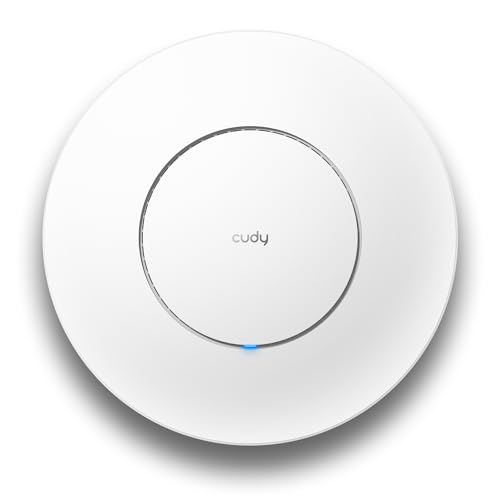
The Cudy AP1300 provides MU‑MIMO with 802.11ac Wave 2 speeds up to 867 Mbps on the 5 GHz band and 300 Mbps on the 2.4 GHz band. It supports PoE, passive PoE, or a DC supply, offering deployment flexibility across different environments. Designed to handle connections from many devices, the AP1300 is a cost‑effective option for extending wireless coverage in small to medium spaces while remaining adaptable to varying power sources.
Buying Guide: Key Purchase Considerations
- Coverage and density: Determine the area to cover and the number of concurrent devices. Mesh systems like Deco X50‑PoE excel in multi‑level homes, while dedicated Omada APs are strong for offices with centralized management needs.
- Power options: PoE power simplifies installation by eliminating separate power adapters. Consider PoE+ for higher power requirements or a mixed setup with traditional plugs in hard-to-reach ceilings.
- Management and scalability: Cloud‑based or app‑driven management helps with firmware updates and network monitoring. Omada SDN provides centralized control across devices and sites.
- Wi‑Fi standard and speed: Wi‑Fi 6 (AX) delivers higher efficiency in crowded environments. Wi‑Fi 7 options are future‑proof but may come at a higher cost and require compatible devices.
- Backhaul and ports: Look for multi‑Gig Ethernet backhaul options (2.5G or higher) to minimize bottlenecks between mesh nodes and the core router.
- Mounting and aesthetics: Ceiling or wall mounting clears floor space and improves signal propagation in multi‑story environments. Consider the form factor that best fits the installation space.
- Security and management features: WPA3, network segmentation, guest networks, and cloud access controls help maintain security and ease of use across devices and sites.
- Warranty and support: A longer warranty and readily available support can be important for business deployments and ongoing maintenance.
- Compatibility and ecosystem: If you already use a particular ecosystem (Omada, Deco, or eero), sticking with compatible devices can simplify setup and ongoing management.
In selecting a PoE mesh access point, evaluate not only the immediate coverage but also future expansion, cloud management options, and hardware compatibility with your existing network. This approach helps ensure a resilient, scalable, and manageable wireless network across environments, from compact homes to multi‑site offices.