Discover top PCIe and PCI tuner cards that unlock live TV, digital ATSC and Clear QAM, plus recording and streaming options. This guide highlights five prominent options, detailing their tuning capabilities, OS compatibility, and key features to help you choose the right card for Windows PCs, HTPC setups, or media centers. Each product section includes direct access to the manufacturer’s hardware and trusted performance notes to support informed decisions.
| Product | Brand | Channel Types | Form Factor | Notable Feature |
|---|---|---|---|---|
| Hauppauge 1196 WinTV HVR-1265 | Hauppauge | ATSC, Clear QAM | PCI Express | SoftPVR analog recording support |
| Hauppauge WinTV-quadHD PCIe | Hauppauge | ATSC, Clear QAM | PCI Express | Quad tuner with PiP and Wintv v10 |
| TBS6704 ATSC Clear QAM Quad Tuner PCIe | TBS | ATSC, Clear QAM | PCIe | Quad tuner for simultaneous recording |
| Hauppauge WinTV-quadHD | Hauppauge | ATSC, Clear QAM | PCIe (half-height) | Four tuners with PiP and v10 software |
| DigitPro PCIE Video Capture Card | DigitPro | CVBS, S-Video (NTSC/PAL) | PCIe | Low-latency HDMI capture and pass-through |
Hauppauge 1196 WinTV HVR-1265 PCI Express Hybrid High Definition TV Tuner Card

The Hauppauge 1196 WinTV HVR-1265 supports ATSC digital TV and Clear QAM digital cable TV, delivering up to 1080i video quality. It integrates with WinTV-Scheduler to plan recordings and can watch, pause, or record TV on a PC. The card also includes SoftPVR for recording analog programs to disk, expanding legacy content support.
Configuration notes emphasize flexible viewing modes, including windowed or full-screen experiences. While the device is PCI Express, users should verify motherboard slots and driver compatibility for Windows versions. This model suits users who want a hybrid card with both digital and analog capabilities in one slot.
Hauppauge WinTV-quadHD PCI Express TV Tuner Card 1609

The WinTV-quadHD offers four concurrent, unencrypted ATSC or Clear QAM streams. It supports PiP and includes WinTV v10 software for live viewing, full-screen or windowed modes, and a robust electronic program guide for scheduled recordings. The package typically includes a remote control with an IR sensor, easing remote navigation on a desktop environment.
Ideal for multi-channel recording setups or HTPC environments, this card emphasizes versatility with four tuners in a half-height PCIe form factor. Use cases range from home media centers to classroom setups where multiple channels need simultaneous monitoring.
TBS6704 ATSC Clear QAM Quad Tuner PCIe Digital TV Card
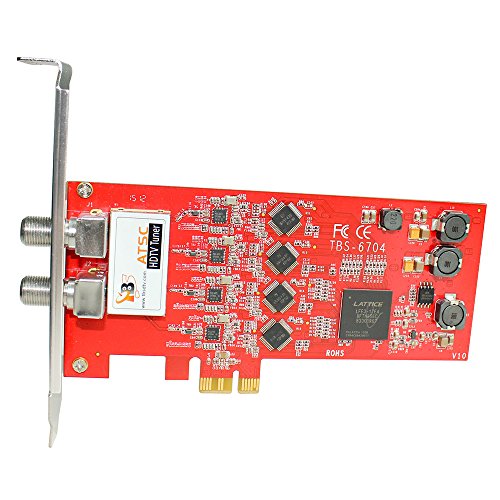
The TBS6704 is a quad-tuner PCIe card that handles ATSC and Clear QAM, enabling simultaneous reception of up to four HD channels. It emphasizes high sensitivity tuners and broad compatibility with North American digital TV standards. While aimed at Windows platforms, users should confirm driver support for Linux if planning a cross-platform HTPC setup. The card supports simultaneous viewing or recording across multiple channels.
Consider this option when a high-channel-count setup is needed for a home theater PC or IPTV server. Availability of Clear QAM can vary by local provider and network configuration, so operator compatibility should be verified beforehand.
Hauppauge WinTV-quadHD – 01698 – Quad Tuner PCI-Express Card

This WinTV-quadHD card is designed for four tuners on a half-height PCIe card, compatible with Windows 11, 10, 8, and 7. It supports simultaneous viewing or recording of up to four unencrypted ATSC channels or Clear QAM. The WinTV v10 software delivers flexible display options, including windowed and full-screen modes, plus four-channel PiP for monitoring multiple streams at once.
Useful for compact HTPC builds in small form-factor cases, this option balances physical space with robust multi-channel capability. Ensure your PC’s power supply and motherboard support a full set of tuners and that your local service provides Clear QAM where needed.
DigitPro PCIE Video Capture Card

The DigitPro PCIe capture card focuses on video and audio capture via a PCIe slot, supporting CVBS and S-Video inputs with NTSC and PAL compatibility. It emphasizes plug-and-play operation with no driver installation required for basic use, and outputs MJPEG or YUV422 at up to 1080P@30Hz. This makes it suitable for streaming, gaming, or archival tasks that require direct capture from external sources.
It serves well for users who need a straightforward capture solution without extensive tuner features. The absence of built-in TV tuners means it pairs best with external tuners or sources, allowing flexible integration into broader media workflows and content capture workflows.
Buying Guide: Key Purchase Considerations
Understanding your setup goals helps pick the right tuner card. Consider the following factors:
- Channel coverage: ATSC, Clear QAM, DVB etc. Verify what signals are available in your region and your provider’s offerings.
- Tuner count: More tuners enable simultaneous viewing and recording of multiple channels. Quad tuners are common for HTPCs and media servers.
- Form factor: Half-height PCIe cards fit compact cases, while full-height PCIe cards may require larger enclosures.
- Software ecosystem: Look for robust GUI support (WinTV v10, scheduling, PiP) and ongoing driver updates for your OS.
- Video quality: Check maximum supported resolution (1080i/1080p) and decoding support for your display setup.
- Compatibility: Ensure drivers work with your Windows version and any Linux or macOS components if you plan multiplatform use.
- Input options: For capture-centric use, assess CVBS, S-Video, HDMI pass-through, and the need for a built-in antenna splitter or external tuners.
- Remote control and ease of use: A bundled remote with IR sensor can streamline TV viewing from the desktop.
Pricing, warranty, and vendor support also factor into total cost of ownership. When evaluating multi-tuner solutions, compare how the software handles scheduling, electronic program guides, and PiP functionality to maximize your recording and viewing efficiency.