Open source arm boards empower hobbyists and educators to prototype, learn, and iterate on robotic manipulation projects. This article highlights five accessible options, spanning low-cost skeleton arms to single-board computers with robotics-friendly features. Each entry includes a quick visual reference, core capabilities, and practical use cases to help you compare open hardware and software ecosystems.
| Product | Brand | Key Focus |
|---|---|---|
| SO-ARM101 Low-Cost AI Arm 3D Printed Skeleton | seeed studio | Open-source arm skeleton with reinforcement learning readiness |
| Waveshare RP2350 GEEK Dev Board | waveshare | Open-source firmware on a compact SBC with display and I/O |
| Robotic Arm with Arduino 5DOF/Axis AI Smart Arm | LewanSoul | Arduino-based open platform with sensors and expansion |
| Orange Pi 3B 2G V2.1 | Orange Pi | Open-source SBC with RK3566 and AI acceleration options |
| Orange Pi 5 | Orange Pi | High-performance open board for AI and robotics workloads |
Throughout this guide, each product is evaluated for hardware openness, software ecosystem, ease of integration with robotics projects, and available learning resources. Whether you’re building a teaching aid, a research prototype, or a personal maker project, these boards offer practical paths to hands-on experimentation without vendor lock-in.
SO-ARM101 Low-Cost AI Arm 3D Printed Skeleton

SO-ARM101 is an open-source, low-cost robotic arm solution designed for easy integration with the LeRobot platform. It supports reinforcement learning and imitation learning workflows through LeRobot’s PyTorch-based ecosystem, enabling data collection, simulation, training, and deployment for real-world robotics tasks. Comprehensive assembly and calibration guides accompany the project, alongside tutorials for testing and deployment to help users start quickly and advance their robotic applications.
Waveshare RP2350 GEEK Dev Board

RP2350-GEEK is a compact single-board computer based on the RP2350 microcontroller, featuring a 1.14-inch color IPS LCD and multiple I/O interfaces. It includes onboard debugging options such as a 3PIN SWD port, USB to UART bridge, and I2C support, making it suitable for rapid prototyping of open robotics projects. The board ships with open-source firmware and is designed for experimentation, learning, and teaching in embedded systems and robotic control tasks.
Robotic Arm with Arduino 5DOF/Axis AI Smart Arm

The miniArm starter kit from LewanSoul is built on the Atmega328 platform and supports Arduino programming, with open-source projects and tutorials for secondary development. It offers high-performance hardware, including a 6-channel knob controller and multiple expansion ports for sensors and peripherals, enabling real-time control, AI experiments, and pose estimation projects. Bluetooth integration and a variety of sensors support hands-on exploration of robotics concepts and applications.
SDR Development Board for OS X Open Source Software Defined Radio
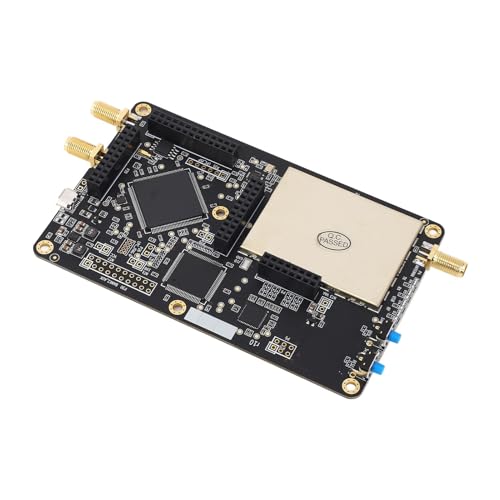
While focused on software-defined radio, this board demonstrates open-source hardware principles and flexible I/O for experimentation with RF sensing and signal processing. It supports easy installation and programming, offers cross-platform testing capabilities, and provides a platform for DIY development. Its openness and modular design make it a useful reference point for integrating sensors and control logic into broader robotics or embedded projects.
Orange Pi 3B 2G V2.1

Orange Pi 3B 2G combines a RK3566 quad-core processor with up to 1.8 GHz, Open Source OS support, and AI acceleration features. It supports 4K video, multiple RAM and storage configurations, and a broad set of interfaces for connectivity and peripherals. The board is well-suited for open robotics projects requiring a capable SBC with a robust software ecosystem and community-driven development resources.
Orange Pi 5

Orange Pi 5 uses the RK3588S with an eight-core configuration, up to 2.4 GHz, and an embedded NPU for AI tasks. It supports high-end graphics, 4K/8K display processing, and extensive I/O to connect sensors, cameras, and peripherals. The open-source orientation and strong development community make it a powerful platform for robotics, edge AI, and complex control systems, suitable for advanced projects and education in open hardware design.
Buying Guide
- Open hardware and software ecosystem: Look for boards with transparent schematics, permissive licenses, and active community support to simplify learning and development.
- Processing power and AI capabilities: Align CPU, GPU, and NPU resources with your project’s needs, from simple servo control to real-time computer vision and learning workloads.
- I/O and expansion options: Ensure compatibility with sensors, actuators, cameras, and communication interfaces (I2C, SPI, UART, USB, GPIO) essential for your robotics setup.
- Documentation and tutorials: Favor platforms with assembly guides, calibration procedures, sample projects, and step-by-step tutorials to accelerate onboarding.
- Compatibility with established ecosystems: Arduino, Raspberry Pi, and Linux-based environments can improve interoperability and learning curves.
- Hardware maturity and safety: Consider mechanical robustness, motor drivers, and protective enclosures, especially for hands-on educational kits and youth-focused projects.
- Power and thermal management: Assess power requirements, battery options, and heat dissipation for sustained operation in robotic experiments.