If you’re chasing octave-up effects that stay musical and responsive, a dedicated octave pedal can expand your sonic palette. This guide highlights five prominent options that deliver clear tracking, versatile tone shaping, and dependable build quality for American guitarists. Explore pedals that handle single notes and chords, offer polyphonic operation, and give you easy control over wet/dry mix and gain structure.
| Product | Brand | Key Feature |
|---|---|---|
| Donner Octave Guitar Pedal | Donner | 7 shift types and 3 tone modes |
| Polyphonic Octave Guitar Pedal (AFOT) | AFOT | Top/Both/Bottom modes |
| Rowin LEF-3806 Octave | Rowin | 11 octave modes, true bypass |
| BOSS OC-5 Octave Pedal | BOSS | Mono/Poly modes, dry output |
| JOYO Octave Fuzz (JF-12) | JOYO | Octave up with fuzz, mid-cut option |
Each pedal offers a distinct approach to octave-up sounds, from digital polyphonic processing to classic fuzz-with-octave textures. The following sections break down five strong picks and their defining capabilities to help you choose the right tool for your rig.
Donner Octave Guitar Pedal Overview

The Donner Harmonic Square Octave Pedal provides a compact solution with seven shift types and three tone modes. Its Sharp, Flat, and Detune options give you a range of octave-up and detuned tones for leads and rhythm parts. Wet and dry controls help balance the effect with your guitar signal, enabling clean blend for ambient textures or pronounced octave emphasis for solos. The true bypass design preserves your core tone when the pedal is disengaged, making it a practical choice for gigging players seeking reliable octave tracking in a small footprint.
AFOT Polyphonic Octave Pedal
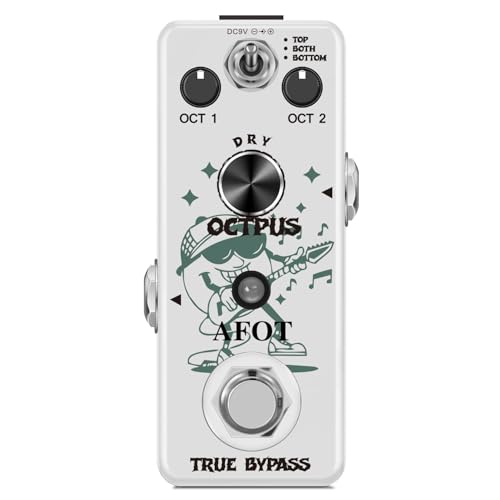
AFOT’s Polyphonic Octave Pedal offers three layering modes—TOP, BOTH, or BOTTOM—within a compact aluminum chassis. It’s designed to handle both single notes and chords with clarity, delivering a broad palette of octave textures. Independent wet/dry controls on the device enable precise balance between the original signal and the octave-shifted sound, supporting clean, punchy octave tones or rich, synth-like textures. This pedal emphasizes versatility for players exploring polyphonic octave effects in complex parts or live looping scenarios.
Rowin LEF-3806 Octave Pedal

Rowin’s Polyphonic Octave Pedal emphasizes affordability coupled with a wide octave range. It includes 11 different octave modes and a true bypass switch to minimize tone loss when the effect is off. The pedal is compact and built with sturdy components for stage use, offering a mix of high organ-like tones and deep bass octaves. Its small footprint makes it suitable for pedalboard-friendly setups while providing solid tracking and a variety of octave textures for riffs and atmospheric lines.
BOSS OC-5 Octave Pedal

The BOSS OC-5 Octave Pedal provides polyphonic guitar and bass octave options with dry direct output. It offers a lowest-range setting in Poly mode that applies the octave effect only to the lowest note in a chord, which helps preserve clarity in complex harmonies. This versatility makes it a dependable choice for players who want solid octave tracking across both single-note lines and chord work, with a reliable build common to BOSS pedals and widely supported by the gear community.
JOYO Octave Fuzz Pedal JF-12
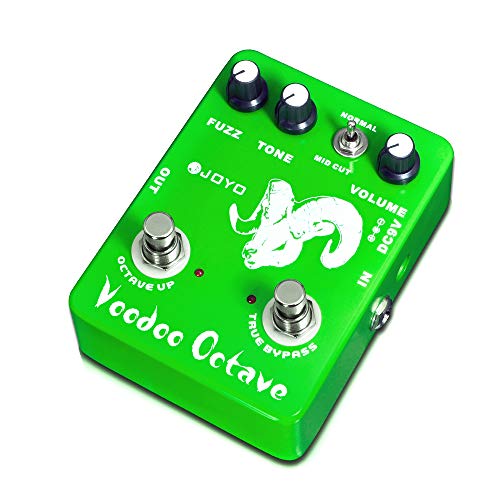
JOYO’s Voodoo Octave Fuzz (JF-12) blends octave-up with a fuzz circuit and adds a mid-cut switch for tonal shaping. The octave-up effect layers with a thick fuzz, producing a “White Stripes”-inspired bite when driven, yet it remains versatile for jangly leads and aggressive riffs. The pedal uses true bypass to protect your core signal when disengaged and features a rugged aluminum chassis suitable for live performances.
Buying Guide: Key Considerations for Octave Up Pedals
- Tracking accuracy and polyphony: If you plan to play chords, prioritize pedals advertised as polyphonic or with strong tracking for multiple notes simultaneously.
- Tone shaping: Look for independent wet/dry controls to blend the octave signal without washing out your original tone. Tone-mode options (Sharp, Flat, Detune) can expand sonic possibilities.
- Mode options: Some pedals offer TOP/BOTTOM/BOTH layers or various octave ranges. Consider how you want octave emphasis across single notes or chords.
- Bypass and signal integrity: True bypass helps preserve your tone when the pedal is off. Some units include buffer or blend features to minimize tone loss in complex boards.
- Build and footprint: If you tour or play live, a compact, durable chassis matters. Pedals from BOSS and JOYO tend to offer robust builds; others vary in size and weight.
- Use case and style: For ambient pads or shimmering leads, a pedal with high headroom and clear tracking will reduce muddiness in dense chord voicings.
- Power requirements: Check whether the pedal uses standard 9V DC power or a multi- pedal power supply and ensure it won’t introduce noise into your signal chain.
In practice, these octave pedals serve distinct roles—from compact, budget-friendly options to professional-grade devices with advanced polyphonic processing. Mapping your playing style to features such as polyphony, wet/dry balance, and mode selection will help you choose the right tool for boosting your octave-up tones without compromising core guitar clarity.