For desktop music production and multimedia work, near field reference monitors deliver accurate, uncolored sound at close listening distances. This guide highlights five solid options to compare in everyday setups, focusing on accuracy, bass response, input flexibility, and room-friendly performance. The following sections detail each model and how it suits different workflows.
| Product | Brand | Approx. Size | Best For |
|---|---|---|---|
| PreSonus Eris 3.5 | PreSonus | 3.5″ woofer | Budget desktop workstations |
| Edifier MR4 | Edifier | 4″ woofer | Compact, versatile listening |
| PreSonus Eris E4.5 | PreSonus | 4.5″ woofer | Clear mid-bass balance |
| JBL 308P MkII | JBL | 8″ woofer | Higher SPL, studio-grade clarity |
| ESI nEar i7 | ESI | 6.5″ woofer | Professional-grade fidelity |
PreSonus Eris 3.5 Studio Monitors

PreSonus Eris 3.5 near field studio monitors are compact, powered speakers designed for desktop music production and multimedia listening. They deliver studio-quality, accurate sound with a tight low end thanks to woven-composite woofers. Each speaker uses dual 25W amplifiers for balanced performance and sufficient headroom in small rooms. The overall sound is clean and usable for reference work, with a design aimed at minimum listening fatigue during long sessions.
Key considerations
- Compact footprint suits desktop setups and limited desk space.
- 50 W total power with paired amplification maintains tonal balance at moderate levels.
- Accurate reproduction aids in mixing and monitoring tasks at near-field distance.
Edifier MR4 Powered Studio Monitors
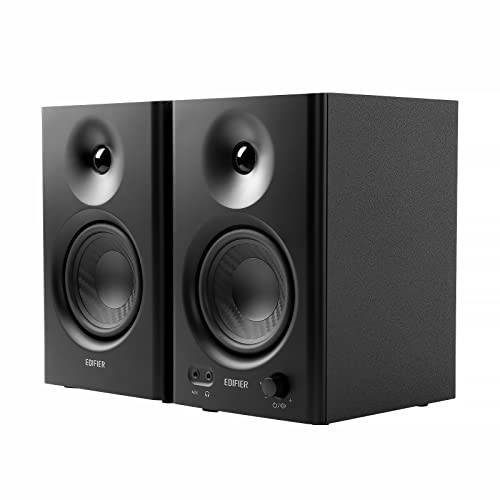
The Edifier MR4 pair provides true studio monitoring with a 1″ silk dome tweeter and a 4″ woofer for clear, smooth sound. The MDF enclosure helps reduce resonance, revealing a more accurate midrange and bass. Flexible connectivity options include 1/4″ balanced TRS, RCA, and an auxiliary input, plus a front headphone output for silent drafting or late-night sessions.
Key considerations
- Versatile input options ease integration with mixers, PCs, and laptops.
- Compact 4″ woofer balances portability with usable low-end response.
- Acoustic design aims for a flat-ish response suitable for critical listening and editing tasks.
PreSonus Eris E4.5

PreSonus Eris E4.5 is a 4.5″ two-way near field monitor featuring the same general design language as the 3.5 model but with a larger woofer for more bass extension. It carries 50 watts of dual-class AB amplification, delivering ample headroom for near-field use without compromising clarity. The Eris family is known for a clean, honest sound suitable for music production, multimedia work, and critical listening in compact spaces.
Key considerations
- Higher bass extension compared to the 3.5 model due to a larger woofer.
- Balanced dual amplification supports accurate monitoring at close distances.
- Good option when desk space allows a slightly larger footprint for richer low end.
JBL 308P MkII 8-Inch Monitor
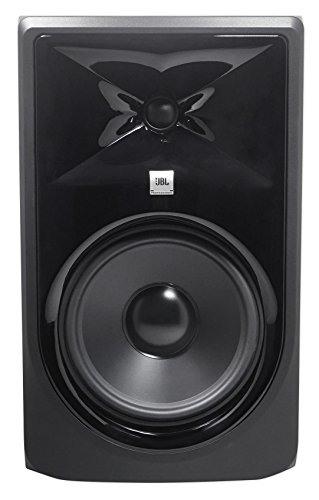
The JBL 308P MkII is a larger near-field monitor designed for higher SPL applications while maintaining precise transient response. It features an 8″ woofer and a 1″ tweeter, refined transducers, and a new boundary EQ to restore flat low-end response when placed on a desk near walls. This model is suitable for users needing more headroom and a more extended low end in small to medium rooms.
Key considerations
- Ideal for louder desktop setups or mid-sized rooms requiring more bass and SPL.
- Updated transducers and boundary EQ improve accuracy near walls.
- Single-unit design works well for solo producers and small studios.
ESI nEar i7 6.5″ Studio Reference Monitor

The ESI nEar i7 6.5″ monitor is designed for near-field reference work, delivering studio-quality sound with a 6.5″ curved woofer and a 1″ silk-dome tweeter. It includes computer-optimized waveguides and balanced XLR plus 1/4″ inputs, along with a precise 21-step volume control. This monitor aims to offer professional clarity for mixing, mastering, and detailed listening in compact spaces.
Key considerations
- Large woofer for deeper low-end in a near-field setup.
- Balanced inputs and fine volume control support precise listening sessions.
- Silent operation and accurate sound for editing, mixing, and game/audio design tasks.
ESI nEar i5 5″ Studio Reference Monitor
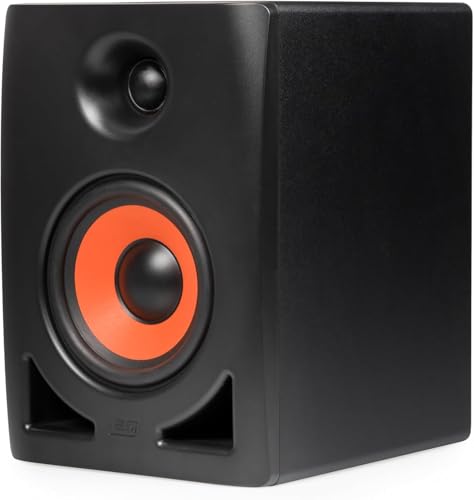
The ESI nEar i5 is a 5″ two-way studio reference monitor offering studio-grade sound in a compact footprint. It uses a 5″ woofer and a 1″ silk-dome tweeter, with balanced XLR and 1/4″ inputs. A 21-step volume control provides precise adjustment. This model is well-suited for near-field listening, editing, and critical monitoring on smaller desks or workstations.
Key considerations
- Compact and flexible for small studios and home setups.
- Balanced inputs help with professional connectivity to mixers and audio interfaces.
- Solid choice for budget-conscious users seeking reliable accuracy.
Buying Guide: Key Purchase Considerations For Near Field Monitors
When selecting near field reference monitors, consider room size, desk setup, and typical listening tasks. Below are critical factors to compare across models:
- Size and bass extension: Smaller monitors excel in tight desks, but may trade low-end weight. Larger woofers offer deeper bass but require more space.
- Power and headroom: Look for enough wattage to prevent clipping at your typical listening levels. Dual amplification often yields better tonal balance.
- Input options: Balanced XLR and TRS connections are standard for professional gear; RCA or aux inputs increase compatibility with consumer hardware.
- Acoustic treatment and placement: Near-wall placement affects bass and transient response. Some monitors include Boundary EQ or tone-shaping options to compensate for desk surfaces.
- Sound signature and accuracy: A flat, honest response minimizes ear fatigue and improves mixing decisions across genres.
- Software and bundled perks: Some models come with software packages or plug-ins that can add value for beginners and enthusiasts alike.
- Budget and upgrade path: Consider future needs, such as adding a dedicated subwoofer or upgrading to higher-fidelity models as skills grow.
Overall, selection should align with how you work: precise, uncolored monitoring for mixing and mastering; or versatile, accurate playback for multimedia editing. The five models listed offer a spectrum of sizes, power, and input flexibility to suit most near-field monitoring needs in American home studios and professional desks alike.