The demand for seamless, large-scale display walls has surged across retail, education, security, and entertainment. This guide highlights five Amazon-relevant devices that help assemble a cohesive multi-monitor video wall, supporting 4K input and synchronized output. Each entry covers configurations, rotation, and control options to simplify setup and operation. Readers will find practical insights to compare matrix switches, video wall controllers, and security-monitor style displays for a cohesive wall experience.
| Product | Brand | Key Feature | Max Resolution |
|---|---|---|---|
| OREI 4K Video Wall Controller | OREI | 4×1 output, 2×2/1×4 layouts, EDID management | 4K@60Hz input; 1080p output |
| Spolehli 4K Video Wall Controller | Spolehli | Multi-slice 2×2/1×4 modes, 180° rotation | 4K input; 1080p output |
| Arvitek 4K 4×4 Seamless HDMI Matrix | Arvitek | 4×4 matrix, multiple splicing modes | 4K@30Hz input; 1080p output |
| ICUIXIAN 4×4 Seamless HDMI Matrix | ICUIXIAN | Seamless switching, 4×4 matrix with video wall | 4K@60Hz input; various outputs |
| ZOSHING 17″ Security Monitor | ZOSHING | Integrated media playback, multiple ports | HDMI/AV/VGA inputs; 1080p-ish output |
OREI 4K Video Wall Controller For Multi-Screen Display
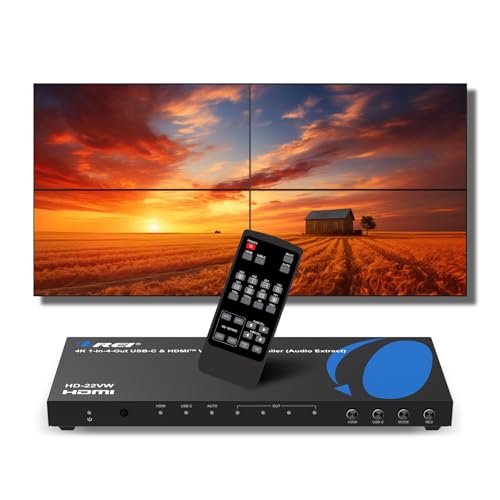
The OREI video wall controller supports versatile input options and displays across four screens. It accepts one HDMI or USB-C source and can configure in several modes such as 2×2, 1×4, or 3×1. A dual voltage power setup and international adapter are included for global use. Bezel adjustment and EDID management help align content across displays and reduce edge misalignment. This device is designed for compact 4-screen walls with flexible layout options.
ZOSHING 17-Inch Security Monitor For Video Walls
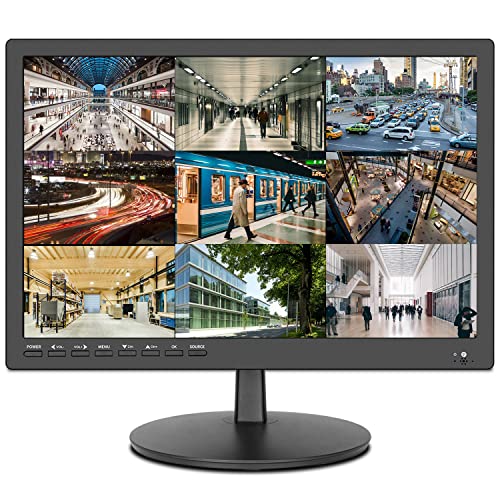
The ZOSHING security monitor combines a 17-inch LED panel with multiple ports for easy integration into a wall of displays. It includes HDMI, AV, VGA, and built-in speakers, along with USB media playback. The device supports local viewing without network dependence, making it suitable for security-focused video walls where a compact, standalone screen is beneficial. It’s well-suited as a supplementary display or for dual-room monitoring within a larger wall configuration.
Spolehli 4K Video Wall Controller 2×2 And More

Spolehli’s video wall controller supports one input distributed across four outputs, enabling 2×2, 1×2, 1×3, and other layouts with a 180° rotation option. It handles 4K input at 60 Hz and outputs at 1080p for most displays, with a dedicated audio path via a 3.5mm port. The edge masking feature helps create seamless large video walls. This model emphasizes flexible splicing modes and multi-screen distribution for greater wall versatility.
Arvitek 4K 4×4 Seamless HDMI Matrix

Arvitek delivers a robust 4×4 HDMI matrix with multiple splicing modes and 4 mirrored options for wall layouts. It supports 4K input at 30 Hz and outputs up to 1080p across the four displays. One output (Output 1) supports split viewing with PIP/POP configurations, while rotation options are available for input-to-output mapping. This device suits larger walls requiring precise control over multi-panel content with a variety of layout options.
ICUIXIAN 4×4 Seamless HDMI Matrix With Video Wall

ICUIXIAN combines a seamless 4×4 HDMI matrix with video wall capabilities, enabling 2×2 wall configurations and full matrix switching. It supports 4K@60Hz inputs, with 4 HDMI outputs, and provides 4:4:4 color handling. The unit emphasizes seamless transitions and a multi-view preview function, helping operators monitor all sources on a single output while maintaining wall coherence. Ideal for pro-grade video walls with quick source swapping.
Buying Guide: Key Purchase Considerations
When selecting a video wall controller or matrix for multiple displays, consider input/output formats, supported resolutions, and rotation features. Ensure the device can handle 4K inputs and provide 1080p outputs if your monitors are 1080p or you require consistent wall brightness and color. Look for EDID management to align display timings, bezel compensation to minimize gaps, and rotation options to adapt wall orientation. Some models offer PIP/POP or multi-view, which can simplify monitoring multiple sources on a single panel.
Other important factors include ease of configuration, user interface, and control options such as RS-232, web GUI, or mobile app support. If you plan a large wall, verify the number of inputs and outputs, the maximum total bandwidth, and whether you need a single device that can perform both matrix switching and video wall tiling. For security-focused setups, consider built-in playback or local display capabilities for continuous operation even without a network.
Be mindful of power requirements and international compatibility if your display wall is deployed in multiple regions. Finally, assess your installation environment: horizontal vs. vertical mounting, desk vs. wall, and whether bezel compensation will be visually seamless with your chosen panel array. A balanced selection will offer robust performance, straightforward setup, and scalable expansion for future wall growth.