For networks demanding strong coverage, fast speeds, and reliable roaming, choosing a powerful wireless access point (AP) is essential. This guide highlights top options from TP-Link and NETGEAR that deliver high-throughput performance, easy management, and scalable cloud control. Whether upgrading a small office or a smart home, these APs support modern standards, multi-user environments, and seamless roaming to keep devices connected without interruption.
Summary of chosen products:
| Product | Brand | Wi‑Fi Standard | Key Strengths | 3500 |
|---|---|---|---|---|
| TP-Link Omada WiFi 7 Wireless AP BE5000 (EAP720) | TP-Link | Wi‑Fi 7 | 2.5G port, dual-band up to 5.0 Gbps, advanced cloud management | ✔ |
| TP-Link EAP650 Ultra-Slim | TP-Link | Wi‑Fi 6 | Ultra-slim design, high speeds, cloud management | ✔ |
| TP-Link EAP225 Omada AC1350 | TP-Link | Wi‑Fi 5/802.11ac | MU‑MIMO, cloud SDN, remote access | ✔ |
| TP-Link EAP610 | TP-Link | Wi‑Fi 6 | OFDMA, seamless roaming, cloud app | ✔ |
| NETGEAR WAX210 | NETGEAR | Wi‑Fi 6 | Compact, 128 devices, PoE option | ✔ |
TP-Link Omada WiFi 7 BE5000 One of the Fastest in the Line

TP-Link’s Omada BE5000 with Wi‑Fi 7 delivers a robust blend of speed, reliability, and centralized management. The dual‑band 4‑stream setup supports up to 5.0 Gbps combined throughput, with a 2.5G Ethernet port that future‑proofs high‑speed internet connections. When integrated with Omada Cloud, administrators gain remote configuration, network monitoring, AI features, and Zero Touch Provisioning. The device emphasizes seamless roaming across multiple APs, providing a consistent user experience for dense environments with many devices.
Key strengths include the 2.5G port for future broadband upgrades, Multi-Link Operation for higher throughput, and 4K‑QAM data encoding for increased capacity. This AP is well-suited for offices, coworking spaces, or demanding home networks where performance and centralized control matter most.
TP-Link EAP650 Ultra-Slim Wireless AP

The EAP650 combines true Wi‑Fi 6 speeds with a compact, elegant design that fits discreetly in professional or home environments. Free Omada cloud management eliminates extra controllers, allowing cloud‑based monitoring and configuration from a mobile app or web interface. With speeds up to nearly 3 Gbps, MU‑MIMO, and advanced features such as seamless roaming, this AP is ideal for offices and busy spaces where aesthetics and performance matter.
Its ultra‑fast throughput supports multiple devices streaming 4K video, online collaboration, and IoT loads. The kit’s straightforward setup makes it accessible for multi‑site deployments, and cloud control ensures consistent policy enforcement and centralized firmware updates.
TP-Link EAP225 Omada AC1350

The EAP225 is a robust, cloud‑managed AP based on 802.11ac Wave 2 MU‑MIMO. It delivers dual‑band speeds up to 1350 Mbps across multiple devices, enhancing capacity in busy environments. Omada SDN integration enables centralized management via a cloud or hardware controller, with remote access through the Omada app. The device supports seamless roaming and MU‑MIMO to optimize performance for groups of users and smart devices across campuses, hotels, or large office spaces.
Although built on Wi‑Fi 5, its cloud‑centric architecture and SDN integration make it a dependable choice for scalable networks where cost efficiency and centralized policy control are priorities.
TP-Link EAP610 Omada WiFi 6 AP

The EAP610 delivers high performance with Wi‑Fi 6, featuring OFDMA and MU‑MIMO for efficient handling of many devices. The compact form factor suits offices and classrooms, while seamless roaming and remote cloud access provide scalable management across sites. The Omada app facilitates simple deployment, and PoE+ support ensures flexible installations without extra power infrastructure. This AP is a strong option for environments demanding higher client density and lower latency.
NETGEAR WAX210 Wireless AP

The NETGEAR WAX210 offers a compact, secure Wi‑Fi 6 solution designed for small to mid‑size deployments. With dual‑band AX1800 speeds and support for up to 128 devices, it balances performance and capacity in retail spaces, lobbies, or small offices. It supports PoE deployment for easy network integration, with a cloud or app‑based management approach to monitor performance and apply configurations remotely. A practical option when space is limited but robust connectivity is required.
TP-Link Omada PtP Wireless Bridge Outdoor
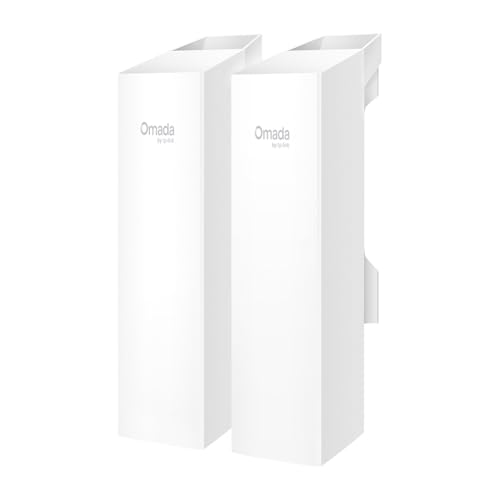
While primarily a bridge, this outdoor 5 GHz link extends high‑speed connections between buildings. It supports PoE or DC power, IP65 weatherproofing, and plug‑and‑play setup. For deployments requiring long‑range coverage without a wired backbone at every location, this device complements an Omada SDN to maintain centralized controls and cloud management across campus or enterprise environments.
Buying Guide: Key Purchase Considerations
- Network scale and density: For dense environments with many clients, Wi‑Fi 6/7 with MU‑MIMO and OFDMA improves capacity and reduces latency. Consider controllers and cloud management if you plan multi‑site deployments.
- Speed tiers and ports: A 2.5G Ethernet port or higher supports future broadband upgrades. If you anticipate multi‑gig Internet or high‑bandwidth workloads, prioritize devices with multi‑gig ports and efficient backhaul.
- Roaming and coverage: Look for seamless roaming, smart handoff, and the ability to deploy multiple APs under a single management plane. This minimizes dropped connections as users move about the space.
- Cloud vs. local management: Cloud‑based controllers simplify remote monitoring and firmware updates across sites, but some environments prefer on‑prem controllers for strict data policies.
- Power and installation: PoE or PoE+ modes reduce cable clutter and simplify placement. If PoE is unavailable, models with DC adapters offer flexibility.
- Security and features: WPA3, guest networks, VLAN support, and SDN integration strengthen security and network segmentation for business environments.
- Future compatibility: Wi‑Fi 7 is the latest standard with higher throughput and efficiency, but Wi‑Fi 6 devices still provide strong performance and value for many networks.
Choosing among these options depends on your environment, expected device density, and whether you prioritize cloud control, ease of setup, or future‑proofing with the latest standard. The listed TP‑Link Omada devices excel in centralized management and scalability, while NETGEAR models offer compact form factors with straightforward deployment. For many advanced home and office setups, a Wi‑Fi 6/7 mix aligned with Omada SDN can deliver superior performance and a smoother user experience across devices.