Marine satellite weather receivers provide real-time conditions, forecasts, and storm alerts for safer voyages. This guide highlights five top options, spanning SiriusXM weather services, GOES weather SDR setups, marine antennas, and multimedia receivers built for harsh marine environments. Each pick includes key features, installation notes, and how it supports navigation and weather planning on the water. Compare capabilities to choose the right balance of weather data, compatibility, and rugged design for your craft.
| Product | Brand | Key Weather/Navigation Benefit |
|---|---|---|
| Simrad WM-4 SiriusXM Marine Weather/Audio Receiver | Simrad | Real-time SiriusXM marine weather, NOAA zone forecasts, NEXRAD storm cells |
| Garmin GXM 54 SiriusXM Satellite Weather Receiver | Garmin | SiriusXM weather and audio with integrated Garmin ecosystem |
| Nooelec GOES Weather Satellite SDR Bundle | NooElec | LRIT/HRIT/HRPT GOES weather images from space with SDR setup |
| SRA-25 Sirius Satellite Radio Antenna | SRS Satellite Radio | Low-profile Sirius radio antenna with long cable for marine and mobile use |
| Raymarine SR6 Sirius Weather Receiver | Raymarine | Sirius weather service with network switch for marine networks |
The selections focus on reliable weather data access, compatibility with popular maritime brands, and rugged construction designed for saltwater environments. Each option is suitable for different vessel types, from small boats to larger yachts, and varies in data depth, installation complexity, and integration with existing chartplotters and NMEA networks.
Simrad WM-4 SiriusXM Marine Weather Receiver

The Simrad WM-4 provides real-time SiriusXM marine weather information with access to Detailed NOAA Marine Zone Forecasts and NEXRAD weather radar storm cell attributes. This receiver is designed for integration into existing Simrad ecosystems, enabling streamlined weather overlays on compatible MFDs and displays. The unit emphasizes reliable weather data delivery and clarity for navigation planning and route adjustments during offshore passages.
Garmin GXM 54 SiriusXM Weather Receiver

The Garmin GXM 54 combines SiriusXM weather data and audio with Garmin’s ecosystem for marine navigation. While market descriptions emphasize general weather and audio capabilities, the receiver integrates with Garmin chartplotters and NMEA networks, helping mariners receive forecast updates and storm alerts in tandem with plotted courses and waypoints. It is suitable for vessels already using Garmin displays seeking streamlined weather access.
Nooelec GOES Weather SDR Bundle
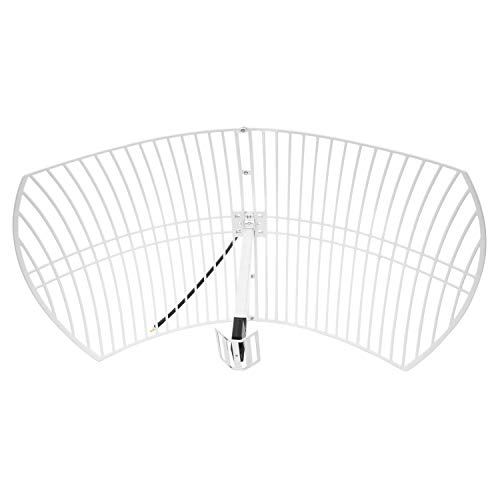
This bundle enables near real-time GOES weather imagery by receiving LRIT, HRIT, and HRPT transmissions. It includes a 21dBi GOES parabolic reflector antenna, NESDR SMArTee XTR SDR receiver, and essential cabling. The package is intended for technically inclined users who want direct access to space-based weather imagery, enabling independent monitoring of large-scale weather systems. Software is required for decoding, with options like SatDump and XRIT Decoder supporting cross-platform use.
SRA-25 Sirius Antenna for Marine Use

The SRA-25 Shakespeare Galaxy marine antenna features a low-profile flush-mount design with a 6-inch whip and included long 25-foot cable. Built with UV-stable plastics for harsh marine conditions, it is designed for boats, trucks, and RVs. This antenna provides reliable Sirius reception in constrained mounting spaces where minimum profile matters, and it ships with mounting hardware for straightforward installation.
Raymarine SR6 Sirius Weather Receiver

The Raymarine SR6 Sirius Weather Receiver delivers access to Sirius weather service and can also be used for Sirius satellite audio. It includes a 6-port network switch to support expanding marine networks, allowing weather data to be distributed across multiple displays and devices aboard. This option suits vessels requiring robust onboard networking for weather updates and cross-device access.
Rockville RGHR2 Marine Gauge Receiver

The Rockville RGHR2 is a marine gauge receiver with Bluetooth/USB/AM/FM, a built-in TDA7851L amplifier delivering strong peak power, IP66 waterproof rating, and flexible playback options. While not a dedicated weather receiver, its rugged, weather-resistant build makes it a practical companion for playing weather briefing audio and integrating with multiple entertainment systems aboard a boat. It supports Bluetooth streaming, USB playback, and AM/FM radio with marine-friendly tuning.
SupplyMount BBWX4 — Weather Receiver Replacement

The SupplyMount BBWX4 is an aftermarket replacement part designed for marine weather equipment, including Furuno-compatible systems. It emphasizes compatibility, reliability, and cost-effectiveness as an alternative to OEM parts. Verify part numbers before purchase to ensure fit with your vessel’s weather receiver setup and electrical system.
Buying Guide
- Weather data needs: Determine whether you primarily want real-time SiriusXM weather, GOES imagery, or a broad weather and audio integration with your chartplotter.
- System compatibility: Check compatibility with existing displays, MFDs, and network setups (NMEA 2000/NGO, Ethernet, Wi-Fi, Bluetooth).
- Installation considerations: Evaluate mounting space, antenna placement, and power requirements; consider the impact of hull vibration and salt exposure on coaxial cables and connectors.
- Data depth vs. ease of use: SiriusXM receivers provide straightforward weather and audio, while SDR-based GOES setups offer extensive imagery at the cost of more complex software configuration.
- Network scalability: For multi-display ships, prefer devices with network switches and multiple ports to distribute weather data efficiently.
- Durability and protection: Prioritize IP-rated housings and conformal-coated electronics on devices used in harsh marine environments.
- Software and decoding needs: SDR-based solutions require decoding software; confirm cross-platform compatibility and ongoing updates.
- Price vs. value: Weigh initial hardware costs against long-term weather data access and the potential safety benefits during storms or heavy seas.