Long HDMI cables extend your setup without sacrificing signal quality. This guide highlights five top-rated options designed for 4K, 8K, HDR, and gaming performance. Each entry includes key specs, compatibility notes, and practical considerations to help shoppers choose the right cable for their devices and rooms.
| Product | Length | Max Bandwidth | Key Features |
|---|---|---|---|
| Highwings 4K Long HDMI Cable | 15 ft / 4.5 m | 18 Gbps | HDMI 2.0, 4K@60, HDR, ARC, Ethernet, braided, gold-plated |
| Highwings Long HDMI Cable 30FT | 30 ft | 18 Gbps | 4K@60, 3D, HDR, eARC, braided, high speed |
| Highwings 15 FT 8K/2.1 Cable | 15 ft | 48 Gbps | 8K@60, 4K@120, eARC, HDCP 2.2/2.3, VRR |
| Snowkids 25 ft 8K/2.1 Cable | 25 ft | 48 Gbps | 8K@60, 4K@120, 3D, VRR, ALLM, eARC |
| Cratree 15 ft 8K Cable | 15 ft | 48 Gbps | 8K/4K support, multi-layer shielding, eARC, VRR |
Highwings 4K Long HDMI Cable

The Highwings 4K Long HDMI Cable delivers 18 Gbps bandwidth and supports 4K resolution at 60 Hz with HDR. It uses gold-plated connectors for reliable signal transmission and is compatible with HDMI 2.0 devices and backwards compatible with older HDMI versions. The braided jacket and durable construction make it suitable for longer runs where signal integrity matters, including home theater setups with PS5, Blu-ray players, and TVs.
Highwings Long HDMI Cable 30FT
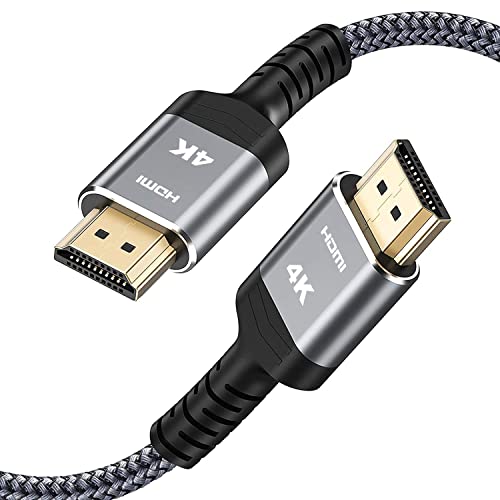
Designed for longer runs, this 30-foot HDMI 2.0 cable delivers 4K at 60 Hz with HDR and 3D capabilities. It offers 18 Gbps bandwidth, plug-and-play use, and a braided jacket for added durability. It’s suitable for gaming consoles, streaming devices, and HDTVs, providing reliable performance across larger living rooms or media rooms.
Highwings 15 FT 8K/2.1 Cable

This 15-foot Highwings HDMI 2.1 cable supports 8K at 60 Hz and 4K at 120 Hz with a 48 Gbps bandwidth. It includes eARC for enhanced audio, VRR for smoother gaming, and backward compatibility with HDMI 2.0 and older versions. The cable is designed for elevated gaming setups and future-proofed video performance in premium home theaters.
Snowkids 25 ft 8K/2.1 Cable

The Snowkids 25-foot HDMI 2.1 cable delivers 8K at 60 Hz and 4K at 120 Hz with 48 Gbps bandwidth. It supports VRR, eARC, ALLM, QFT, and QMS for smooth visuals and responsive gaming. The long length is ideal for large rooms or multi-seat home theaters, ensuring high-bandwidth performance across devices like TVs, laptops, gaming consoles, and projectors.
Cratree 15 ft 8K Cable

The Cratree 15 ft HDMI cable is certified for 8K and 4K high-bandwidth performance with 48 Gbps. It features multi-layer shielding to reduce interference, 24K gold-plated connectors, and VRR/eARC support. It is designed for demanding setups where immersive 8K content or gaming with high frame rates is a priority, and it remains backward compatible with HDMI 2.0 and earlier standards.
Buying Guide
When selecting a long HDMI cable, consider these purchase factors to align with your needs and devices:
- Resolution and refresh rate: For 8K content and high-frame-rate gaming, choose HDMI 2.1 cables with 48 Gbps bandwidth. For standard 4K setups, HDMI 2.0 cables may suffice.
- Length versus signal integrity: Longer runs can introduce signal loss. Look for cables with robust shielding, braided jackets, and gold-plated connectors to preserve signal quality.
- Feature support: eARC enables high-quality audio return, VRR smooths gaming, and HDR enhances color and contrast. Ensure your devices support these features and match the cable.
- Backward compatibility: Most modern cables are backward compatible with older HDMI versions, protecting prior investments in devices.
- Durability and installation: In-wall rated or CL3/CL2 ratings are important for in-wall runs. Consider connector quality, jacket material, and ease of routing around corners.
- Compatibility with devices: Verify that your TV, gaming console, soundbar, or projector supports the cable’s bandwidth and features to ensure optimal performance.
- Cost versus future-proofing: Higher bandwidth cables may be pricier, but they reduce the need for upgrades as newer devices require more bandwidth and advanced features.