RV living and extended travels rely on steady, clean power from lithium or lead-acid batteries. The right lithium battery converter charger ensures safe charging, optimal battery health, and trouble-free operation of lights, appliances, and electronics on the road. This article highlights five top-rated 55–65 amp RV power converters that support lithium batteries, with objective specs and practical guidance to help you choose the best fit for your setup.
The following summary table presents the chosen products and their key attributes in a quick-reference format. It excludes prices to keep the focus on performance and compatibility.
| Product | Brand | Approx. Output | Battery Type | Notes |
|---|---|---|---|---|
| WF-9855 Upgrade | Suplife | 55A | Lithium | 5-year warranty; compatible with WF-9800 series |
| WAVLINK 55A RV Converter | WAVLINK | 55A | Li/Lead-Acid | 3 smart charging modes |
| PowerMax PM4 60A | PowerMax | 60A | Li/Lead-Acid | 4-stage smart charging |
| WAVLINK GS800RV-55 | WAVLINK | 55A | Li/Lead-Acid | 4-stage smart charging; lithium compatible |
| VEVOR 65A RV Converter | VEVOR | 65A | Li/Lead-Acid | Dedicated charging modes; 13–16.5V range |
Suplife 2025 Upgrade WF-9855 55A RV Power Converter

The WF-9855 upgrade is designed for lithium battery systems and WF-9800 series converters. It delivers 55 amps with an output of 14.6V DC and an input of 105–130V AC. The unit emphasizes three-stage charging, which optimizes charging efficiency and battery health. A 5-year warranty underscores its reliability, with responsive support via Amazon. This model is suitable as a replacement or upgrade for compatible WF-9800 line devices, providing robust performance for mid-size RV batteries.
WAVLINK 55 Amp RV Power Converter

The WAVLINK converter transforms 120V AC into 12V DC, delivering up to 55A and adapting to Li/Lead-Acid batteries. It features tailored charging modes for peak performance, including lithium and lead-acid settings, plus adjustable voltage range from 13.0V to 16.5V. This flexibility ensures compatibility with a variety of battery chemistries and RV installations. The product emphasizes multi-mode charging for efficient, safe energy management on the road.
PowerMax 60 Amp RV Converter
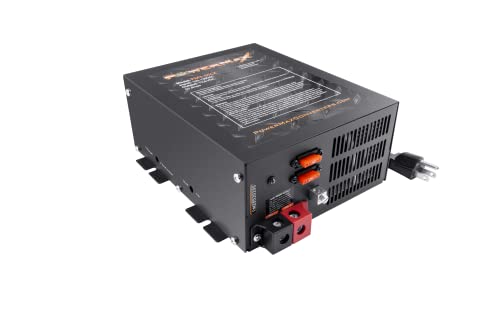
PowerMax PM4 60A provides 60 amps of continuous power and a 13–16.5V adjustable output. It incorporates a four-stage charging system to optimize lithium, AGM, gel, and lead-acid battery charging, protecting battery life and ensuring stable power for RV electronics, lighting, and appliances. The unit is designed for easy installation and reliable operation in RV, camper, and marine applications, with emphasis on safe, controlled charging for mixed battery fleets.
RecPro RV Converter 100 Amp

RecPro’s 100-amp converter offers 120VAC to 12VDC conversion with a 4-stage charging approach and a broad operating range (13V–16.5V). It is capable of charging RV batteries while powering low-voltage devices, making it suitable for larger RV setups or higher energy demands. Availability in multiple amperages makes RecPro a flexible option for customers seeking higher capacity without sacrificing charging efficiency.
VEVOR RV Power Converter 65A

VEVOR’s 65A converter is designed for lithium and lead-acid batteries with a 13.0–16.5V operating range and dedicated charging modes. It delivers up to 65A of steady current, making it suitable for mid-range RV power needs. The unit is aimed at providing reliable charging and power conversion for RV electronics, lights, and appliances, with practical mode options to balance charging speed and battery health.
Buying Guide: Key Purchase Considerations
When selecting a lithium battery converter charger for an RV, consider the following factors to ensure compatibility, safety, and long-term value.
- Battery compatibility: Confirm support for lithium (LiFePO4) and/or lead-acid batteries. Some models offer dedicated lithium modes or fixed-voltage options.
- Output and charging stages: Look for converters with 4-stage or multi-stage charging (bulk, absorption, float, equalization) to optimize battery health and longevity.
- Voltage range: A flexible output range (13.0–16.5V) accommodates various battery chemistries and states of charge, reducing overcharging risk.
- Current rating: Match the converter’s continuous amperage to your battery bank size and expected load. Higher amp ratings support faster charging for larger systems.
- Three- or four-stage modes: Modes tailored for lithium versus lead-acid help avoid under- or over-charging and improve efficiency.
- Installation and compatibility: Ensure the unit fits your RV’s space and wiring configuration and is compatible with existing WF-9800/WF-8955 series or similar hardware if upgrading.
- Warranty and support: A multi-year warranty and accessible customer support enhance confidence in long-term RV use.
- Noise and heat management: Quiet operation and effective cooling are important in compact RV setups for uninterrupted rest and performance.
Practical considerations also include the ease of maintenance, diagnostic indicators, and whether you want a direct replacement part for an existing model or a new system with broader compatibility. Evaluating these factors helps ensure stable power delivery, battery longevity, and a comfortable RV experience.