LED illumination is essential for achieving sharp, shadow-free views in modern microscopy. This guide examines 5 top-rated ring light and LED illuminators that pair well with stereo and compound microscopes, helping you choose the right brightness, glare control, and mounting compatibility for detailed observations. Each product highlights adjustable brightness, shadow-free illumination, and build quality, enabling precise examination across biology, electronics, and material science applications.
| Product | Brand | Key Feature |
|---|---|---|
| LED-144-ZK Black Adjustable 144 LED Ring Light | Bikani | Compact with built-in dimmer |
| AmScope LED-144W-ZK White Adjustable Ring Light | AmScope | Shadow-free, auto switching power |
| DEVMO 60-LED Ring Light | DEVMO | Integrated dimmer, 144-LED array |
| SE LED-Illuminated Pocket Microscope | SE | Portable with 30x magnification |
| Annhua 144 LED Ring Light | Annhua | High-brightness, adjustable dimming |
Bikani 144 LED Ring Light Illuminator

The Bikani LED-144-ZK model features a compact design with a built-in dimmer control, enabling smooth brightness adjustments. It carries UL certification and a U.S. standard plug, making it suitable for classroom or lab setups. While its primary advantage is space-saving convenience, users should consider the coupling size with their stereo microscope and whether the single light source aligns with their preferred illumination angle. It provides reliable, consistent light for routine observations and basic imaging tasks.
AmScope LED-144W-ZK White Ring Light

The AmScope LED-144W-ZK provides intense, focused, shadow-free illumination with a robust external diameter and interior mounting fit. It supports a wide voltage range (110-240V) and auto-switching power, making it versatile for different lab environments. Its large light area can reduce hotspotting on metallic or glossy specimens, but care should be taken to ensure compatibility with your microscope’s mounting thread and accessory adapters for optimal alignment.
DEVMO 60-LED Adjustable Ring Light

The DEVMO 60-LED ring light offers a compact design with a built-in dimmer and a 144-LED configuration for broad, shadow-free illumination. It supports mounting up to 2.48 inches in diameter, making it a practical choice for smaller stereo or zoom microscopes. Its strength lies in consistent brightness control and a flexible mounting range, though users should verify the exact fit with their stand and objective lenses before purchase.
SE LED-Illuminated Pocket Microscope

The SE MW10084 pocket microscope offers 30x magnification with LED illumination for portable inspection. Its compact form makes it ideal for fieldwork or quick checks of small components. While not a high-end lab light, its LED system suffices for basic, on-the-go observation and magnified viewing where portability matters more than extensive power output. Suitable for jewelers, hobbyists, or quick diagnostics on the go.
Annhua 144 LED Ring Light With Cover

The Annhua 144-LED ring light delivers ultra-bright illumination with a protective cover and adjustable dimming. Its ring design offers shadow-free lighting ideal for extended sessions on microscopes, cameras, and mini lathes. The LED array provides even illumination, though users must ensure the light assembly integrates cleanly with their specific microscope objective and observation angle to avoid glare on reflective surfaces.
KH866 144 LED Ring Light, White Light
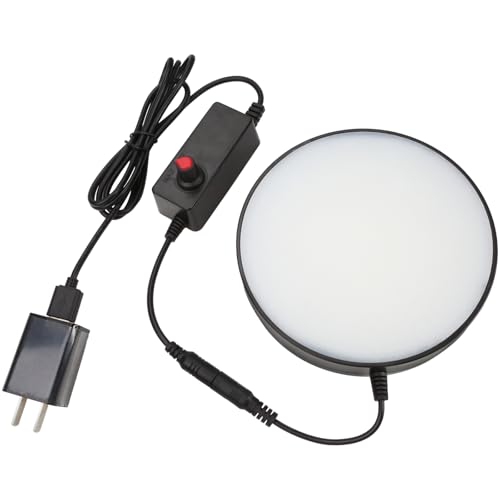
The KH866 Microscope LED Ring Light emphasizes adjustable brightness from 0% to 100% with a 6–10W white LED light. Built from ABS plastic, it is lightweight yet durable, designed for easy installation on a range of stereo or binocular microscopes. This model prioritizes stable, cool lighting that reduces heat buildup during long observation sessions, though mounting compatibility should be checked for your specific stand.
iFixes iL37 Polarized Ring Light

The iFixes iL37 uses a polarized LED ring light with anti-glare illumination and a rotatable analyzer, reducing reflections from metallic parts viewed with stereo microscopes. The built-in polarizer and analyzer enhance color fidelity and reduce glare, making it a strong choice for metallurgical or electronics inspection. Ensure compatibility with your microscope’s mounting and polarizer slot for optimal results.
TreochtFUN 144 LED Ring Light

The TreochtFUN 144 LED ring light offers a bright, adjustable illumination suitable for various stereo microscope setups. It emphasizes shadow-free focus and broad coverage, making it appropriate for close-up inspection in lab or workshop environments. As with similar devices, verify compatibility with your microscope’s mounting diameter and any required adapters to maximize performance.
Buying Guide: Key Purchase Considerations And Comparisons
- Brightness and dimming: Look for models with a wide brightness range and smooth, flicker-free dimming to prevent eye strain during extended sessions.
- Light quality: White LED outputs provide consistent, cool illumination that reduces heat buildup. Some users may prefer full-spectrum or polarized options to manage glare and color accuracy.
- Mounting compatibility: Check the ring light’s mounting diameter and whether adapters are included or sold separately. Ensure compatibility with your microscope stand, eyepieces, and objective lenses.
- Size and weight: Smaller, lighter illuminators save space on benchtops but may offer less brightness. Larger units provide more even illumination but require sturdier stands.
- Power options: Consider input voltage tolerance (110–240V), auto-switching capabilities, and whether a dedicated power adapter is provided.
- Glare reduction features: Polarized options or ring lights with diffusers help minimize reflections from shiny surfaces and metallic objects.
- Portability vs. lab use: Pocket-style illumination is excellent for fieldwork, while larger ring lights suit permanent lab benches and imaging workflows.
- Durability and warranty: ABS or metal housings and a reliable warranty can reduce downtime in busy labs or classrooms.
- Accessories: Look for protective covers, dimming controls, and compatibility with camera adapters for photomicrography.
When selecting LED illumination for microscopy, align the choice with your typical specimens, required magnification, and observation angles. A balanced setup often combines a bright, adjustable ring light with polarization or diffusion options to minimize glare and ensure consistent imaging across experiments. Consider starting with a mid-range model to evaluate brightness, mounting ease, and color fidelity before investing in higher-end units for advanced metallography or fluorescence work.