Choosing the right wireless in-ear monitor (IEM) system can dramatically improve on-stage monitoring for bands, churches, studios, and solo performers. This guide highlights five top options that balance ease of use, latency, range, and multi-user capabilities. Each product is designed to deliver reliable stereo or mono monitoring with low latency, so performers hear themselves clearly without feedback or interference.
Summary Table of Selected Products
- LEKATO MS-01: 2.4 GHz stereo IEM system with auto-pairing and one-to-many support
- Phenyx Pro PTM-33-4B: Quad-channel UHF IEM with four bodypacks and versatile monitoring
- Xvive U45: 5.8 GHz true diversity system with channel scan and strong 100 ft range
- LEKATO MS-02: Upgraded 2.4G stereo system with low latency and auto-pairing
- JOYO JW-07: 2.4G IEM with automatic pairing and low latency for practice and performance
LEKATO MS-1 Wireless In-Ear Monitor System
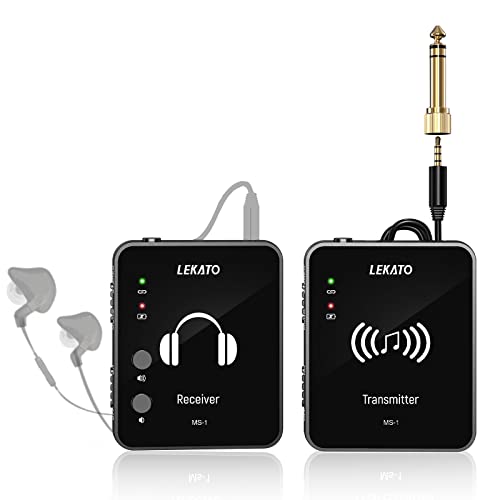
The LEKATO MS-1 system supports up to six receivers from a single transmitter, enabling small to medium bands or churches to run multiple performers without separate wireless packs for each. Auto-pairing simplifies setup; power on, press both PAIR buttons, and the green light indicates a successful pairing. It delivers true stereo audio with a straightforward option to switch between stereo and mono input, assuming a stereo source and cable are used.
Key points include: One TX to Many RX capability, automatic pairing, and stereo transmission for accurate stage monitoring. The kit is well-suited for rehearsal rooms, small gigs, and venues that require multiple performers to monitor themselves simultaneously. The emphasis on simple pairing reduces setup time between songs and runs smoothly in quick-change environments.
Phenyx Pro Quad-Channel Wireless In-Ear Monitor System

This four-channel IEM system provides four independent left/right monitor feeds with looping outputs, enabling complex stage setups. It supports up to four standalone mixes with no audible delay, helping performers focus on their own sound. The system uses 4×25 UHF frequencies to minimize interference and claims a broad 140–164 ft range in line of sight. IR sync quickly links multiple receivers, and the package includes a rack-mount friendly design for studio or live use.
The unit is designed for bands, churches, and sound engineers who need reliable, distinct monitor mixes without cross-talk. While mono monitoring is emphasized, the flexibility of multiple independent mixes suits larger ensembles or floor-level monitoring scenarios. Aimed at professional environments, it balances functionality with practical routing options.
Xvive U45 Wireless In-Ear Monitor System

Operating on 5.8 GHz with true diversity, the U45 offers a robust RF connection to reduce dropouts. It delivers up to 100 feet of transmission distance and features a Channel Scan Mode to quickly identify the best channel for operation, then matches transmitter and receiver channels for reliable pairing. Audio quality is strong, with a wide 20 Hz–20 kHz frequency response and a clear 24-bit/48 kHz audio path and 110 dB SNR, ensuring detailed on-stage detail at various volumes.
Channel scanning helps mitigate interference from other wireless devices, making the U45 a solid choice for theaters, studios, or live venues with multiple wireless systems nearby. The system is designed to be user-friendly while maintaining professional-grade audio performance.
LEKATO MS-02 Wireless In-Ear Monitor System

The MS-02 upgrades the original MS-01 with lower latency (<4.5 ms) and enhanced 24-bit/48 kHz audio. It supports One TX to Many RX connections (up to four receivers), making it suitable for small-to-medium ensembles or multi-performer practice sessions. Battery life extends to roughly 6–8 hours, and the system includes volume and battery indicators on the receiver for quick status checks. The mono monitoring focus helps performers tune into a clear, direct mix on stage.
With an emphasis on low latency and stable performance, MS-02 is appropriate for live performances, house worship settings, and rehearsal spaces where reliable wireless monitoring is essential. The integrated pairing method mirrors common LEKATO workflows, ensuring straightforward use for users upgrading from earlier models.
JOYO JW-07 Wireless In-Ear Monitor System

JOYO offers a 2.4 GHz wireless IEM option with automatic pairing and practical monitoring features for studios and live performances. The system emphasizes low latency (under 5 ms) for real-time feedback during practice and performances, plus anti-interference technology to minimize channel noise. This makes it suitable for guitar players, DJs, and vocalists who need clear on-stage monitoring without delays while moving across a stage.
Designed for compact setups, JW-07 supports quick pairing and stable transmission, enabling performers to focus on performance rather than setup logistics. It balances portability with performance, ideal for musicians seeking an affordable, reliable wireless IEM solution.
Buying Guide: Key Purchase Considerations And Comparisons
When selecting a wireless IEM system, consider the following factors to match your use case and environment:
- Latency: Lower latency is crucial for real-time monitoring. Systems advertise sub-5 ms latency; ultra-low latency is especially important for vocalists and drummers who rely on precise timing.
- Channel Capacity: If you perform with multiple musicians, a system that supports multiple receivers from one transmitter can simplify setup. One-to-many configurations reduce transmitter clutter and setup time.
- Frequency Band: 2.4 GHz systems are common for consumer-friendly use with auto-pairing, while UHF systems may offer more stability in crowded RF environments. Consider your venue size and potential interference.
- Range: Look for a system with adequate line-of-sight range for your stage. Larger venues may benefit from 100 ft (30 m) or more.
- Audio Quality: A wider frequency response and higher SNR generally translate to clearer and more natural on-stage monitoring. 24-bit/48 kHz is typical for pro-grade systems.
- Battery Life: Long-lasting receivers reduce mid-show swaps. Check both transmitter and receiver endurance and whether the units show battery status clearly.
- Ease of Setup: Auto-pairing and IR synchronization save time between performances. Consider how quickly a system boots up and pairs with multiple receivers.
- Durability and Use Case: Church, studio, and live stage environments demand robust builds and sometimes rack-mount options for easy integration into existing setups.
- Accessories: Rack mount kits, extra batteries, and cables can influence total cost and convenience. Check what comes in the box.
In practice, the LEKATO options emphasize ease of use and flexible multi-receiver setups, which suits small to medium ensembles and worship bands. Phenyx Pro provides robust multi-channel routing and a professional monitor station, ideal for bands and venues needing several independent mixes. Xvive’s system prioritizes channel scouting and stable 5.8 GHz performance, making it a strong candidate for venues with other wireless gear nearby. JOYO and Depusheng offer compact, affordable solutions with varying latency and range, suitable for musicians on a budget or practicing at home and in small venues.