For guitarists and producers, turning guitar input into MIDI data opens up a world of synthesizers, virtual instruments, and software sequencing. USB MIDI adapters and interfaces provide reliable, plug‑and‑play paths from your instrument to your computer or tablet. This guide highlights five top options that pair well with common guitar rigs, enabling seamless recording, shaping, and performance workflows. Each pick supports standard MIDI signals, easy setup, and broad compatibility with Mac, Windows, and mobile platforms.
Summary of chosen products:
| Product | Brand | Use Case | Notes |
|---|---|---|---|
| CME U2MIDI Pro | CME | USB MIDI cable with filter/mapper | Plug & play, 16 channels, modern compatibility |
| FORE MIDI to USB Interface | FORE | USB MIDI in/out with computer/DAW | Driver‑free setup, LED indicators |
| TENINYU USB to MIDI Cable | TENINYU | 2‑in/2‑out MIDI passthrough | Great value, simple PC/Mac use |
| CME H2MIDI Pro | CME | USB host MIDI interface with routing | Standalone mode and computer connectivity |
| UGREEN USB B to USB C MIDI Cable | UGREEN | Printer/MIDI compatible USB B to USB-C | Broad device compatibility, plug & play |
CME U2MIDI Pro – High‑Speed USB MIDI Cable

The CME U2MIDI Pro is a compact USB MIDI cable designed for quick connections between MIDI instruments and computers. It supports 1‑in/1‑out MIDI data paths and is backed by CME’s long‑standing MIDI expertise. The device emphasizes plug‑and‑play operation across major platforms, so guitarists can route signal through DAWs or virtual instruments without lengthy driver installs. Its 16‑channel capability and robust build suit live rigs and studio sessions alike, enabling precise timing for guitar‑driven MIDI performances.
Key features include a straightforward USB connection, compatibility with common DAWs, and reliable data transmission. It’s suitable for players who want a simple path from a guitar effects rig or MIDI controller to software instruments. For setups requiring extensive MIDI routing, consider pairing it with a larger hub or additional interface to expand channels. The U2MIDI Pro emphasizes stability and ease of use for everyday guitar‑to‑MIDI tasks.
FORE MIDI to USB Interface

The FORE MIDI to USB Interface provides 1‑in/1‑out MIDI with USB connection to a computer or mobile device. It is designed for direct use with keyboards, synthesizers, and other MIDI devices, making it a practical bridge for guitarists who want to control software synths or sample libraries. The device emphasizes plug‑and‑play operation, often with minimal driver setup. It also notes compatibility with a broad range of recording software and platforms, including GarageBand and FL Studio, which helps ensure smooth integration in diverse studios and home setups.
With its indicator LEDs and straightforward layout, users can quickly verify power and signal flow. While it excels in simplicity, those needing more complex MIDI routing or multi‑in/out configurations might explore units with expanded ports. FORE’s interface is ideal for guitarists seeking a reliable, lightweight option to capture MIDI data from hardware or pedals into a DAW.
TENINYU USB To MIDI Cable Converter
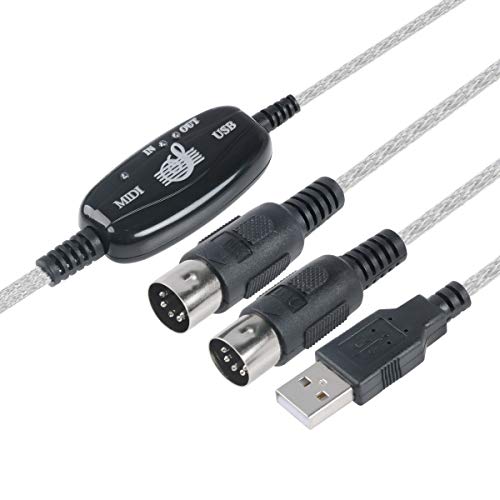
The TENINYU USB to MIDI Cable Converter delivers a 2‑in/2‑out MIDI interface in a compact form. It’s designed to turn a computer into a music studio with ease, enabling guitarists to connect MIDI keyboards, controllers, or synths for recording, overdubbing, and editing. The kit’s straightforward USB connection and MIDI ports support up to sixteen channels, making it suitable for layered arrangements and complex MIDI setups. Some setups may require both MIDI plugs to be connected, but the overall plug‑and‑play nature remains accessible for most users.
Users should ensure software compatibility with their chosen DAW and confirm that the device’s MIDI implementation aligns with their instruments. The TENINYU option is a cost‑effective choice for players who want to explore MIDI workflows without investing in high‑end interfaces, while still enjoying solid performance for basic to intermediate projects.
Storel Midi Controller Cable USB 2.0 Type‑B To USB‑B
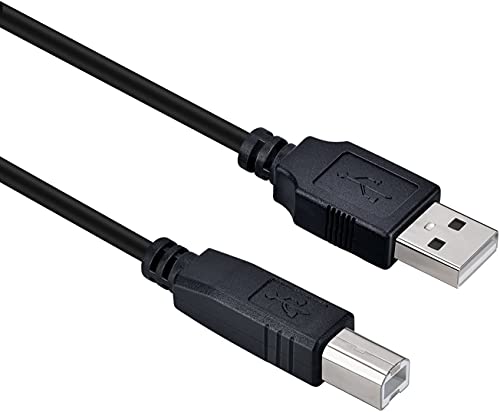
The Storel USB 2.0 Type‑B to USB‑B cable is marketed as a versatile replacement cord for devices using a USB Type B connection, including printers, scanners, and certain MIDI/audio interfaces. While it functions as a USB cable, it’s primarily positioned for data‑transfer reliability and compatibility with USB 2.0 devices. Guitarists using USB MIDI gear that employs a Type B port can rely on this durable option for stable connections to laptops and desktops. It is not a dedicated MIDI interface, but it can serve as a component in a broader MIDI setup when paired with compatible hardware.
When integrating with guitar rigs, check whether your MIDI interface requires specific driver support or power considerations. This option is best used to supplement an existing MIDI workflow where a sturdy USB B cable is needed for a reliable link between devices and a computer.
DUKABEL USB Guitar Cable (8ft)

Note: The DUKABEL USB Guitar Cable is a direct USB‑A to 1/4″ TS cable intended for guitar recording and direct instrument connection to a computer or audio interface. While not a traditional MIDI interface, it enables USB audio capture from guitar signals into software workflows that may include MIDI conversion through software or external MIDI processors. It’s a practical option for guitarists who want to streamline instrument‑to‑PC recording without needing a full MIDI interface, especially when used in conjunction with DAWs that can map audio to MIDI or host virtual instruments.
As a dedicated MIDI pathway, you’ll still rely on a separate MIDI interface or converter if you need strict MIDI data transfer. This cable provides a convenient USB connection for audio capture and can complement MIDI setups when used in multi‑device rigs.
UGREEN USB B To USB C Printer Cable (3 ft)

The UGREEN USB B to USB C printer cable supports USB B devices in a USB‑C world. While marketed for printers, it’s also compatible with many MIDI gear setups that require a USB B to USB C connection, such as MIDI keyboards, DACs, DJ controllers, and audio interfaces. The cable emphasizes plug‑and‑play simplicity, broad compatibility with modern laptops and tablets, and stable 480 Mbps data transfer. For guitarists, this option can be a versatile link in mixed‑port rigs where USB Type‑C devices interface with legacy USB B hardware.
In MIDI contexts, verify device compatibility and whether your MIDI interface or keyboard relies on specific drivers. The UGREEN cable is a practical, adaptable choice when building a USB‑C friendly studio that includes MIDI components.
Buying Guide: Key Purchase Considerations
When selecting a guitar‑to‑MIDI USB solution, consider the following factors to ensure optimal results across recording, live performance, and workflow needs:
- Connectivity and channels: If you plan to control multiple soft synths or hard MIDI gear, choose a unit offering at least 2‑in/2‑out or more, and verify supported MIDI channels (usually 16 per link).
- Plug‑and‑play vs drivers: Many modern interfaces offer driverless use, which simplifies setup on Mac and Windows. If you use older DAWs or unusual OS configurations, a device with driver support may be more reliable.
- Standalone vs computer‑connected: Some devices (like the CME H2MIDI Pro) can operate without a computer, routing MIDI through hardware. This can be useful for live rigs or hybrid setups.
- Latency and stability: Low latency is critical for real‑time playing. Look for devices with proven timing accuracy and robust USB compatibility to avoid glitches during recording or performance.
- Build and portability: For gigging guitarists, a compact, solidly built unit reduces recovery time after transport and ensures durability on the road.
- Software compatibility: Verify compatibility with your preferred DAW (e.g., Ableton Live, Logic Pro, FL Studio, Studio One) and any required drivers or firmware updates.
- Cable quality and length: Choose appropriate cable lengths to minimize signal loss or noise, especially in live environments or pedalboard setups.
- Future‑proofing: If you anticipate expanding your rig, consider devices with multiport hubs or USB host options to accommodate more gear over time.
In practice, users often pair a compact USB MIDI interface (like CME U2MIDI Pro or FORE) with a dedicated MIDI keyboard or pedalboard, then route notes into a DAW for virtual instruments, loops, and effects. For users needing standalone functionality, devices such as the CME H2MIDI Pro offer flexible routing options without always requiring a computer. Always match the chosen device to your current and anticipated setup to maximize performance and workflow efficiency.