Choosing the right general purpose circuit board is essential for quick prototyping and reliable electronics builds. The following article highlights five versatile boards suitable for Arduino and other hobby projects, covering different sizes, materials, and hole patterns. Each entry includes key features to help you compare options at a glance and decide which board best fits your workflow and project needs.
| Product | Brand | Size / Format | Key Feature |
|---|---|---|---|
| DIKAVS 104x38mm Prototyping Board | DIKAVS | 104×38 mm, 1.6 mm thick | |
| Vectorbord General Purpose Prototyping Board | VECTOR | 8.5″ x 4.5″ | |
| MCIGICM FR-4 Copper Clad, Single Side | MCIGICM | 4″ x 2.7″, single side | |
| 174-Piece PCB Prototype Kit | HEHIPLE | Multiple sizes, double-sided | |
| SchmalzTech Double Sided Perfboard | SchmalzTech | 4 pack of 1″ x 1″ |
DIKAVS 104x38mm Prototyping Board

DIKAVS’ 104x38mm FR4 prototyping board provides a compact, solderable perforated layout ideal for Arduino and similar projects. The board uses a 2.54 mm pitch to align with common DIP components, and its 1.6 mm thickness offers a sturdy build for hand-wired prototypes. Four mounting holes facilitate secure mounting in enclosures or fixtures. FR4 is a standard glass-epoxy material favored for reliable electrical performance and mechanical integrity in hobbyist and educational kits.
Vector #84P44WE Vectorbord General Purpose Prototyping Board

Vectorbord features a classic prototyping layout with holes and drilled pads configured for straightforward wiring. The board delivers a generous footprint at 8.5″ by 4.5″ with a 1.6 mm thickness, suitable for medium-scale projects. The structured hole pattern supports reliable component placement, and the simple drill-to-pad design reduces the risk of misrouting during assembly. This board is well-suited for educational demonstrations and hobby builds that require clean, repeatable layouts.
MCIGICM FR-4 Copper Clad Single-Sided PCB

This MCIGICM board offers a single-sided copper-clad FR-4 laminate in a compact 4″ x 2.7″ format. It is designed for etching and prototyping with a straightforward copper front and Bakelite back, making it a cost-effective choice for beginner projects and educational kits. The package typically comes with multiple boards per pack, along with protective moisture barriers to help prevent copper oxidation during storage.
174-Piece PCB Circuit Board Prototype Kit

This HEHIPLE kit provides a broad assortment of double-sided prototype boards in multiple sizes, plus a complete set of headers and jumper components. The variety supports rapid layout experimentation and scalable quantities for larger projects. The included 0.1 inch (2.54 mm) pitch ensures compatibility with a wide range of standard connectors and breakout boards. It is particularly useful for classrooms, makerspaces, and advancing hands-on electronics learning.
SchmalzTech Double Sided Perfboard
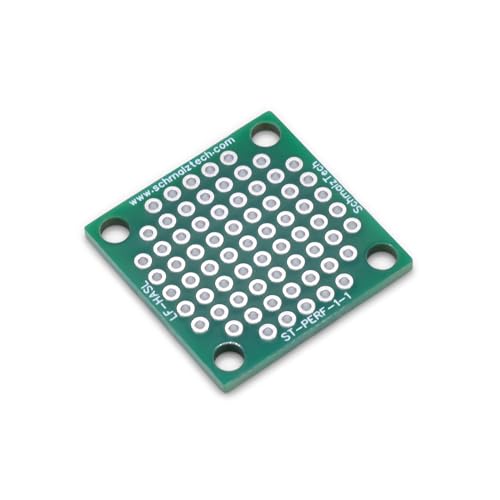
SchmalzTech’s double-sided perfboard uses through-hole plating with a standard 0.1 inch pitch, allowing many common components to be mounted easily. The dual-sided design can enable strong solder joints and more flexible routing for complex circuits. Four corner mounting holes provide stabilization for projects requiring a fixed base, and the HASL (hot-air solder leveling) finish aids solder adhesion and longevity in varied environments.
WWZMDiB 54Pcs 2.54mm Prototyping Kit
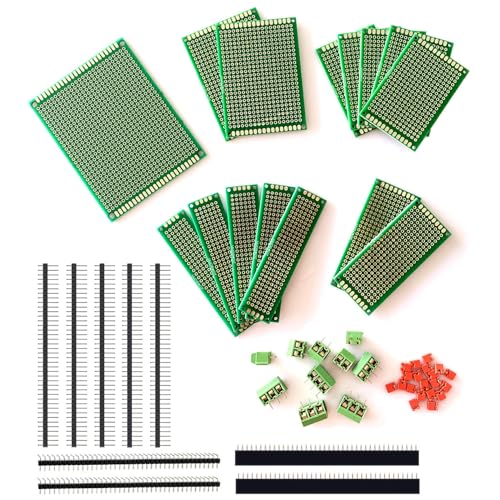
WWZMDiB’s kit bundles multiple PCB boards with a substantial set of header pins to enable quick assembly. The kit emphasizes a compact 2.54 mm pitch common in DIY electronics, helping users quickly map out connections and test ideas. The included headers support straightforward plug-in of microcontrollers and sensors, making this a versatile starter package for hobbyists.
RSR Electronics Prototyping Board

RSR Electronics’ single-sided prototyping board offers a compact 3.6″ x 1.7″ footprint with solder pads arranged for simple DIP integration. The single-sided layout simplifies routing for straightforward circuits and reduces manufacturing complexity for quick builds. This board is suitable for compact prototyping tasks, small wearables, and compact control modules where space is at a premium.
Buying Guide: General Purchase Considerations
When selecting general purpose circuit boards, consider the following factors to match your project requirements and workflow:
- Board size and pitch: Choose dimensions that fit your enclosure and align with your components’ spacing. A 2.54 mm pitch supports many standard headers and DIP parts.
- Material and finish: FR4 is the common standard for durable boards. Copper-clad and HASL finishes improve solderability and longevity, especially in temperature cycling environments.
- Single-sided vs. double-sided: Double-sided boards enable more complex routing and higher component density, while single-sided boards are simpler and often cheaper for quick prototyping.
- Mounting options: Pre-drilled mounting holes or corner holes can simplify mounting in cases or fixtures.
- Included components: Some kits bundle headers, jumpers, and terminal blocks, which can save time for beginners and classrooms.
- Quantity and packaging: Bulk packs reduce cost per board, while smaller sets suit hobbyists testing ideas.
- Compatibility: Ensure the board supports common components and connectors you routinely use, such as Arduino-compatible headers and standard DIP packages.
- Storage and protection: Look for moisture protection or anti-oxidation packaging to preserve copper boards over time.