For FPV pilots, a reliable, portable ground station matters as much as the drone. This guide highlights five built-in battery FPV monitors designed to deliver quick video, stable reception, and convenient power on the go. Each option supports 5.8 GHz video, offers DVR recording, and includes features that reduce setup time and signal dropouts. The selections span compact 4.3-inch screens to larger 7-inch displays, helping you choose the right balance of portability and screen real estate for precise piloting and field operation.
| Product | Brand | Screen Size | Key Benefit |
|---|---|---|---|
| FPV Monitor for FPV Camera | RunCam | 4.3″ | Built-in 40-channel receiver with DVR |
| SoloGood 4.3″ FPV Monitor | SoloGood | 4.3″ | Internal battery; 5-23V input |
| Readytosky 4.3″ FPV Monitor | Readytosky | 4.3″ | Auto search; OSD; built-in battery |
| SoloGood 7Inch FPV Monitor | SoloGood | 7″ | Large display; DVR; dual antenna reception |
| SPEEDY BEE 7Inch FPV Monitor | SPEEDY BEE | 7″ | 40-channel receiver; DVR; wide voltage |
FPV Monitor for FPV Camera — RunCam

The RunCam FPV Monitor combines a 4.3-inch IPS display with a built-in battery and a 5.8 GHz receiver. It provides a real-time video return with low latency, making it suitable for quick-response FPV flights. The DVR feature enables recording via an SD card, so pilots can review flights later. Power efficiency is emphasized, with low current draw and a universal USB charging interface. It supports both video input and output, and accepts DC power across a wide range (5-23V), offering flexible field charging options.
SoloGood 4.3″ FPV Monitor With DVR

This 4.3-inch SoloGood monitor delivers a compact ground station with a DVR function and a 40-channel 5.8 GHz receiver. The IPS display provides decent brightness and sharpness at 800 x 480 resolution. A built-in battery supports extended field use, while the device accepts 5-23V input to pair with various power sources, including portable power banks or backup batteries. The device emphasizes quick channel search and reliable reception, reducing the setup time during flights.
Readytosky 4.3″ FPV Monitor With Built-In Battery
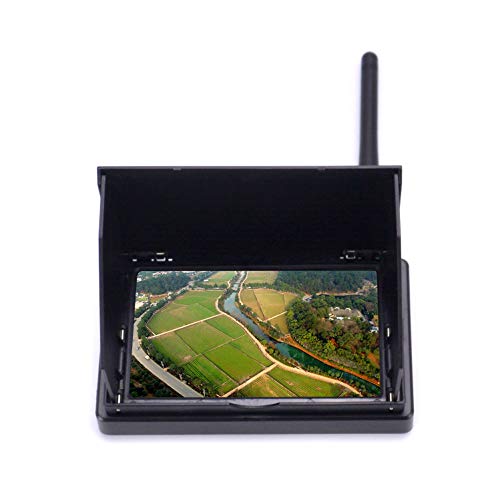
The Readytosky model features a compact 4.3-inch LCD with 48-channel auto-search for quick setup. Its integrated battery helps keep the ground station small and portable, ideal for on-the-go FPV sessions. An on-screen display (OSD) provides channel and status information, while the monitor supports standard FPV inputs and outputs. The auto-search function reduces the time spent tuning frequencies, and the durable form factor suits field operations.
SoloGood 7Inch FPV Monitor With DVR

The 7-inch SoloGood monitor provides a larger display for easier target acquisition and detail in FPV scenes. It includes a DVR function for recording, dual-antenna reception to improve signal stability, and a built-in battery for portable operation. The monitor supports a broad power range and USB charging, making it compatible with various field power solutions. The larger screen is particularly useful for drones flying in complex environments or for pilots who prefer a broader field of view during critical maneuvers.
SPEEDY BEE 7Inch FPV Monitor

The SPEEDY BEE 7-inch FPV monitor emphasizes a bright 800 x 480 LCD, 40-channel 5.8 GHz reception, and a built-in battery for all-day field use. With a wide DC input range (7-16V) and a USB charging interface, it offers flexible power options for outdoor pilots. The DVR feature lets users capture flight footage, while the dual-antenna setup enhances signal stability, reducing interference from surrounding devices and environments. The display balance makes it suitable for both beginners and seasoned FPV enthusiasts.
Buying Guide
- Screen size vs portability: Smaller monitors are highly portable but offer less detail; larger screens improve visibility and accuracy but add bulk. Choose based on your typical pilot distance and backpack setup.
- Battery life and charging options: Look for built-in batteries with sufficient runtime and universal charging ports (USB or DC input) to adapt to field power sources like power banks or spare batteries.
- Receiver performance: A 5.8 GHz 40-channel receiver with dual antennas tends to deliver more stable video, especially in interference-prone environments. Consider models with auto search to speed up setup.
- DVR and storage: DVR capability supports later review and training. Check SD card compatibility and capacity to ensure ample recording space.
- OSD and usability: On-screen displays for channel, battery, and signal status help pilots stay informed during flights. Simple controls speed up channel changes and mode adjustments.
- Durability and weather usage: If you fly outdoors, consider displays with protective casings or sun shading to maintain readability in bright conditions.
- Compatibility: Ensure the monitor supports your camera and transmitter formats and that power input matches your chosen power solution (DC voltage range).
- Price-to-feature balance: While higher-end models offer more features, a mid-range monitor with DVR, decent brightness, and reliable reception often suffices for most FPV pilots.
Choosing the right FPV monitor with a built-in battery depends on how you balance screen size, battery life, and antenna performance. The options above provide a spectrum from compact 4.3-inch models to larger 7-inch displays, all designed to minimize setup time while maximizing flight time and video reliability. When evaluating, consider your typical flying style, field conditions, and preferred power source strategy to select the best fit for your RC drones and FPV goggles ecosystem.