Finding the right filter for a phone line can reduce noise, static, and interference that disrupt both voice calls and internet connectivity. This guide focuses on reliable inline DSL filters designed to separate voice and data signals on landline setups, improving call quality and keeping DSL or ADSL connections stable. The recommended products below cover single and dual-pack options, various inductor counts, and compatibility with fax machines, answering machines, and cordless phones.
Summary of Selected Products
- Uvital DSL Filter for Landline Phone (1 Pack) – RJ11 6P2C, in-line filter for single line voice devices.
- NECABLES DSL Filter for Phone Line (6 Inductors) – Enhanced filtration for clearer calls.
- KUJOBUY DSL Filter for Landline – 2-in-1 DSL filter and RJ11 splitter.
- InstallerParts DSL Modem Phone Filter – Universal compatibility with a focus on minimizing interference.
- Lativu DSL Filter for Landline Phone – In-line filter with stable connection and broad compatibility.
Uvital DSL Filter for Landline Phone (1 Pack)

The Uvital DSL Filter is designed to reduce digital noise and interference on landline lines, helping eliminate call static and stabilize the signal. It is intended for POTS environments and is not suitable for pure voice lines, VoIP ports, or fiber-optic telephone lines. This single-port filter supports a single 2C line and works with landline phones, cordless phones, fax machines, and answering machines. It plugs directly between the wall socket and the telephone line without tools or batteries. Ideal for maintaining clear voice quality alongside a basic DSL connection.
NECABLES DSL Filter for Phone Line (6 Inductors)
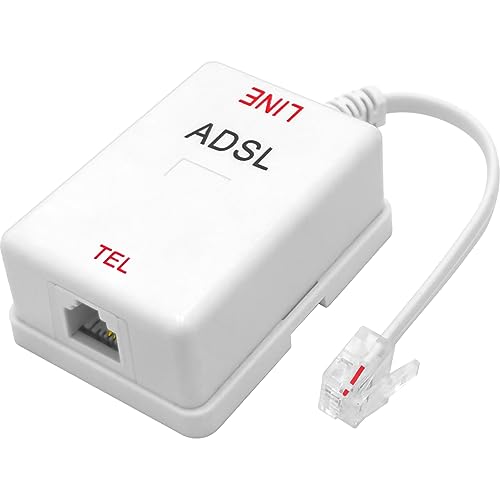
NECABLES offers a six-inductor DSL filter designed to eliminate DSL band interference and improve sound clarity on phone lines. It aims to prevent voice dropouts, hissing, and static, delivering a cleaner listening experience. The higher inductance count provides stronger filtration than four-inductor alternatives, making it well-suited for busy home or small office lines where both DSL data and voice share the same line.
KUJOBUY DSL Filter & RJ11 Splitter (2-in-1)

This device combines a DSL filter with an RJ11 splitter, enabling you to connect both your DSL modem and landline to a single wall jack without compromising either voice or internet quality. It provides clear audio by filtering DSL interference and is designed for easy plug-and-play installation, making it suitable for homes, small offices, or workplaces relying on ADSL services.
InstallerParts DSL Modem Phone Filter
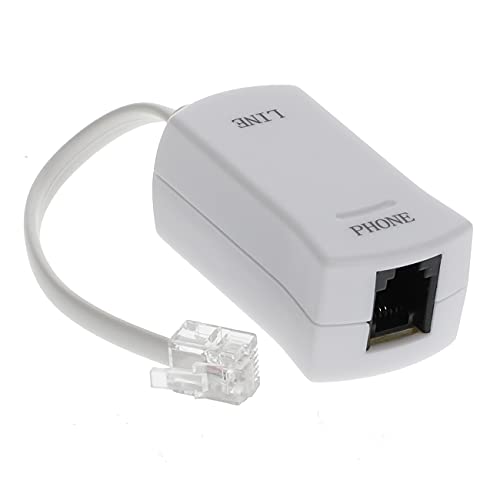
InstallerParts emphasizes clear sound by filtering out DSL interference that causes voice dropouts, hiss, and static. The filter is marketed as universally compatible with standard phone jacks and supports use with answering machines, fax machines, cordless and wired telephones, and even VoIP devices for noise elimination. Its broad compatibility makes it a practical choice for mixed-device environments in homes and small offices.
FZENeast Phone Jack Splitter In-line DSL Splitter Filter

FZENeast presents a practical DSL line splitter and filter built for in-line use. The unit includes one RJ11 6P4C Male plug feeding two RJ11 6P2C female ports. It is designed to protect voice signals and DSL data from interference caused by telephones and fax machines sharing the line, supporting smoother internet access and clearer voice calls for both home and office setups.
Lativu DSL Filter for Landline (1-Pack)
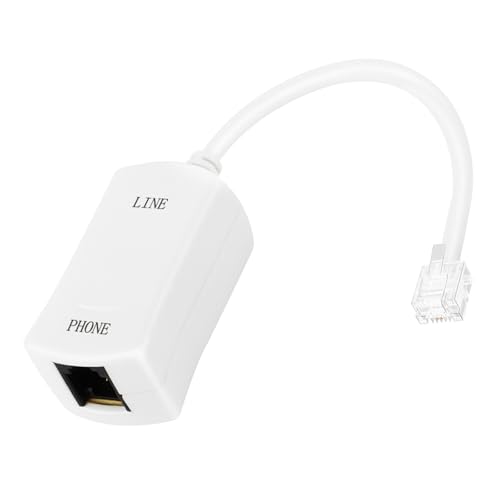
The Lativu DSL filter splits the incoming signal to separate voice and DSL outputs, reducing digital noise and interference. Built with durable ABS housing and copper plugs, it emphasizes reliability and clear communication. It works with landline and cordless phones, fax machines, answering machines, and printers, supporting many common home and small business configurations with various service providers.
NECABLES DSL Filter Splitter for Phone Line and Modem (6 Inductors)

This NECABLES model splits the line into two outputs: one for filtered voice and another for the DSL modem. It aims to prevent voice dropouts, hissing, and static by removing DSL band interference. The six-inductor configuration is designed to outperform lower-inductor variants, making it a solid option for people with dual-use lines in busy environments.
Buying Guide: Key Considerations For Choosing A Phone Line Filter
- Filter Type and Purpose: Decide between a simple inline filter, a splitter with a built-in filter, or a dual-output device that separates voice from data. The right choice depends on whether you need to preserve both a landline and a separate modem connection on one wall jack.
- Inductor Count: Higher inductors generally offer stronger attenuation of DSL interference. Models with 6 inductors tend to deliver better performance than those with fewer inductors, particularly in crowded line environments with multiple devices.
- Compatibility: Ensure the filter works with standard RJ11 connectors and is compatible with the devices you use (fax machines, answering machines, cordless phones, VoIP adapters). Some filters are not suitable for dual-line or bonded DSL services.
- Installation: Look for plug-and-play devices that require no tools. In-line filters should be simple to insert between the wall jack and devices without additional configuration.
- Signal Separation: If you need both internet and voice on the same wall jack, consider a splitter with a dedicated DSL path to the modem, preserving data integrity while protecting voice quality.
- Durability and Build Quality: A robust housing and quality copper connectors can contribute to stable connections and longer device life, particularly for home offices or busy households.
- Use Case Coverage: If you frequently use fax machines or answering machines, ensure the filter performance supports those devices without introducing new noise or dropouts.
These filters are designed to minimize interference between voice signals and DSL data. When selecting a model, match the product features to your exact needs—single-line voice improvement, line splitting for modem and phone, or both. In environments with multiple devices and frequent line use, higher-inductor filters or splitters may provide the most consistent results.