The solar system comes alive with engaging, hands-on models that blend learning with play. This guide highlights five top Amazon picks that teach astronomy, orbit mechanics, and space science through interactive project kits, motorized models, glow-in-the-dark displays, and classroom-friendly setups. Each product offers unique features—from talking guides and multilingual facts to light projection and art activities—making them suitable for home classrooms and science-minded children ages 6 and up. Explore these options to find the right balance of creativity, technical insight, and durability for your young astronaut.
| Product | Brand | Key Feature | Ideal For |
|---|---|---|---|
| Science Can Solar System for Kids, Talking Astronomy Solar System Model Kit | Science Can | Project 8 planets; bilingual learning; 24 slides | Young children (5–7) and budding astronomers |
| Educational Insights GeoSafari Motorized Solar System | Educational Insights | Auto-rotating planets; star dome projection | Elementary classrooms and bedrooms |
| Science Can Solar System for Kids, Interactive Talking Solar System Model | Science Can | 3 knowledge cards; 48 facts; 24 image disks | Older kids (6–12) and French/English learners |
| Dan&Darci 360° Orbiting Solar System | Dan&Darci | Motorized orbit; paint-and-build kit | Art-led science projects |
| National Geographic Glow-in-The-Dark Solar System Model Kit | Blue Marble | Movable arms; glow-in-the-dark paint | Decorative, durable classroom or room display |
Below, discover five well-rounded options that cover a spectrum of learning styles—from projection-based planetariums to hands-on painting and assembly—and see how each one aligns with your child’s interests and classroom needs.
Science Can Talking Solar System Kit (8 Planets Projection)

This talking solar system model lets kids project the eight planets onto walls or ceilings, turning ceilings into a space-themed planetarium. The base includes planet patterns that trigger educational facts in both English and Spanish, promoting bilingual learning. With 24 space exploration slides, children see astronauts, spaceships, and planets, supporting inquiry-based learning in a home or classroom setting.
GeoSafari Motorized Solar System

This model offers a realistic display of planetary orbits around the sun at different speeds, enhancing understanding of orbital mechanics. It includes a light-up sun dome and a star dome to project constellations, plus an auto shut-off night-light feature. The hands-on setup makes it ideal for classroom demonstrations or a science-themed bedroom decor piece, supporting both independent study and guided lessons.
Science Can Interactive Talking Solar System
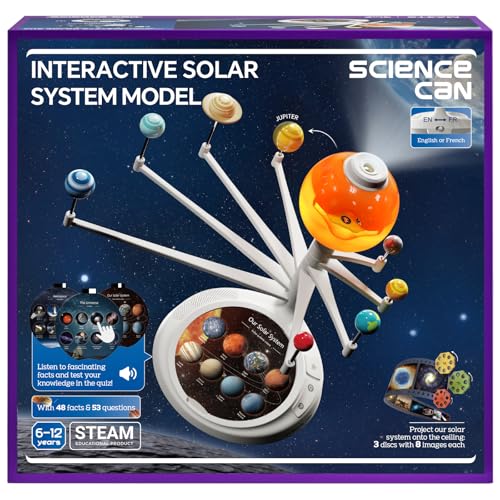
This model centers on interactive learning with three knowledge cards delivering 48 fascinating facts. It features English and French options, plus an interactive quiz mode with 53 questions to reinforce astronomy concepts. The immersive planetarium projector uses three disks to display 24 full-color images of planets and space phenomena, creating an inspiring classroom or home observatory experience.
Dan&Darci 360° Orbiting Solar System

Kids paint eight planets and the Sun, assemble them on a motorized orbiting system, and watch as the pieces spin around. The kit includes paints, brushes, a dry rack, and a color-mixing palette for a complete hands-on experience. A motorized action adds a dynamic display that blends art with science and supports patience, fine motor skills, and creative planning.
National Geographic Glow-in-The-Dark Solar System

This kit enables kids to build and display a 3D solar system with movable arms and glow-in-the-dark features. It includes vibrant paints, glow accents, decals, and a poster with solar system facts. Movable arms let children adjust planet positions, encouraging exploration of scales, distances, and orbits in a tangible, night-friendly display.
Buying Guide
Key purchase considerations help you pick the best solar system model for your child or classroom.
- Learning style: Choose projection-focused models for visual immersion, or motorized kits for kinetic and engineering appeal.
- Age and language support: Look for bilingual options or age-appropriate complexity to match your child’s reading level and curiosity.
- Durability and materials: Consider sturdy plastics and safe paints for kids who handle components or participate in art activities.
- Educational depth: Some kits emphasize facts and quizzes, others emphasize art and construction. Match to your goals—teacher-led lessons or free-form exploration.
- Display and storage: Plan for space at home or in the classroom. Larger kits may serve as focal displays; smaller ones fit desks or shelves.
- Assembly requirements: Some sets are fully kit-based with paints, brushes, and instructions; others are plug-and-projector experiences with disks or domes.
- Expansion potential: Check if components can be added later (extra disks, more planets, or additional glow paints) to extend your investment.
Each of the five picks serves distinct needs—from classroom-ready demonstrations to home décor that doubles as an interactive science station. When evaluating options, balance educational depth, engagement, and durability with your budget and space. If you want a quick, broad introduction, consider Science Can’s talking model for bilingual learning and planet projection. For hands-on artistry and science connections, Dan&Darci’s paint-and-build kit offers tangible creativity. And for glow-in-the-dark display and adjustable arms, the National Geographic model supplies a visually striking long-term exhibit. The GeoSafari model provides a motorized, classroom-friendly experience that blends basic astronomy with constellation projection.