Whether you’re growing vegetables, herbs, or ornamentals, a dependable electronic soil nutrient tester helps you optimize irrigation, fertilization, and plant health. This guide highlights five highly capable models that measure soil pH, moisture, salinity, nutrients, temperature, and more. Each section explains what the device tests, how it helps plant care, and what to consider before buying. Use these insights to choose a tester that fits your garden size, preferred data format, and calibration needs.
| Product | Main Benefit | Key Metric |
|---|---|---|
| Luster Leaf 1605 Rapitest Digital Soil Testing Kit | Simple, reliable color-based results with digital readouts | pH, nutrients (N, P, K) |
| LKBird 8-in-1 Soil Moisture Tester | Comprehensive, app-connected health data | pH, moisture, temperature, light, salinity, fertility, EC, humidity |
| Rapitest Soil Test Kit, Garden Edition | USA-designed, quick home analysis | pH, N, P, K |
| ORAPXI 8-in-1 Bluetooth Soil Tester | All-in-one with mobile app and long-term tracking | pH, EC, moisture, fertility, salinity, sunlight, humidity, temperature |
| Raintrip 4-in-1 Soil Moisture, pH, Light Tester | Low-maintenance, battery-free option with dial | Moisture, pH, nutrients, light |
Choosing the right tester involves balancing measurement scope, ease of use, calibration options, and whether you prefer a standalone readout or smartphone connectivity. The products below are organized to reflect a range of needs—from simple, quick checks to in-depth data logging for long-term soil monitoring.
Luster Leaf 1605 Rapitest Digital Soil Testing Kit

The Luster Leaf 1605 is a classic choice for home gardeners seeking straightforward soil analysis. The kit uses a combination of tablets and color indicators to deliver pH, nitrogen, phosphorus, and potassium readings. Its digital readouts simplify interpretation, making it suitable for beginners who want reliable, repeatable results without complex setup. Power comes from batteries, and the included components cover multiple test spots for a quick snapshot of soil fertility. This model emphasizes ease of use with minimal calibration requirements, ideal for seasonal garden planning and seasonal adjustments in nutrient management.
Key considerations: Look for clear instructions and consistent color results. The kit’s bundle typically includes 20 tests (5 per nutrient), enabling repeat testing across several garden zones. If you want simple, decently accurate readings without extra features, this is a solid pick for standard home gardens and raised beds.
8-in-1 Soil Moisture Tester With APP Monitoring (LKBird)
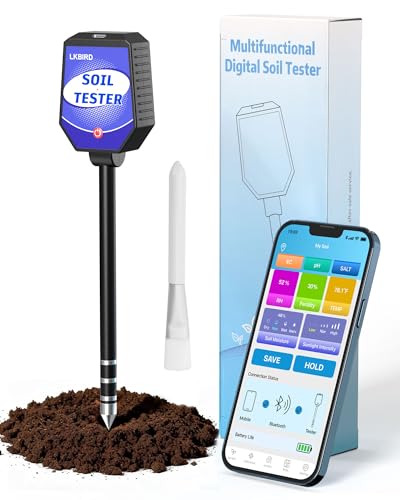
The LKBird tester is designed for gardeners who want a one-tool solution. It measures eight core soil indicators—pH, moisture, temperature, light intensity, salinity, fertility, conductivity, and air humidity. The device connects via Bluetooth to a dedicated app, enabling real-time data syncing, on-device record storage, and long-term trend analysis by plot or date. A high-precision aluminum alloy probe provides fast responses, while one-click calibration helps maintain accuracy over time. The combination of hardware and app support makes it suitable for serious hobbyists and small-scale farms seeking data-driven decisions.
Key considerations: If you value historical data and cloud-like organization, this model’s app ecosystem is a strong fit. If you’re primarily seeking a quick soil check, the full eight-parameter readout may be more than you need but remains useful for deeper soil understanding and calibrations.
Rapitest Soil Test Kit for Gardens
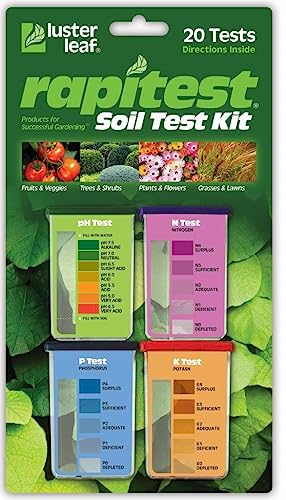
This Rapitest kit emphasizes quick, home-based testing with a focus on three nutrient indicators—nitrogen, phosphorus, and potassium—in addition to pH. The kit uses a capsule system and patented color comparators to translate color changes into quantitative insights. It contains enough components for multiple tests across different garden areas, making it well-suited for gardeners who want to map soil conditions across beds, borders, and containers. While it may not offer Bluetooth connectivity or long-term data storage, its simplicity and low cost are appealing for basic soil health checks and early-season planning.
Key considerations: If you’re prioritizing affordability and straightforward interpretation, this kit is a practical choice. For gardeners who need detailed long-term data, pairing with a digital tester or app could be beneficial.
ORAPXI Smart Soil pH Tester 8-in-1

ORAPXI brings an eight-in-one approach with Bluetooth connectivity, offering a comprehensive soil diagnostic package in a single instrument. The tester measures pH, EC, moisture, fertility, salinity, sunlight, humidity, and temperature. Real-time Bluetooth data transfer to compatible devices simplifies monitoring across multiple planting beds and greenhouses. It’s designed to save time and money by consolidating tools, while a calibration system aims to preserve accuracy. Ideal for tech-savvy hobbyists, urban gardeners, and small growers who want a holistic view of their soil profile.
Key considerations: Check the supported apps and calibration powders included. If you require precise control over irrigation and fertilization plans, this model’s integrated data stream can be very valuable for ongoing adjustments and documentation.
Raintrip 4-in-1 Soil Moisture, pH, Light Tester

The Raintrip tester is built around a 4-in-1 concept that covers moisture, pH, nutrients (implicitly via the test design), and light, all in a single handheld unit. A 90-degree rotating dial makes readings comfortable to view from standing positions, reducing strain during extended testing sessions. It’s designed for garden beds, lawns, and indoor pots, with a focus on straightforward interpretation rather than deep analytics. This option is well-suited for casual gardeners who want a compact, battery-free solution that’s easy to use and maintain.
Key considerations: If you prefer a no-battery option with a dial-based readout, this model reduces maintenance. For gardeners seeking deeper nutrient specifics or long-term trend tracking, you may want a model with digital readouts or smartphone connectivity.
Buying Guide: What To Look For When Choosing an Electronic Soil Nutrient Tester
- Measurement scope: Decide which metrics matter most—pH, soil moisture, EC, salinity, fertility, light, and temperature. Some devices cover all eight metrics; others focus on a few essentials.
- Ease of calibration: Look for one-click calibration, included powders, or app-guided calibration to maintain accuracy over time.
- Connectivity: Apps and Bluetooth/NFC can streamline data logging, trend analysis, and multi-bed monitoring. Consider whether you want offline readings or cloud-based history.
- Sample size and placement: For accurate soil health, sample from multiple spots, depths, and planting zones. Check if the tester supports multi-spot testing and how results are reported.
- Display and readability: LED or LCD readouts with backlighting improve readability in various lighting, including shaded areas and early mornings.
- Battery vs. battery-free: Battery-powered units offer broad feature sets but require replacements; battery-free models tend to be simpler and maintenance-light.
- Price vs. value: Higher-end models with app support often deliver more data and long-term value, while basic kits are great for quick checks and budgeting.
- Durability and warranty: Consider build quality, water resistance, and any manufacturer warranty to protect your investment.
Across these options, your choice should balance how deeply you want to analyze soil health with how much time you’re willing to dedicate to calibrating and reviewing results. For most hobbyists aiming to improve garden outcomes over a growing season, a model offering reliable readings with easy calibration and optional app logging provides the best mix of usability and insight.