Protecting households from natural gas leaks requires accurate, fast-acting detection. The following five devices combine combustible gas sensing with visual and audible alerts, helping you find leaks in kitchens, basements, RVs, and other spaces. Each product features quick warm-ups, clear indicators, and practical form factors for real-world use.
| Product | Brand | Key Features |
|---|---|---|
| PT199 Natural Gas Leak Detector | TOPTES | Detects methane, propane, butane; 0.5s alarm; red LCD on high concentrations; includes batteries |
| PT520A Natural Gas Detector | TOPTES | 17-inch gooseneck probe; 50–10,000 ppm range; 0.5s response; 75dB alarm |
| PT177 Gas Leak Detector | TOPTES | Portable pocket design; auto-calibration; 0.5–3s alarm; 75dB; versatile gas detection |
| PT205 Natural Gas Detector | TOPTES | %LEL detection (1%LEL–10%LEL); wide gas range; rapid 0.5s alarms; visual bar graph |
| NICGOL 4-in-1 Gas & CO Detector | NICGOL | Dual sensors; temperature & humidity; dual alarms; plug-in 110–220V |
Note: The devices listed here cover a spectrum of use—from compact pocket tools for quick checks to plug-in detectors suitable for continuous monitoring. All emphasize rapid notification and clear indicators to support immediate safety actions.
PT199 Natural Gas Leak Detector
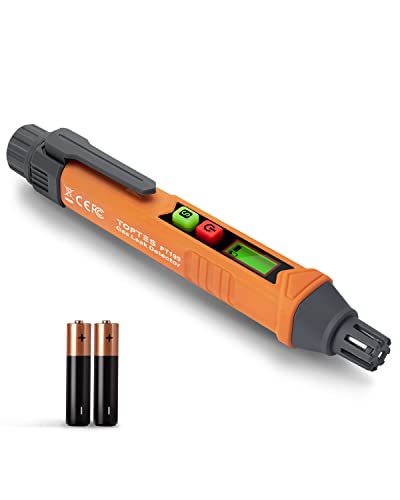
The PT199 from TOPTES detects a range of combustible gases including natural gas, methane, propane, and LPG. It delivers a rapid 0.5-second alert with both visual and audible signals. The LCD turns red at higher concentrations, helping you gauge urgency. It ships with two AAA batteries and includes a short warm-up period, with a low-battery indicator and auto-power-off after five minutes of inactivity.
PT520A Natural Gas Detector

The PT520A includes a 17-inch gooseneck probe for accessing tight spaces, ideal for detecting leaks around pipelines, storage areas, and basements. It detects methane, propane, natural gas, LPG, and more, with a 0.5-second response, a 75dB alarm, and seven colored bars that intensify as gas concentration rises. Detection range spans 50 to 10,000 ppm.
PT177 Gas Leak Detector

The PT177 offers a compact, pocket-sized design with a 30-second auto-calibration after powering on. It detects a range of gases including LPG, methane, ethane, propane, butane, and natural gas. Five red LEDs and a 75 dB alarm intensify with rising gas levels. A storage bag and pocket clip enhance portability for RVs and DIY projects.
PT205 Natural Gas Detector

The PT205 expands safety with %LEL detection, offering a precise readout from 1%LEL to 10%LEL (about 100 ppm to 5,000 ppm). It detects a broad spectrum of gases and provides fast 0.5-second alarms with a red LCD display at high concentrations. A prominent bar graph visually communicates gas levels alongside audible alerts.
NICGOL 4-in-1 Gas & CO Detector

This upgraded NICGOL device combines natural gas and carbon monoxide detection with temperature and humidity sensing. It features dual sensors, dual alarms, and a plug-in design for 110V–220V operation. The device provides quick alerts (CO≥150 PPM or natural gas≥5% LEL) with loud alarms and flashing red indicators, supporting safer indoor environments and RV use.
Buying Guide: Key Purchase Considerations
What to evaluate when choosing an electronic natural gas leak detector:
- Detection range and gases: Look for devices that detect methane, propane, butane, LPG, and natural gas. Some models add CO sensing or %LEL readings for deeper safety insight.
- Response time and alarms: A fast 0.5-second detection with audible (often 75–85 dB) and visual alerts is ideal for early warning. Multi-LED bars or color LCD displays help gauge severity.
- Probe design and reach: Gooseneck or long probes are beneficial for accessing tight spaces, basements, or behind appliances. Portable pocket models suit quick checks, while plug-in units suit ongoing monitoring.
- Power and maintenance: Battery-powered units are portable and independent, but plug-in models offer continuous operation. Check warm-up time, battery life, and auto-off features.
- Calibration and accuracy: Auto-calibration and clear calibration instructions help ensure accurate readings. Consider models with %LEL or ppm scales for precise risk assessment.
- Durability and safety: Look for flame-retardant housings, robust housings for RV use, and safety certifications if available.
- Usability and portability: Pocket-sized detectors with clips and bags increase convenience for DIYers, RV travelers, and homeowners.
- Maintenance and replacement parts: Availability of replacement sensors, batteries, and spare parts impacts long-term value.
- Compatibility with environments: Indoor-only devices vs. models designed for RVs, kitchens, or garages; consider power requirements and weather resistance for outdoor use.
Choosing the right detector involves balancing portability, sensing capabilities, and monitoring needs. For quick spot checks, compact pocket devices are suitable, while for continuous safety in homes or RVs, a plug-in or long-probe detector provides stronger coverage and ongoing alerts.