Finding a reliable electronic calendar clock can simplify daily routines for seniors and caregivers alike. The following selection highlights large displays, multiple alarms, memory reminders, auto-dimming, and clear readability. Each model is designed for easy viewing and dependable alerts, helping manage medications, appointments, and daily activities. Below is a quick overview table of five top picks, followed by in-depth product sections and a practical buying guide.
| Product | Key Feature |
|---|---|
| Clock with Day and Date for Elderly (Roxicosly) | 7″ HD display, 20 alarms, 20 reminders, dimmable |
| Soobest Dementia Digital Clock | 7″ HD display, 20 alarms, 3 ringtones, DST |
| Raynic 11.5″ Large Display Calendar Clock | Indoor temperature, 3 alarms, auto dimming |
| SSINI Digital Calendar Dementia Clock | 12 alarms, 3 medication reminders, auto dimming |
| Peakeep Large Display Digital Clock | 5 volume levels, loud alarm, calendar and USB port |
Each device offers a readable display and practical scheduling tools for daily care, with varying combinations of alarms, reminders, and display options. Consider display size, number of alarms, dimming behavior, and whether you need extra features like temperature readouts or multiple time modes when selecting the best clock for a senior’s needs.
Clock With Day And Date For Elderly — Roxicosly

The Roxicosly 7-inch clock presents a high-definition 1024x600P LCD display that clearly shows TIME, DATE, and DAY OF THE WEEK, along with six daily periods (MORNING, NOON, AFTERNOON, EVENING, NIGHT, MIDNIGHT, BEFORE DAWN). Colorful icons (Sun and Moon) visually cue the time of day, supporting quick comprehension for seniors. It supports up to 20 standard alarms and 20 reminders, including medication alerts and hydration reminders, with the option to set reminders for specific dates or events. The device features one-touch Sleep Mode to turn the display off for rest and 10 brightness levels to tailor visibility day or night. A power adapter is required for operation, with batteries serving only to preserve settings during outages.
Soobest Dementia Digital Clock — 20 Alarms

The Soobest model showcases a 7″ HD display with multiple display modes (white digits, yellow digits, analog clock, color display). It offers up to 20 alarms and 20 reminders, ideal for chronic medication schedules or daily routines. The clock includes three built-in ringtones and adjustable volume to accommodate different hearing needs. Its reminder icons accompany each alarm to minimize confusion, enhancing independence while reducing caregiver intervention needs.
Raynic Digital Clock — 11.5″ Large Display
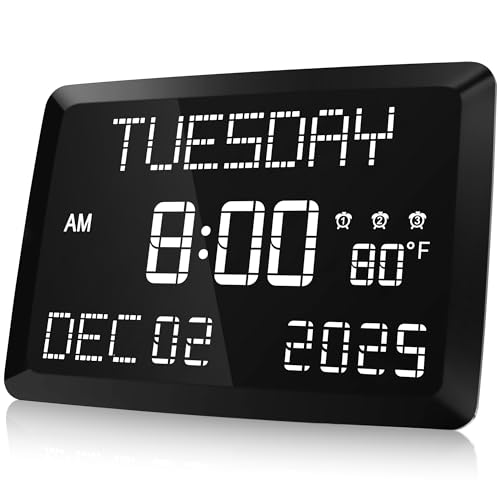
The Raynic 11.5″ calendar clock emphasizes a bright, easy-to-read LED display with five brightness levels, plus indoor temperature readout and DST support. It supports up to three alarms and features two USB charging ports. This model blends a calendar and clock in a single unit, making it a versatile choice for both home and office environments while ensuring critical information remains visible from a distance or across a room.
SSINI Digital Calendar Dementia Clock

The SSINI dementia clock focuses on clarity and ease of use, with a 7-inch display showing time, date, and day of the week in large text. It provides 12 daily alarms and 3 medication reminder sets, with 8 language options. Auto dimming adjusts brightness to conserve eye comfort, and the device stands on a desk or can be mounted on a wall. This clock combines straightforward operation with robust notification capabilities suitable for memory care needs.
Peakeep Large Display Digital Clock

The Peakeep clock is designed for bedrooms and living spaces, featuring a large digital display with bold numbers, six volume settings, a calendar, USB charging, and a back-up battery option for power outages. It emphasizes strong audible alerts for heavy sleepers, with a 9-minute snooze option and dedicated dimming controls. The device balances modern aesthetics with practical features to support daily routines and accessibility.
Buying Guide: Key Considerations And Comparisons
When choosing an electronic calendar clock for seniors, consider these factors to align features with daily needs:
- Display size and readability: Larger screens with high-contrast digits help users see time, date, and day at a glance. Adjustable brightness and auto-dimming are important for day vs. night use.
- Alarms and reminders: Determine how many alarms are needed and whether reminders can be linked to specific dates, medications, or events. Look for color-coded or pictorial reminder cues to reduce confusion.
- Display modes and customization: Some models offer multiple display styles (digital, color, analog) and language options, which can aid comprehension for memory-impaired users or multilingual households.
- Durability and power: Check whether the clock requires constant power or supports battery backup. Power adaptability is critical during outages but may limit features when on battery.
- Additional features: Temperature readouts, humidity, DST support, USB charging, and built-in music or nature sounds can influence comfort and usefulness depending on the setting.
- Ease of setup and use: Plug-and-play operation, simple button layout, and clear on-device instructions reduce caregiver burden during installation.
- Room placement: Wall-mount vs. desk placement affects visibility from different angles and distances. Consider furniture layout and bed distance to ensure optimal viewing.
In choosing among the options, balance the need for a large, easy-to-read display with the required number of alarms and reminders, along with any preferred extra features such as temperature data or ambient sounds. For households managing dementia or memory loss, clocks with simple interfaces, distinct icons, and auto-dimming can significantly reduce confusion and support daily independence without heavy caregiver intervention.