Choosing an easy-to-use dive computer can simplify every dive, from planning to ascent. The following devices emphasize intuitive interfaces, clear displays, and practical safety features for beginners and experienced divers alike. This guide highlights five user-friendly options that balance straightforward controls with reliable decompression logic, customizable gas mixes, and helpful alarms. Read on to compare interfaces, modes, and display clarity to help you select a model that makes underwater navigation safer and more enjoyable.
| Product | Brand | Key Benefit |
|---|---|---|
| Cressi Leonardo 2.0 Dive Computer | Cressi | Single-button navigation, customizable FO2/PO2, CNS indicator |
| Shearwater Peregrine Dive Computer | Shearwater Research | State-aware menu, simple two-button control |
| SUUNTO Zoop Novo Wrist Dive Computer | SUUNTO | Air/Nitrox/Gauge modes, programmable 21–50% gas |
| Cressi Leonardo 2.0 (Black/Grey) | Cressi | Same intuitive design with easy mode switching |
| Mares Puck Pro EZ | Mares | High-contrast display, Nitrox 21–50%, decompression calculations |
Cressi Leonardo 2.0 Dive Computer — Black/Pink

The Leonardo 2.0 from Cressi combines a user-friendly interface with practical dive features. Its single-button navigation makes mode changes and settings straightforward for beginners, while advanced options exist for seasoned divers. It supports Air, Nitrox, and Gauge modes with easy switching, and offers adjustable FO2 from 21% to 50% and PO2 from 1.2 to 1.6 bar. A CNS oxygen toxicity indicator helps monitor safety, complementing three levels of conservatism and audible alarms for critical alerts. The result is a dependable, easy-to-use dive computer that reduces cognitive load during dives.
Shearwater Peregrine Dive Computer

The Peregrine by Shearwater emphasizes a clean, state-aware interface designed for ease of use. Its two-button control and a straightforward menu structure facilitate quick access to essential settings, ideal for divers who prioritize simplicity without sacrificing capability. Battery life reaches approximately 30 hours on a medium brightness level, supporting longer exposures between charges. The device provides reliable data management and decompression logic in a compact, durable package, making it a strong choice for divers who want a no-fuss, dependable computer.
SUUNTO Zoop Novo Wrist Dive Computer
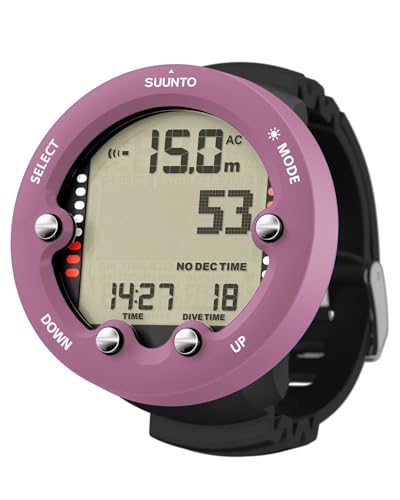
The SUUNTO Zoop Novo offers several operating modes, including Air, Nitrox, Gauge, and Freedom, with programmable oxygen between 21% and 50%. Its imperial or metric options support diverse user preferences, while decompression stop data and audible alarms enhance safety. The Zoop Novo presents a balance of simplicity and versatility, suitable for divers who want a single, reliable computer that adapts to different diving styles and gas mixes without complexity.
Cressi Leonardo 2.0 Dive Computer — Black/Grey

This variant of the Leonardo 2.0 emphasizes the same user-centric design with a simple single-button interface for seamless mode selection. Its HD backlit display improves readability in low-light conditions, while the adjustable FO2 (21–50%) and PO2 (1.2–1.6 bar) allow divers to tailor dives to their experience and comfort. The device includes the CNS toxicity indicator and audible alarms, delivering clear safety cues and a consistent user experience across environments and dives.
Mares Puck Pro EZ Wrist Dive Computer

The Puck Pro EZ from Mares emphasizes visibility and versatility. It features a high-contrast, easy-to-read screen that remains legible in challenging underwater conditions. It supports single-gas Nitrox (21–50%), and relies on a dependable decompression algorithm (ZH-L16C with dual gradient factors) to deliver accurate dive data. This model is designed for recreational divers who value straightforward operation, reliable calculations, and quick access to essential information during dives.
Buying Guide
Key purchase considerations center on ease of use, safety features, and display readability. Consider whether you prefer a single-button navigation (like the Leonardo) or a two-button interface (as seen on Peregrine and Zoop Novo). Gas options are important: most models support air and Nitrox in the 21–50% range. Programmable PO2 and FO2 enable customization for deeper dives or frequent Nitrox use, but may require a learning curve for first-time Nitrox divers.
Display quality matters for quick data retrieval underwater. Look for HD backlit screens or high-contrast panels, especially in low-light or murky conditions. Audible alarms and clear decompression stop data improve safety by providing timely, actionable cues. Battery life is another practical factor; longer life minimizes mid-dive interruptions. Finally, consider compatibility with your diving style—whether you prefer recreational, multi-gas, or technical setups—as this will guide the best overall choice for you.
In summary, each highlighted model emphasizes ease of use without compromising essential safety calculations. Beginners gain confidence from simple navigation and readable displays, while experienced divers appreciate configurable gas mixes and robust alarm systems. When selecting, align your choice with your routine dives, comfort with programming, and how you value screen clarity and alert reliability in underwater environments.