The attic is a popular mounting spot for over-the-air TV antennas due to protection from weather and a discreet profile. This guide highlights five top antennas that excel for attic or ceiling installs, balancing range, multi-channel reception, and ease of setup. Each option keeps you away from monthly cable bills while delivering clear 4K/1080p broadcasts from local towers. Below you’ll find features, mounting options, and practical considerations to help you choose the right antenna for your home environment.
Summary table of chosen products:
| Product | Brand | Approximate Range | Mounting | Key Benefit |
|---|---|---|---|---|
| GE 29884 Pro Outdoor/Attic Mount Antenna | GE | Up to 70 miles | Outdoor/Attic | Compact design with solid VHF/UHF reception |
| UltraPro Outdoor HD Digital Antenna | UltraPro | Up to 70 miles | Attic/Outdoor | 4K/1080p capable with weather-ready build |
| Five Star Yagi Satellite HD TV Antenna | Five Star | Up to 200 miles | Outdoor/Attic | Long-range, enhanced signal with wide coverage |
| PBD Amplified Outdoor TV Antenna | PBD | Up to 150 miles | Outdoor/Attic | 360° rotation for best alignment |
| 1byone Outdoor TV Antenna | 1byone | 100+ miles | Outdoor/Attic | Omni-directional reception with stability |
GE 29884 Pro Outdoor/Attic Mount Antenna

The GE 29884 Pro is designed for flexible placement, offering practical VHF and UHF reception with a compact form that fits neatly in an attic or mounted outdoors. Its long-range capabilities (up to roughly 70 miles from broadcast towers) make it a strong option for suburban homes where towers are within reasonable distance. The coaxial power design supports simple integration with existing TV setups through standard coaxial connections, enabling straightforward installation for most homeowners.
Key considerations include placement height, nearby obstructions, and line-of-sight to local transmitters. In attic installations, ensure the rafters or joists provide a stable mounting surface and avoid metal obstacles that can degrade signals. This antenna pairs well with televisions that accept OTA signals and does not require a separate power source beyond coaxial feed for signal transmission.
UltraPro Outdoor HD Digital Antenna

The UltraPro antenna is built for versatility, with 4K/1080p HDTV compatibility and a 70-mile long-range reach. It includes a J-mount and is marketed for attic or outdoor installation, making it a flexible choice for mixed housing structures. Its weather-resistant construction provides durability through seasonal changes, while the long-range reception aims to capture a wide array of channels from nearby towers. This antenna is particularly suitable for smart TVs and older models alike, delivering a robust mix of VHF and UHF channels with clear HD quality.
When choosing this option, consider your local tower density and terrain. In attic setups, roof overhangs or metal decking can reflect or absorb signals; mounting as high as possible and away from metal barriers tends to improve performance. The included mounting hardware helps simplify initial setup, though you may want to add a signal meter or a split-capable receiver if you plan to feed multiple TVs.
Five Star Yagi Satellite HD Antenna
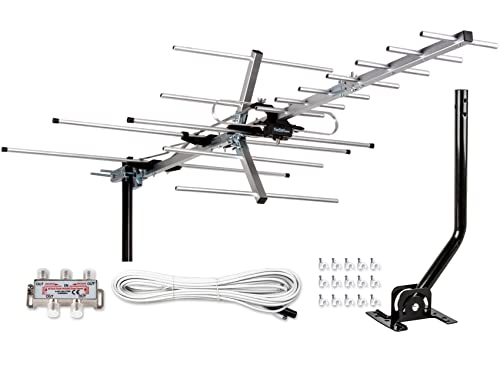
This High-Performance Yagi antenna is designed for substantial long-range reception, offering up to 200 miles under favorable conditions. It’s a multi-directional outdoor/attic option capable of pulling in both VHF and UHF channels, with a focus on free HDTV. The design emphasizes a longer antenna element length for more stable signal acquisition and reduced interference, which can translate into fewer dropped channels and more reliable reception.
In attic environments, the Five Star unit can be a solid choice when towers are relatively far away or obstructed by terrain. A proper mast or mounting pole helps keep the directionality stable, and using a preamp only if needed can prevent noise amplification. If you’re aiming to serve multiple TVs, verify compatibility with multi-output setups and ensure the included mounting gear fits your attic or roof structure.
PBD Amplified Outdoor TV Antenna
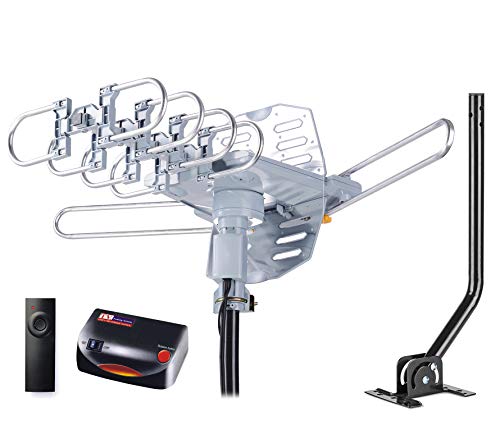
The PBD Amplified Outdoor Antenna features a built-in high-gain, low-noise amplifier designed to deliver strong reception up to about 150 miles. Its 360° motorized rotation enables precise signal alignment via a remote control, which is especially helpful when towers are in different directions or when you need to optimize reception after weather events. The weatherproof design supports year-round outdoor use, including in attic installations where wind exposure is limited but environmental exposure remains a factor.
Key decisions revolve around motorized rotation versus static mounting. If you anticipate seasonal changes in signal direction or you have nearby broadcasting towers at multiple bearings, the PBD’s remote rotation can be a major convenience. For attic installations, ensure that the rotation mechanism has enough clearance and that the mounting pole is securely anchored to handle the antenna’s weight and wind load.
1byone Outdoor TV Antenna

The 1byone antenna emphasizes omni-directional reception, claimed to cover 100+ miles with 360° reception. The included 39-foot RG6 coax cable supports flexible routing to attic or outside mounting locations. Its design seeks to deliver stable digital reception without constant aiming, which can be advantageous for homeowners who prefer a simpler setup with fewer adjustments after installation. It’s compatible with a range of TV brands and converter boxes, making it a versatile choice for mixed households.
When integrating an omni-directional antenna in an attic, consider the presence of metal attic surfaces and insulation that could affect signal quality. If you encounter weak reception on certain channels, a dedicated booster or repositioning within the attic space might help. For multi-TV homes, plan a splitter strategy that preserves signal strength across rooms without introducing excessive loss.
Buying Guide: Key Purchase Considerations For Attic TV Antennas
- Range and terrain: Antennas advertise ranges that depend on tower distance and line-of-sight. In hilly areas or dense suburbs, a longer-range antenna like a Yagi or motorized unit can compensate for obstructions, but performance will still vary by location.
- Directionality vs. omni-directionality: Omnidirectional antennas simplify setup in attic spaces but may underperform in crowded RF environments. Directional (Yagi) designs can offer stronger reception when towers are known and aligned, at the cost of needing to point the antenna properly.
- Mounting and weather resilience: Attic installations reduce weather exposure but require sturdy mounting to prevent movement from wind or vibrations. Weatherproof housings, mast clamps, and J-mounts help maintain signal quality over time.
- Signal amplification: A built-in or external amplifier can improve reception in areas with weak signals. Avoid over-amplification in areas with strong local signals to minimize noise and interference.
- TV compatibility and formats: Look for antennas supporting NEXTGEN TV, 4K, 8K UHD, and standard HD channels. Most modern TVs handle DVB-T/T2 or ATSC formats; confirm compatibility with your TV and local broadcast standards.
- Installation footprint: Size and mounting hardware influence where an antenna fits in your attic or on a roof. Ensure there’s enough clearance for rotation (if applicable) and for cable routing to your TV(s).
- Feeding multiple TVs: If you plan to distribute to several receivers, check the antenna’s splitter availability, signal loss per split, and whether a separate booster is advisable to maintain consistent channel availability across rooms.
- Future-proofing: Antennas with robust construction and multi-band reception tend to age better in the face of changing broadcast towers and digital standards.
Choosing the right attic-friendly antenna involves balancing range, installation practicality, and your local broadcast landscape. Consider starting with a mid-range model that offers strong VHF/UHF reception, a straightforward mounting setup, and the option to upgrade with a preamp or motorized rotation if your viewing area changes or expands. The options listed above provide a spectrum of design philosophies—from compact attic-friendly designs to long-range outdoor-oriented Yagi systems—to help you optimize free over-the-air TV in your home.