Choosing a desktop fiber laser engraver means balancing power, speed, precision, and portability. This guide highlights five top options that fit a compact workspace while delivering professional-grade metal and non-metal markings. Each model features high-speed galvanometer systems, varied working areas, and material versatility, making them suitable for jewelry, signage, gifts, and small-batch production. Explore how these machines compare on power, accuracy, ease of use, and safety so you can pick the right desktop fiber marker for your needs.
Summary table of selected products
| Product | Brand | Engraving Area | Key Strength |
|---|---|---|---|
| XTool F2 5W IR & 15W Diode Dual Laser Engraver | xTool | Not specified (compact work area) | Dual-laser versatility; fast throughput; 50MP camera for alignment |
| GWEIKE G2 20W Fiber Laser Engraver | G·WEIKE | 110×110 mm | High speed up to 15000 mm/s; precise deep engraving on metal |
| ComMarker B4 20W Fiber Laser Engraver | ComMarker | 110×110 mm + 200×200 mm (two lenses) | 2-in-1 desktop and handheld; LightBurn compatibility |
| OMTech 100W Fiber Laser Engraver | OMTech | Not specified | High power; rapid metal marking with 0.1 mm accuracy |
| GWEIKE G2 Plus 20W Fiber Laser Engraver | G·WEIKE | 150×150 mm | Larger area; electric lifting; high-speed marking |
XTool F2 5W IR & 15W Diode Dual Laser Engraver
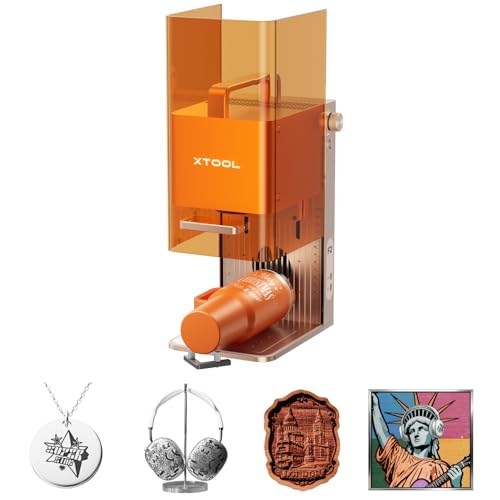
The XTool F2 combines a 5W infrared laser with a 15W diode laser to deliver versatile engraving and marking across more than 300 materials. The deep metal marking capability of the 5W IR complements the 15W diode’s strength in 3D embossing and cutting thicker materials. A built-in 50MP camera supports precise alignment, achieving accuracy around 0.00199 inches and alignment precision near 0.1 mm. With speeds up to 6000 mm/s, it supports batch processing and on-site production, improving workflow for small businesses and hobbyists alike.
Features alignment precision, fast throughput, and a camera-assisted workflow that minimizes waste. The dual-laser setup allows simultaneous marking tasks, which can boost production capacity for coasters, tags, and personalized items. Safety and software compatibility are important considerations for daily use in a home workshop or small studio.
GWEIKE G2 20W Fiber Laser Engraver

The GWEIKE G2 20W model uses a high-speed galvanometer and 1064 nm fiber laser to deliver fast, precise metal engraving with up to 0.001 mm accuracy. It supports deep engraving on metal and works well on plastic, leather, dark glass, ceramic, and more. The 110×110 mm working area is paired with dual red-light positioning to simplify setup and previewing before marking, helping reduce waste and ensure consistency in small-batch runs.
ComMarker B4 20W Fiber Laser Engraver

The ComMarker B4 is a versatile 20W fiber laser system designed for both desktop and handheld use. It includes two field lenses (110×110 mm and 200×200 mm) and supports LightBurn and EzCad2, along with rotary marking. This configuration expands capabilities for jewelry, silver, and gold marking as well as durable metal surfaces. The unit emphasizes safety with robust protection, automatic lifting, and emergency features, making it suitable for small labs and studio setups with a need for greater marking variety.
OMTech 100W Fiber Laser Engraver

The OMTech 100W fiber laser offers high-speed metal marking with a focus on throughput and durability. Targeting metal applications such as jewelry, steel, and coated surfaces, the machine processes at speeds up to 10,000 mm/s with a typical marking accuracy around 0.1 mm per pass. The system includes protection and a robust optics setup, enabling reliable long-term operation in small to medium workshops. The absence of a fixed workbed height is complemented by a flexible mounting arrangement that helps accommodate different workpieces.
GWEIKE G2 Plus 20W Fiber Laser Engraver

The GWEIKE G2 Plus expands on the standard G2 with a larger 150×150 mm working area and electric lifting for effortless focusing. Its 20W laser, paired with a high-speed galvanometer, supports engraving at up to 15000 mm/s and offers 2k, 4k, and 8k resolution options with 0.001 mm accuracy. Red light preview and digital Galvano scanning further simplify alignment, enabling precise work on metals, leather, dog tags, and jewelry, while reducing setup time for repetitive tasks.
Buying Guide: Key Purchase Considerations
- Engraving area and focus: Choose a working area that matches typical workpieces (e.g., 110×110 mm to 150×150 mm). Consider electric lifting for easier focusing on taller parts.
- Laser power and material compatibility: Higher wattage offers deeper engraving on metal, but may require stronger ventilation and safety measures. Ensure compatibility with the intended materials (metal, leather, plastic, glass, etc.).
- Speed and accuracy: Look for high marking speeds (thousands of mm/s) and sub-0.01 mm accuracy if fine detail is essential. Galileo galvanometer systems and 8K resolution options can improve precision.
- Vision and alignment: Built-in cameras and red-light previews help with precise placement, reducing waste and mis-marking on small parts.
- Software ecosystem: Verify compatibility with your preferred software (LightBurn, EzCad2, or vendor-provided interfaces) and the ability to import common file formats (AI, DXF, SVG).
- Footprint and portability: Desktop models should fit your workspace, with options like handheld configurations for on-site work or short-distance production jobs.
- Safety features: Look for Class 1 or well-ventilated enclosures, protective eyewear, emergency stops, and robust shielding to ensure safe operation in a small studio.
- Support and compatibility: Consider warranty duration, availability of replacement parts, and ease of obtaining consumables or upgrades in the US market.
- Future-proofing: If you anticipate scaling, prioritize machines with higher power, larger beds, and flexible lens options that expand from 110×110 to 150×150 mm or more.
For buyers, it’s important to map your typical workflow—batch engraving, custom orders, or high-precision marking—and then align your choice with the machine’s speed, accuracy, and material reach. While lower-wattage options can excel at detail on non-metals, higher-wattage units deliver superior metal marking performance. Safety, software, and support should be weighed as heavily as raw power when selecting a desktop laser marker for commercial or semi-professional use.